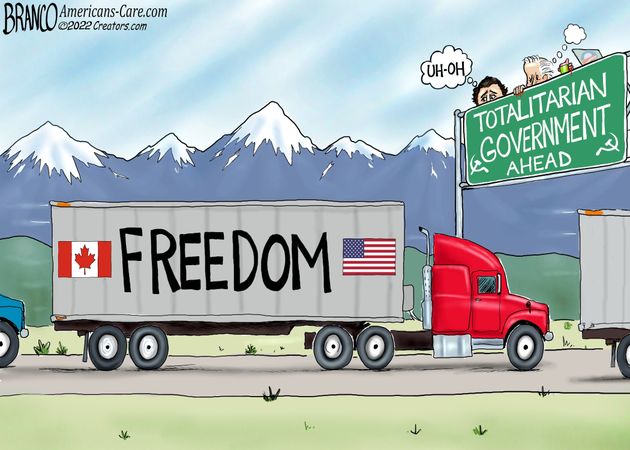
Toxic Feminizing Running Amok

Preface

In a previous post Is “Emotional Intelligence” an Oxymoron? I began by reflecting on a pattern often seen in organizational settings.

Warning: This post will express sincere thoughts that are politically incorrect, for example accepting that males and females have differing predominant behaviors and traits.

The title refers to a notion that came up in the fields of management science and industrial psychology, coincidental with increasing numbers of women practicing in those disciplines. I am prompted to write about this upon realizing that our present social divide is more fundamental than many think. This century, we see increasing numbers of people choosing to operate from emotions rather than intelligence.

This pattern is in contradiction to the trajectory of Western civilization placing reason as primary and individual rights and freedoms as essential.

In a recent article thread a comment caught my attention. “It has been said men rank, women exclude, and that is very true IMO. All-female groups are very exclusionary to anyone who does not fit in.” That expression of Ranking vs. Excluding was new to me, and it may be changing this century, what with women competing with other women in sports, and with men as well in the workplace. Still, it points to our present social struggle whereby “diversity” is employed to divide a nation into identity groups to protest prejudice and claim reparations against grievances. The US as usual is the leading example of this culture war. Ironically, tribalism is rearing its ugly head in precisely the nation-state that so successfully created an American tribe that included any and all ethnic and religious groups.

Ranking vs. Excluding also explains such events as the Senate hearings on Judge Kavanaugh. Clearly his opponents sought to exclude him not only from the Judiciary, but to banish him from the human race. Their fierce and unrelenting animus to this day is frightening for the republic. Ironically, Kavanaugh prevailed in the process only by an emotional outburst, his outrage finally waking others up to the enormously evil beheading underway. This was out of character for a man by all accounts extremely reasonable and unprejudiced, and even in this testimony his intelligence was evident and in control.

It also shows up in the warfare between Trump and the leftist media. From the moment of Trump declaring candidacy, the left has been focused on excluding Trump from legitimacy, not only as President, but as an human being. Meanwhile, he is focused on the ranking: Winning is what matters, coming in first place. And despite the media’s attempts to paint him racist and sexist, I see no evidence that he excludes losers in a contest. On the contrary, he and Senator Rubio are on the same side pushing back against election fraud in Florida. The media can not recognize Trump is driven by intelligence despite his determined actions pursuing rational policy goals, and unbowed by social pressure and disapproval.

This modern tribalism emerged from the academic world and has now spread into the wider society as graduates gain employment in private and public sector institutions. However, many of them carry a virus along with whatever knowledge and skills they have been able to acquire in their studies.

Philip Pippin brings the issue up to date writing on the corrosive social effects from today’s male/female culture warfare in his America Greatness article Who’s Toxic Now?  Excerpts on in italics with my bolds and added images.

Is America suffering from toxic masculinity—or toxic femininity?

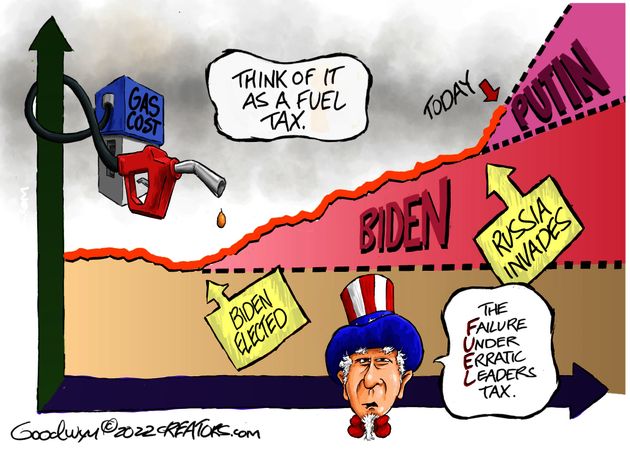
So far this year, events are rapidly unwinding in chaos both at home and abroad. Inflation is soaring; the nation’s southern border is effectively dissolving; violent crime is escalating in many cities, seemingly unchecked; radical indoctrination is replacing proper education in public schools; and Russia is emulating the Nazis’ savage blitzkrieg-cum-genocide strategy of conquest, with relative lassitude by America.
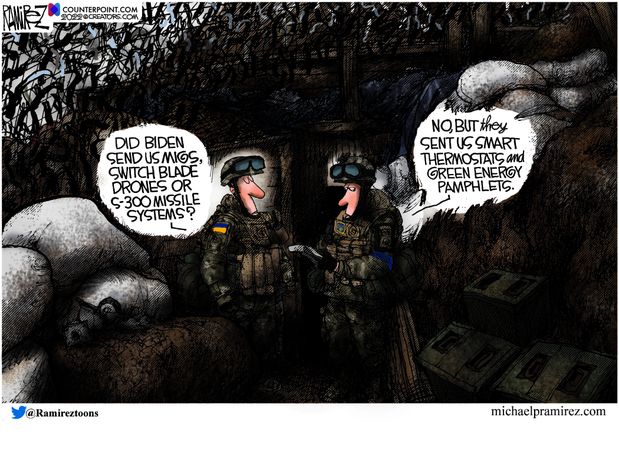
It is vital to reflect on what autocratic Democratic rule—yes, rule, not governance—in Washington, D.C. has produced since Joe Biden’s inauguration and the leftist seizure of near-total control of the national legislative agenda. Such reflection can emanate from a myriad of perspectives, both mundane and esoteric, but there is a cultural lens I’d like to peer through here in this critical election year.

Those who value fact-based realities over “social constructs” meant to facilitate and justify ideological imperatives like identity politics and tribalism accept that there are two—and only two—sexes. Social “innovations” such as “gender fluidity” and the heated efforts exerted by their proponents to normalize them are designed to confound, disrupt, and ultimately destroy the organic social order that has evolved over centuries of experimentation across many societies. These proponents euphemistically label this “fundamental transformation”; those well-acquainted with world history and the relentless delusions of social utopians, foreign or domestic, more accurately call this “social engineering.” Usually, decadence in all forms attends the drive towards “perfecting” society by “perfecting” all the people who live in it. Rampant amorality, the debasement of all civilized norms of behavior, and the successful elevation—even glorification—of perversions of all kinds become milestones on the way to “utopia.” The result? Narcissistic elites prosper, and everyone else slides into misery and poverty as mere tools for the elite’s aggrandizement of power and lucre.
One of the modern whipping boys to advance this savage menace has been “toxic masculinity,” embodied in and epitomized by white, hetero, generically (but not exclusively) Christian, middle- and working-class males. Traits of this supposed scourge include tendencies toward emotional aggression, physical intimidation and violence, attitudes of patriarchal disdain and supremacism, and the usual laundry list of demonic isms and phobias: racism, sexism, various LGBTQ-centric phobias, and Islamophobia.

In a word, men are the problem, and particularly white, heterosexual men who possess natural masculine attitudes, values, and predispositions.
This perspective deliberately ignores the positive traits of masculinity that have long been esteemed and celebrated in America and throughout all organized societies. These include the capacity to design and build structures and organizations; the ability to preserve and protect through exertion of physical strength; the ability to produce and amplify material wealth by the use of rational thought and physical labor; and the ability to produce food and water supplies. “Toxic masculinity” is really just a propaganda meme of the utopian Left created for the purpose of besmirching the strong individualism and independent mindset of society’s motivated producers, who, predominantly, happen to be male.
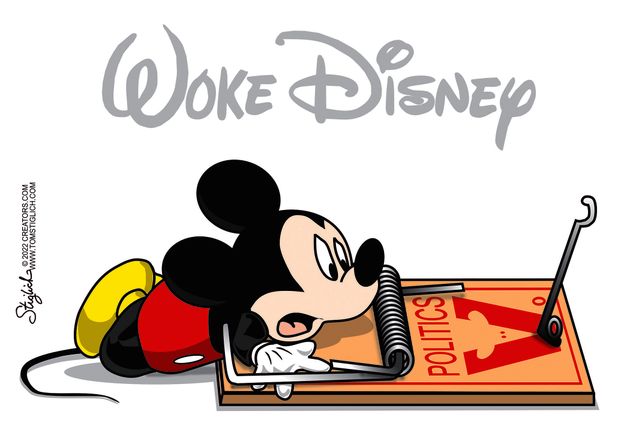
So, what of femininity? If in fact there is a tangible taint known as “toxic masculinity” beyond just being an inflammatory meme designed to divide and alienate people from one another for purposes of aggrandizing political power, is there something rightfully labeled “toxic femininity”? I assert there is, and it is likely even more menacing.

If “toxic men” can be overly aggressive and intimidating, then “toxic women” may be overly passive-aggressive and covertly conniving, working behind the scenes to get what they want by subterfuge. If “toxic males” can be too direct and “in your face” with their demands, needs, and wants, then “toxic females” can be intentionally indirect, coy, sly, and even deceitful to get whatever they want. If the former can be physically violent based on emotions gone awry, then the latter can be emotionally manipulative towards others, playing on their personal fears, vulnerabilities, and sensitivities.
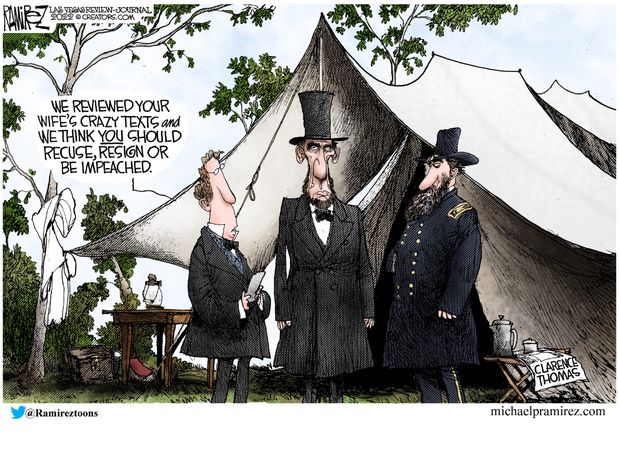
If men and women share both masculine and feminine traits, in varying degrees, then this discourse can hardly be defamed as a diatribe aimed invidiously at women as women. Rather, these behaviors exist in the politics, ideological conflicts, and rivalries bedeviling our nation today—modes employed by both men and women.

Today, Democratic politicians at every level of government and their ideological cohorts in major media, academia, Hollywood, and Big Tech are increasingly being outed as serial liars, deceitful spin artists, subversives, and cynical manipulators of our people’s basest emotions and instincts. Their predations did not start with the 2020 elections, of course. However, in achieving greater normalization, they threaten to subvert and topple not only our own civil society and republican form of government, but the world order, which is predicated on unparalleled American military strength, economic power, and historical values.
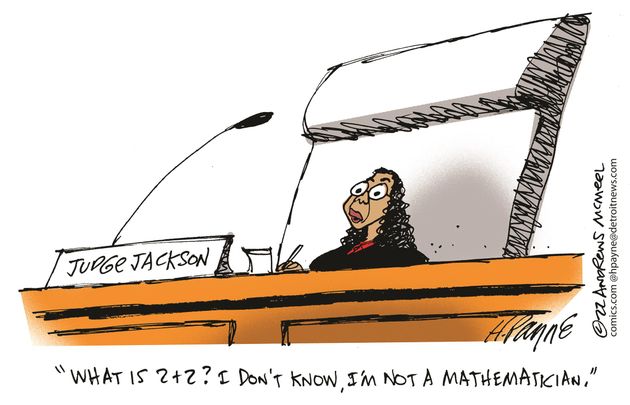
If not checked decisively this year by the sane, the rational, the historically literate, and the spiritually conscious, historians of the future may well ascribe America’s devolution and ultimate collapse as a free, independent, and sovereign nation primarily to a pandemic of “toxic femininity.”

It is, to be emphatic, a fully inclusive, “pan-gender” affliction embodied in men and women of all “gender orientations.” That said, the biological men in power today acting as “toxic females” will be most to blame. There are many: Biden, Blinken, Austin, Garland, Kerry, Mayorkas, Buttigieg, Milley, Schumer, Schiff, and Nadler. So, the ladies will have to move over. They have once again been usurped.

See Also To Be a Man, Or Not to Be (Fight Degendering)
Vexing Truths About Energy

Philip Dick’s insight has a corollary:  Reality is also that which doesn’t happen no matter how much you want it to.  Chris Wright explains the contradictions with energy fantasies in his Denver Gazette article Inconvenient truths about energy.  Excerpts in italics with my bolds and added images.

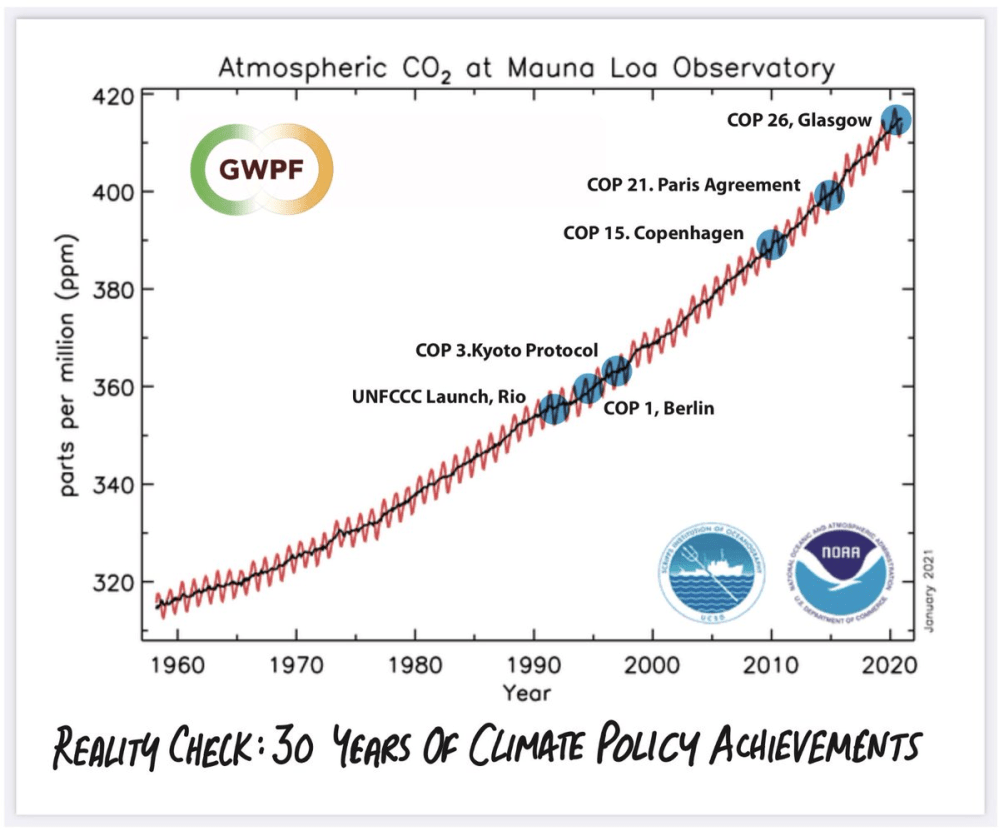
The energy transition is not happening. Or not nearly at the pace that everyone believes or wishes. At current rates the “transition” is set to finish in the mid-2600s. The U.N. Rio Convention and subsequent Kyoto Protocol launched the energy transition drive in 1992. Global energy consumption from hydrocarbons has grown massively since then, with market share only declining by four percentage points over the last 30 years from 87% in 1992 to 83% today. I am not celebrating this fact as I have spent years working on energy transition technologies.

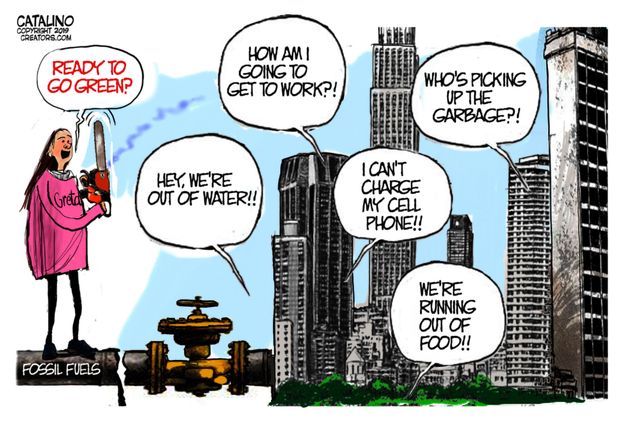
The energy transition isn’t failing for lack of earnest effort. It is failing because energy is hard, and 3 billion people living in energy poverty are desperate for reliable and scalable energy sources. Meanwhile, 1 billion energy-rich people are resistant to diminishing their standard of living with higher cost and an increasingly unreliable energy diet.

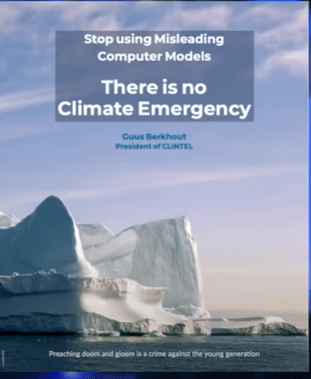
There is no “climate crisis” either. If there is a term more at odds with the exhaustive literature surveys of the Intergovernmental Panel on Climate Change (IPCC) than “climate crisis,” I have not heard it.

Climate change is a real global challenge that is extensively studied. Unfortunately, the facts and rational dialogue about the myriad tradeoffs aren’t reaching policy makers, the media, or activist groups. Or are they are simply ignoring these inconvenient truths?

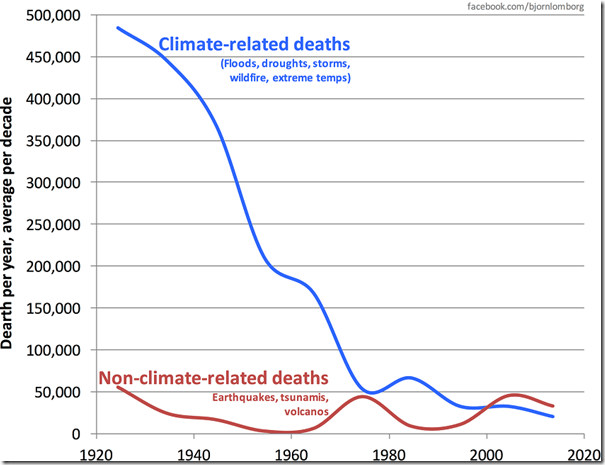
For example, we hear endlessly about the rise in frequency and intensity of extreme weather. This narrative is highly effective at scaring people and driving political action. It is also false. The reality is detailed in countless publications and summarized in the IPCC reports. Deaths from extreme weather have plunged over the last century, reaching new all-time lows last year, an outcome to be celebrated. This is not because extreme weather has declined. In fact, extreme weather shows no meaningful trend at all.

Deaths from extreme weather events have declined because highly energized, wealthier societies are much better prepared to survive nature’s wrath.

My Mind is Made Up, Don’t Confuse Me with the Facts. H/T Bjorn Lomborg, WUWT

Recognizing reality

You are not supposed to say out loud that there is no climate crisis or that the energy transition is proceeding at a glacial pace. These are unfashionable and, to many, offensive facts. But let’s be honest. Energy transition ambitions must recognize reality. Otherwise, poor investment decisions and regulatory frameworks will lead to surging global-energy and food prices. This is exactly what is happening. We are here today in large part because energy transition efforts that previously encompassed solely aggressive support of alternative energy policies, economics be damned, have recently supplemented this strategy with growing efforts to obstruct fossil fuel development.

Fossil fuels make the modern world possible.

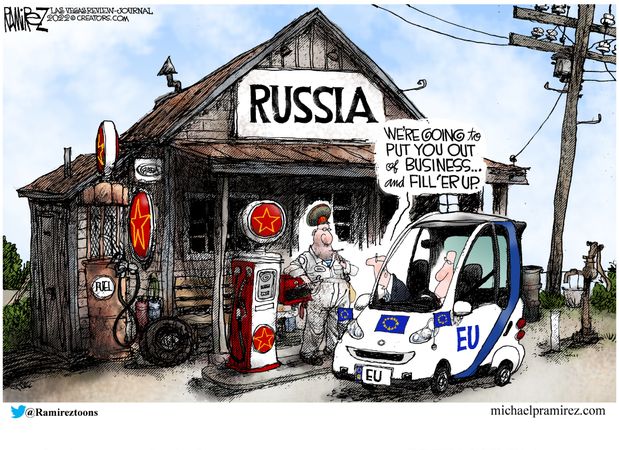
The real crisis today is an energy crisis. It began to reveal itself last fall with a severe shortage in globally traded Liquified Natural Gas (LNG). The LNG crisis has not abated and it gives Russia’s Vladimir Putin tremendous leverage over Europe. Without Russian gas, the lights in Europe go out. Amid war, public outrage, and intense sanctions, Russian gas flows to Europe remain unchanged. Russian oil exports have continued with minimal interruption. The world can talk tough about sanctioning Russian energy exports, but those exports are vitally needed; hence they continue. Energy security equals national security.

The world energy system, critical to human wellbeing, requires meaningful spare capacity to handle inevitable bumps in the road. In the electricity sector, which represents only 20% of global energy but 40% in wealthy countries, this is called reserve capacity. In the oil market, spare production capacity today is shrinking and concentrated in OPEC nations like Saudi Arabia and the United Arab Emirates. Also, there is a massive global storage network in both surface tanks and underground caverns. In natural gas markets, there are both extensive underground storage reservoirs and typically spare export capacity through pipelines and large industrial LNG export and import facilities.

The last several years have seen this spare capacity whittled away due partly to lower commodity prices and poor corporate returns shrinking the appetite to invest.

Excess capacity has also shrunk due to regulatory blockage of critical energy infrastructure like pipelines and export terminals. Roadblocks for well permitting and leasing on federal lands, together with a mass public miseducation campaign on energy and climate alarmism, are also stymieing hydrocarbon development. Investment capital is further constrained by a corporate Environment, Social and Governance (ESG) movement, and divestment campaigns. These factors are shrinking hydrocarbon investment below what it otherwise would be in response to price signals and outlook for supply and demand.

The net result is a constrained supply of oil, natural gas, and coal, which means higher prices and greater risk of market dislocations like the one unfolding today.

High energy and food price inflation is the cruelest form of tax on the poor. After a few specific examples, I’ll return to what we should do now to reverse these damaging and deeply inequitable trends.

In denial about demand

Why does the world today suffer from a severe shortage of LNG? Demand for natural gas has been growing strongly for decades. It provides a much cleaner substitute for coal in electricity production, home heating, and a myriad of industrial and petrochemical uses. Rising displacement of coal by natural gas has been the largest source of GHG emission reductions. Unfortunately, the aforementioned factors have prevented supply from keeping pace with rising demand. Energy shortages drive rapid prices rises and have cascading impacts on everything else. Energy is foundational to everything humans do. Everything.

Perhaps the most critical use of natural gas is nitrogen fertilizer production. Roughly a century ago, two German chemists, both subsequently awarded Nobel Prizes, developed a process to produce nitrogen fertilizer on an industrial scale. Before the Haber-Bosch process innovation, nitrogen content in soil was a major constraint on crop productivity. Existing nitrogen sources from bird guano, manure, and rotating cultivation of pea crops were limited. Today, elimination of natural gas-synthesized nitrogen fertilizer would cut global food production in half.

The now six-months-long LNG crisis translates into a worldwide food crisis as skyrocketing fertilizer prices are cascading into much higher food prices. Wheat prices are already at a record high and will likely head higher as spring plantings suffer from under fertilization.

Global LNG markets are tight because rising demand has outrun the growth in LNG export capacity in the United States, now the largest LNG exporter. We have an abundance of natural gas in the United States. Unfortunately, we have a shortage of pipelines to transport this gas and LNG export terminals, preventing us from relieving the energy crisis in Europe and around the world. These pipeline and export terminal shortages are due in large part to regulatory blockage. The result is that natural gas prices in the United States and Canada are five to ten times lower than in Asia and Europe. This deeply disadvantages consumers and factories (like fertilizer factories) in Europe and Asia that rely on LNG imports to fulfill their needs.

Failed energy policies

Russia’s invasion of Ukraine did not cause today’s energy crisis. Quite the reverse. Today’s energy crisis is likely an important factor in why Russia chose to invade Ukraine now. Europe’s energy situation is both tenuous and highly dependent on Russian imports. Russia is the second-largest oil and natural gas producer after the United States. Russia is the largest exporter of natural gas, supplying over 40% of Europe’s total demand. Additionally, Russia is the largest source of imported oil and coal to Europe. Europe put itself in this unenviable position by pursuing unrealistic, politically-driven policies attempting to rapidly transition its energy sources to combat climate change.

Europe’s energy pivot has been a massive failure on all fronts: higher energy costs, grave energy insecurity, and negligible climate impacts.

Germany is the poster child of this failure. In 2000, Germany set out to decarbonize its energy system, spending hundreds of billions of dollars on this effort over the last 20 years. Germany only marginally reduced its dependence on hydrocarbons from 84% in 2000 to 78% today. The United States matched this 6% decline in hydrocarbon market share from 86% in 2000 to 80% today. Unlike in the US, Germany more than doubled its electricity prices — before the recent massive additional price increases — by creating a second electric grid. This second grid is comprised of massive wind and solar electric generating sources that only deliver 20% of nameplate capacity on average, and often less than 5% for days at a time. The sun doesn’t always shine and the wind doesn’t always blow. Hence, Germany could only shrink legacy coal, gas and nuclear capacity by 15%. It now must pay to maintain both grids. The legacy grid must always be flexing up and down in a wildly inefficient manner to keep the lights on, hospitals functioning, homes heated, and factories powered. Outside of the electricity sector, Germany’s energy system is largely unchanged. It has long had high taxes on gasoline and diesel for transportation, and lower energy taxes on industry. Germany subsidizes industrial energy prices attempting to avoid the near-complete deindustrialization that the UK has suffered due to expensive energy policies across the board.
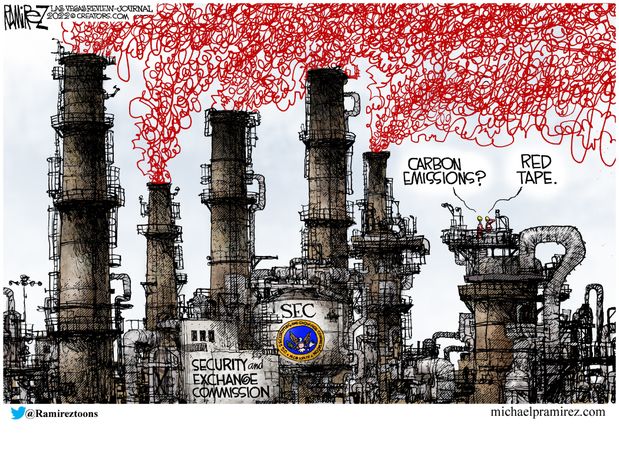
Over the last 20 years, the United States has seen two shale revolutions, first in natural gas and then in oil.

The net result has been the U.S. producing greater total energy than consumed in 2019 and 2020 for the first time since the 1950s. The U.S. went from the largest importer of natural gas to the second-largest exporter in less than fifteen years, all with private capital and innovation. The shale revolution lowered domestic and global energy prices due to surging growth in U.S. production. Surging US propane exports are reducing the cost and raising the availability of clean cooking and heating fuels for those in dire energy poverty still burning wood, dung, and agricultural waste to cook their daily meals. U.S. GHG emissions also plunged to the lowest level on a per capita basis since 1960. Imagine the world’s energy situation today with the American shale revolution.

We are starting to hamstring and squander the enormous benefits of the shale revolution. The same misinformed anti-hydrocarbon crusade that impoverished Europe and made it heavily dependent on Russia is now sweeping the US. California and New England had already adopted European-style energy policies driving up electricity prices, reducing grid reliability, and driving manufacturing and other energy-intensive, blue-collar jobs out of their states. Colorado is not far behind.

California, a state with a plentitude of blessings, managed to create the highest adjusted poverty rate in the nation with an expensive, unstable power grid increasingly reliant on coal-powered electricity imports from Nevada and Utah.

New England’s proximity to Pennsylvania’s clean low-cost natural gas resources was a stroke of luck. But it refused to expand the natural gas pipelines running from Pennsylvania, leaving it chronically short of natural gas, its largest source of electricity and cleanest option for home heating. Instead, it remains heavily reliant on fuel oil for home heating and occasionally imports LNG from Russia to keep the lights on. Last winter New England burned copious amounts of fuel oil to produce electricity which went out of fashion in the 1970s elsewhere in the US.

Texas has not been immune from energy illiteracy and collateral damage. Texas’ poorly designed electric grid, structured to encourage investment in renewables, led to hundreds dying last year in the Uri cold spell. No one would pay the same price for an Uber that showed up whenever convenient for the driver and dropped you off wherever they desired. But that is what Texas does with electricity: paying the same price for reliable electricity that balances the grid as they do for unreliable, unpredictable electricity. No wonder the reliability of the Texas grid has declined and is headed for more trouble.

Misplaced faith

The common thread in these cases is unrealistic beliefs in how rapidly new energy systems can replace demand for hydrocarbons, currently at all-time highs. Political intervention and miscalculation have led to over-investment in unreliable energy sources and, far worse, under-investment in reliable energy sources and infrastructure. The full costs of this colossal malinvestment have been somewhat hidden from view as spare capacity in the global energy network has mostly kept the train on the tracks. Now that excess capacity has shrunk to a critically low level, more impacts are hitting home.

Like the disease itself, the cure takes years to run its course. But that longer time frame is no excuse not to act now in a thoughtful fashion to begin rectifying historical blunders.

Steel, cement, plastics and fertilizer are the four building blocks of the modern world and all are highly reliant on hydrocarbons.

Most critically this means removing the growing myriad obstacles to hydrocarbon development, justified in the name of fighting climate change. This is nonsense. Overly cumbersome hurdles to hydrocarbon development in the U.S. do nothing to change oil and gas demand. They simply displace U.S. production overseas where production practices are less stringent and less ethical. Resulting in increased GHG emissions and other air pollutants, reduced economic opportunities for Americans, and increased geopolitical leverage of Russia and OPEC — see the invasion of Ukraine.

Climate change is a long-term problem best addressed with technologies cost-effective today like natural gas, energy efficiency, and nuclear. The solution requires combining today’s commercial low-carbon energy sources with research and technology development in carbon sequestration, next-generation geothermal, and economical energy storage to make solar and wind more viable.

Today the price mechanism must destroy energy demand to bring it in line with short-term supply. This reduces the quality of living, especially for low-income families. The price mechanism will also incent new supply to the extent possible in the face of growing regulatory hurdles, infrastructure shortages, and capital starvation. A revaluation of all three of these factors is urgently needed.

♦  Is the overarching goal “energy transition” at all costs?
♦  Or is it humane policies that better human lives and expand opportunities for all?

We need to replace the former mindset with the latter.

Chris Wright is chairman and CEO of Liberty Energy, a Denver-based hydraulic fracturing company. Read “Bettering Human Lives”, a report released last year for more information on the above issues.


Green Apocalyptic Adventists

Pascal Bruckner writes at City Journal  Apocalyptic Daze.  Excerpts in italics with my bolds.

Secular elites prophesy a doomsday without redemption.

My point is not to minimize the dangers that we face. Rather, it is to understand why apocalyptic fear has gripped so many of our leaders, scientists, and intellectuals, who insist on reasoning and arguing as though they were following the scripts of mediocre Hollywood disaster movies.

Around the turn of the twenty-first century, a paradigm shift in our thinking took place: we decided that the era of revolutions was over and that the era of catastrophes had begun. The former had involved expectation, the hope that the human race would proceed toward some goal. But once the end of history was announced, the Communist enemy vanquished, and, more recently, the War on Terror all but won, the idea of progress lay moribund. What replaced the world’s human future was the future of the world as a material entity. The long list of emblematic victims—Jews, blacks, slaves, proletarians, colonized peoples—was likewise replaced, little by little, with the Planet, the new paragon of all misery.

No longer were we summoned to participate in a particular community; rather, we were invited to identify ourselves with the spatial vessel that carried us, groaning.

How did this change happen? Over the last half-century, leftist intellectuals have identified two great scapegoats for the world’s woes. First, Marxism designated capitalism as responsible for human misery. Second, “Third World” ideology, disappointed by the bourgeois indulgences of the working class, targeted the West, supposedly the inventor of slavery, colonialism, and imperialism. The guilty party that environmentalism now accuses—mankind itself, in its will to dominate the planet—is essentially a composite of the previous two, a capitalism invented by a West that oppresses peoples and destroys the earth. Indeed, environmentalism sees itself as the fulfillment of all earlier critiques. “There are only two solutions,” Bolivian president Evo Morales declared in 2009. “Either capitalism dies, or Mother Earth dies.”

So the planet has become the new proletariat that must be saved from exploitation
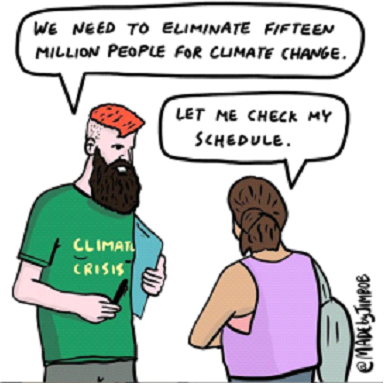
—if necessary, by reducing the number of human beings,
as oceanographer Jacques Cousteau said in 1991.

One could go on citing such quotations forever, given the spread of the cliché-ridden apocalyptic literature. Environmentalism has become a global ideology that covers all of existence—not merely modes of production but ways of life as well. We rediscover in it the whole range of Marxist rhetoric, now applied to the environment: ubiquitous scientism, horrifying visions of reality, even admonitions to the guilty parties who misunderstand those who wish them well. Authors, journalists, politicians, and scientists compete in the portrayal of abomination and claim for themselves a hyper-lucidity: they alone see clearly while others vegetate in the darkness.

The fear that these intellectuals spread is like a gluttonous enzyme that swallows up an anxiety, feeds on it, and then leaves it behind for new ones. When the Fukushima nuclear plant melted down after the enormous earthquake in Japan in March 2011, it only confirmed a feeling of anxiety that was already there, looking for some content. In six months, some new concern will grip us: a pandemic, bird flu, the food supply, melting ice caps, cell-phone radiation.

The fear also becomes a self-fulfilling prophecy, with the press reporting, as though it were a surprising finding, that young people are haunted by the very concerns about global warming that the press continually instills in them. As in an echo chamber, opinion polls reflect the views promulgated by the media. We are inoculated against anxiety by the repetition of the same themes, which become a narcotic we can’t do without.

Atime-honored strategy of cataclysmic discourse, whether performed by preachers or by propagandists, is the retroactive correction. This technique consists of accumulating a staggering amount of horrifying news and then—at the end—tempering it with a slim ray of hope. First you break down all resistance; then you offer an escape route to your stunned audience. And so the advertising copy for the Al Gore–starring documentary An Inconvenient Truth reads: “Humanity is sitting on a time bomb. If the vast majority of the world’s scientists are right, we have just ten years to avert a major catastrophe that could send our entire planet’s climate system into a tail-spin of epic destruction involving extreme weather, floods, droughts, epidemics and killer heat waves beyond anything we have ever experienced—a catastrophe of our own making.”

Now here are the means that the former vice president, like most environmentalists, proposes to reduce carbon-dioxide emissions: using low-energy lightbulbs; driving less; checking your tire pressure; recycling; rejecting unnecessary packaging; adjusting your thermostat; planting a tree; and turning off electrical appliances. Since we find ourselves at a loss before planetary threats, we will convert our powerlessness into propitiatory gestures, which will give us the illusion of action. First the ideology of catastrophe terrorizes us; then it appeases us by proposing the little rituals of a post-technological animism.

But let’s be clear: a cosmic calamity is not averted
by checking tire pressure or sorting garbage.

Another contradiction inherent in apocalyptic discourse is that, though it tries desperately to awaken us, to convince us of planetary chaos, it eventually deadens us, making our eventual disappearance part of our everyday routine. At first, yes, the kinds of doom that we hear about—the acidification of the oceans, the pollution of our air—charge our calm existence with a strange excitement. The enemy is among us, and he waits for our slightest lapses, all the more insidious because he is invisible. If the function of ancient rites was to purge a community’s violence on a sacrificial victim, the function of our contemporary rites is—at first—to dramatize the status quo and to exalt us through proximity to cataclysm.

But the certainty of the prophecies makes this effect short-lived. The language of fear does not include the word “maybe.” It tells us, rather, that the horror is inevitable. Resistant to all doubt, it is satisfied to mark the stages of degradation. This is another paradox of fear: it is ultimately reassuring. At least we know where we are heading—toward the worst.

One consequence of this certainty is that we begin to suspect that the numberless Cassandras who prophesy all around us do not intend to warn us so much as to condemn us.

In a secular society, a prophet has no function other than indignation. So it happens that he becomes intoxicated with his own words and claims a legitimacy with no basis, calling down the destruction that he pretends to warn against. You’ll get what you’ve got coming!—that is the death wish that our misanthropes address to us. These are not great souls who alert us to troubles but tiny minds who wish us suffering if we have the presumption to refuse to listen to them. Catastrophe is not their fear but their joy. It is a short distance from lucidity to bitterness, from prediction to anathema.

What is surprising is that the mood of catastrophe prevails especially in the West, as if it were particular to privileged peoples. Despite the economic crises of the last few years, people live better in Europe and the United States than anywhere else, which is why migrants the world over want to come to those places. Yet never have we been so inclined to condemn our societies.

Perhaps the new Green puritanism is nothing but the reaction of a West deprived of its supreme competence, the last avatar of an unhappy neocolonialism that preaches to other cultures a wisdom that it has never practiced. For the last 20 years, non-European peoples have become masters of their own futures and have stopped regarding us as infallible models. They are likely to receive our professions of environmentalist faith with polite indifference. Billions of people look to economic growth, with all the pollution that accompanies it, to improve their condition. Who are we to refuse it to them?

Environmental worry is universal; the sickness of the end of the world is purely Western.

To counter this pessimism, we might list the good news of the last 20 years: democracy is making slow progress; more than a billion people have escaped absolute poverty; life expectancy has increased in most countries; war is becoming rarer; many serious illnesses have been eradicated. But it would do little good. Our perception is inversely proportional to reality.

The Christian apocalypse saw itself as a hopeful revelation of the coming of God’s kingdom. Today’s has nothing to offer. There is no promise of redemption; the only hope is that those human beings who repent of their errors may escape the chaos, as in Cormac McCarthy’s fine novel The Road.

How can we be surprised, then, that so many bright minds have become delirious
and that so many strange predictions flourish?


Background see post Progressively Scaring the World

ESG Funds Buy Russian Over Canadian Oil

More evidence that ESG investing is poppycock is revealed in Jeff Lagerquist’s Yahoo Finance article Why ESG funds ‘shockingly’ buy Russian oil instead of Canadian crude.  Excerpts in italics with my bolds.

Russia’s war on Ukraine continues to expose uncomfortable realities for environmental, social and governance-focused (ESG) investments, prompting calls for the asset management industry to rethink the loosely-defined term as analysts point to “shocking” holdings within some funds.

A new report from CIBC Capital Markets shows many of the 10 largest energy holdings across ESG funds have pared down or exited investments in Canada’s oil sands, while half stayed invested in Russia. At the end of 2021, the bank found ESG funds owned twice as much Russian oil and gas as Canadian oil and gas.

“Perhaps most shockingly, the ratio of dollars held in Gazprom (a Russian state-owned energy firm) was six times that of Suncor,” the CIBC analysts wrote in research published on Monday.

According to the report, the big four Russian energy companies, NK Lukoil, Novatek, Gazprom and NK Rosneft, accounted for about 0.2 per cent of the global ESG holdings. That’s double the size of investments in Canada’s TC Energy (TRP.TO)(TRP), Suncor Energy (SU.TO)(SU) and Canadian Natural Resources (CNQ.TO)(CNQ), the bank said.

“Russia and Saudi Arabia may well emit less CO2 per produced barrel of oil equivalent than some North American firms, but they also invariably have less robust social and governance oversight,” the CIBC analysts wrote.

“This says nothing of the reality many of their energy entities are de-facto state controlled and often aligned (read: weaponized) with foreign policy objectives – many of which will be an affront to mainstream ESG investors.”

Several of the world’s largest companies and institutional investors have moved to cut ties to Russia in recent weeks, amid increasingly violent attacks on Ukraine’s population. ESG funds held at least US$8.3 billion in Russian assets before Russia invaded Ukraine, according to data compiled by Bloomberg.

Those include the country’s financial firms. Bloomberg News recently reported that Vanguard Group and Northern Trust upped their stakes in Russia’s leading bank through their respective index-based ESG funds in January, as Vladimir Putin’s forces amassed on Ukraine’s borders.

Vlad Tasevski, chief operating officer and head of product at Purpose Investments, says these examples show the need to rebalance the trio of ESG priorities. He says the environmental “E” in ESG is being over-emphasized, likely due to the greater challenge of measuring the social and governance variables, compared to hard carbon emissions data.

Tasevski isn’t overly surprised by the lack of enthusiasm for Canadian fossil fuel producers across ESG funds. He says Canadian producers have been “overwhelmingly negatively impacted by the ESG movement,” even as the industry has worked to shrink its carbon footprint, and invested in technology like carbon capture and storage.

CIBC says global flows into ESG funds were down more than 50 per cent through the first two months of this year, after setting records in 2020 and 2021. The bank says flows out of ESG funds have outpaced net outflows from other asset classes.


How Public Health Canceled Herd Immunity

//cdn.jwplayer.com/players/25iITzTK-jEuQjxp9.html

David Robertson writes at Stat News How we got herd immunity wrong.  Excerpts in italics with my bolds and added images.

Herd immunity was always our greatest asset for protecting vulnerable people,
but public health failed to use it wisely.

In March 2020, not long after Covid-19 was declared a global public health emergency, prominent experts predicted that the pandemic would eventually end via herd immunity. Infectious disease epidemiologist Michael Osterholm, who advised President Biden, opined in the Washington Post that even without a vaccine, SARS-CoV-2, the virus that causes Covid-19, would eventually “burn itself out as the spread of infection comes to confer a form of herd immunity.” The best strategy, he reasoned, was to “gradually build up immunity” by letting “those at low risk for serious disease continue to work” while higher-risk people sheltered and scientists developed treatments and, hopefully, vaccines.

Experts in the United Kingdom also spoke early on of herd immunity acquired through infection as a protective force that would ultimately end the epidemic. Planning on SARS-CoV-2 eventually becoming endemic, epidemiologist Graham Medley suggested that the U.K.’s initial strategy should be to “manage this acquisition of herd immunity and minimise the exposure of people who are vulnerable.” The U.K.’s chief scientific adviser, Patrick Vallance, explained that the goal was to flatten the curve and “build up some kind of herd immunity” in order to “protect those who are most vulnerable to it.”

Soon after this, some came to interpret the term as a do-nothing, “let it rip” strategy that would result in a huge number of avoidable deaths.

In response, policy quickly shifted to efforts to prevent all infections rather than targeting interventions at those at highest risk while accepting that a certain degree of viral transmission was unavoidable. Herd immunity in the absence of a vaccine soon became a dirty word. By May of 2020, a leading official in the World Health Organization announced that “humans are not herds” and that the term can lead to a “very brutal arithmetic.”

With the early arrival of vaccines in late 2020, prominent experts began promising that infection with SARS-CoV-2 was no longer inevitable. Herd immunity became defined as a percentage of immune individuals in a population that would stop transmission. Anthony Fauci captured this sentiment in May 2021 as a guest on “Face the Nation,” when he suggested that fully vaccinated individuals “become a dead end to the virus.” Once populations reached “the threshold of herd immunity,” he reiterated a month later, they would “see the infections almost disappear.”

Those mantras became the new plan: Get vaccinated to protect yourself, but also to protect those around you. Get to vaccine-induced herd immunity and the virus will virtually disappear from our communities.

As these failed to materialize, herd immunity has once again been dismissed as unachievable for Covid-19. As Fauci recently put it, SARS-CoV-2 will “find just about everybody.”

What went wrong?

The idea that vaccinating a certain percentage of the population would stop transmission of SARS-CoV-2 was a seductive but unhelpful description of herd immunity. This understanding comes from the so-called sterilizing immunity provided by infection or vaccination against diseases like measles. Sterilizing immunity means an individual can no longer be infected or infect others. Reach a certain percentage or “threshold” of this immunity in a population (around 95% for measles) and transmission comes to halt and the virus is eliminated.

This, however, is neither the exclusive nor even the most common understanding of herd immunity — and it is misleading for Covid-19.

SARS-CoV-2 is not like the measles virus, but more like influenza, a virus that does not produce sterilizing immunity, returning every season like clockwork. Yet scientists do speak of herd immunity against the flu, even in the absence of vaccination. As Danish epidemiologist Lone Simonsen explained in September 2020: “every [flu] pandemic we’ve ever looked at ended by herd immunity.”

Long before herd immunity came to be seen as an elimination threshold guiding mass vaccination campaigns, it explained why epidemics subside, reducing — but not eliminating — an individual’s risk of infection. Much like gravity pulls an object back to earth, herd immunity is the counterweight to sustained epidemic growth.

For SARS-CoV-2, herd immunity should not have been seen as an elimination threshold.

Instead, it should have helped us understand that as immunity accumulated in the population, whether from infection or vaccination, the epidemic would recede before everyone was infected. Acknowledging that we couldn’t stop all infections, policy should have focused on minimizing the exposure of those already known to be at enormously increased risk of severe disease, while also limiting the harms caused by prolonged restrictions.

In contrast to the notion of an elimination threshold, which arose relatively recently, herd immunity has been understood as a mechanism of epidemic abatement for nearly a century. In the aftermath of the 1918 flu pandemic, British epidemiologists recreated epidemics in caged mice populations as part of efforts to understand how the shifting ratio of susceptible and immune individuals fueled or restrained epidemics. They hypothesized that epidemic waves “fall because the average resistance of the herd is raised.” But this did not mean that a pathogen disappeared. “Another wave will follow it at a later date,” they continued, when waning immunity causes “the average herd immunity to fall below some critical level.” Herd immunity denoted a turning point in an epidemic that happened before every individual in a population had been exposed, offering the appealing possibility of preventing the infection of those at most risk of severe disease.

In October of 2020, the possibility of herd immunity without vaccines reentered public discussions following publication of the Great Barrington Declaration. In line with a long-established understanding of the concept, that document defined herd immunity as “the point at which the rate of new infections is stable” and stressed that as “immunity builds in the population, the risk of infection to all — including the vulnerable — falls.”

Like prominent experts at the beginning of the pandemic, the epidemiologists who wrote the declaration stressed the importance of protecting vulnerable people while herd immunity accrued among those at lower risk. They called for a strategy of “focused protection” of those at highest risk. Writing before the arrival of vaccines, they suggested increasing testing in care homes, minimizing the rotation of staff between such facilities and, where possible, using staff with acquired immunity. Elsewhere, they proposed that Social Security payments could facilitate paid leave to high-risk individuals in the community unable to work from home. There were further suggestions for focusing protection on specific risk groups, such as those living in intergenerational households.

Rather than engaging with the substance of these proposals,
major public health figures dismissed the declaration.

Fauci called it “ridiculous” and “total nonsense.” It was later revealed that he and Francis Collins, then the director of the National Institutes of Health, privately discussed launching a “quick and devastating published take down” of the declaration. WHO Director-General Tedros Adhanom Ghebreyesus labeled it “unethical.” The WHO even changed its online definition of herd immunity, temporarily erasing reference to immunity from infection. A letter signed by many prominent scientists published in The Lancet declared: “Any pandemic management strategy relying upon immunity from natural infections for Covid-19 is flawed.”

One unfortunate result of this period in the pandemic was that herd immunity became widely understood as exclusively referring to an elimination threshold achieved through vaccination. Short of that goal it became seen as dangerously inappropriate. Two weeks after the Great Barrington Declaration was published, Nature reported on “the false promise of herd immunity” for Covid-19. One virologist wrote that “herd immunity has never been achieved through naturally acquired infections.”

Drawing on the concept as it pertains to pathogens against which we have sterilizing immunity, such statements were misleading.

When experts — and the public — began to realize that neither previous infection nor vaccination produces lasting immunity against infection with SARS-CoV-2, many became pessimistic about the very possibility of herd immunity and the term once again became seen as irrelevant to Covid-19.

In the days before anyone knew how long it would take to develop effective vaccines, herd immunity could have helped us think strategically about targeting protections at those most at risk while reducing the considerable harms caused by restrictions intended to suppress transmission, such as school closures. This was essentially what Sweden did and, though mistakes were also made there, it navigated the pandemic with its children attending school in person and with substantially lower per-capita mortality from both Covid-19 and all causes than the European Union, the U.K., and the U.S.

“It’s not possible to stop everybody getting it,” Vallance cautioned the U.K. in mid-March 2020. As countries from Iceland to Australia are recognizing, he was correct. Yet in all of the confusion and false promises of elimination that followed his warning, public health strategies lost sight of how to leverage our herd immunity to protect vulnerable people, with or without a vaccine.

Don’t Fence Us In!

Dangerous Illusion: 2 Weeks to Flatten the Curve


Bruce Pardy explains in his Epoch Times article Back to the Future: ‘Two Weeks to Flatten the Curve’ Was a Dangerous Mistake From the Beginning.  Excerpts in italics with my bolds.

Editor’s note: COVID lockdowns and restrictions for “two weeks to flatten the curve” began two years ago in late March 2020. At the time, many pundits called it a dangerous mistake, one of whom was law professor Bruce Pardy. Two years later, as restrictions finally begin to ease, the federal government and many workplaces still maintain vaccination mandates. Below are prognostications (edited) from Pardy from April and May 2020.

Lenin once said that there are decades where nothing happens and weeks where decades happen. In this new era of the past few weeks, Canada has become less free. Lockdowns will eventually ease, but we have crossed a threshold. Canadians now want government to keep them safe—not just from foreign threats and violence, but from viruses and the vicissitudes of life. Authorities have enthusiastically seized the moment. Politicians have assumed unprecedented powers not subject to legislative oversight and have suspended civil liberties. For the first time ever, officials have confined citizens—with their approval—to their homes. Municipalities issue citations for walking through the park, police enforce rules that do not exist, and health authorities surveil the sick.

The situation that we are now in may be a shock, but it should not be a surprise. We have long been headed down this road. COVID restrictions may seem like an extreme change to daily life, but it is a difference of degree, not of kind. We were not a free country on March 22 that suddenly became unfree on March 23. We have an expansive administrative welfare state, which for a long time has driven the bus. It regulates everything. It subsidizes, taxes, supervises, and directs. The degree of infringement on civil liberties is more extreme now than it has even been for the general population in this country, but COVID rules are not differently intrusive, just more so. The lockdowns will ease, but the mandate that the government now has will remain. It will be difficult to put this genie back in the bottle.

It has worked like this: In Stage One, which we passed through a long time ago, the populace becomes convinced that it is the state’s role to keep them safe. In Stage 2, which began with the onset of the virus, they become fearful. Stage Three is necessity: if the virus is to be feared and the job of government is to keep us safe, then government must do whatever is necessary to protect us from the virus. Necessity provides the excuse for control, and control exacerbates dependence. What we have now is a dependent population, economically and psychologically.

There will not be rational debate about these policies. Governments do not adopt policies for logical and rational reasons. It is a mistake to believe that it is possible to engage in a civil conversation with the public and with government officials to figure out what works best. What has worked for governments in this circumstance is the promotion of fear. Concentrating on making rational policy recommendations based upon the premise that we are engaging in a good faith dialogue would be to miss the plot.

There will be court challenges, but the courts will not say that these policies are unconstitutional. The government can do what it is doing because the Charter of Rights and Freedoms does not provide the lines in the sand that we think that it does. Courts like to pretend that they are immune from public opinion, but they follow the culture as much as anybody else.

The charter will not protect us from the culture, and the culture now is one that demands safety, provided by the state.

Governments will be allowed to do indirectly what they could not do directly. Take the vaccine for example. If a vaccine is developed, they will not make the vaccine mandatory. Instead, they will say, make your own choice but if you do not have a vaccine you cannot come inside the building. You cannot come and renew your driver’s licence unless you can show us you have been vaccinated. Technically that is not mandatory, but practically it is. Contact tracing means that they are imposing upon you a requirement without admitting that what they are doing is locking you down if you decide not to do it. Governments will use means by which to achieve their objective without being so authoritarian that you cannot move.

The most disturbing thing about the COVID regime is not that governments are putting it in place, but that citizens support it, and indeed demand it.

COVID madness will not stop until a critical mass of people say that they have had enough. The way to turn this around is to get the population to reject the authority of experts, health officials, and governments to tell them what to do. Until we get to that, efforts to reverse these policies may prove to be a waste of time. Until people perceive that the purpose of government is to protect liberty instead of safety, everything else is fiddling around the margins.

Crises are an ideal time for the state to advance into territory from which it will not wish to retreat. In time, controls will loosen but old expectations have been swept away. In this new era, we will discover that leaders of all political stripes have more than a little Lenin in them.

Ukraine Is Elites’ Latest Propaganda Ploy

Ukrainian ambassador and flag waving at Biden State of the Union speech.

Lee Smith writes at Compact Ukraine Is the Ruling Class’s Latest Propaganda Ploy.  Excerpts in italics with my bolds and added images.

The war in Ukraine has been dominating headlines for more than a month, but it is still hard for most Americans to grasp what is going on. In part, that’s because most of what is coming out of Kyiv and Moscow is war propaganda. But it’s also because the US ruling class is once more waging information war—against domestic critics and internal enemies.

You can hardly blame the Ukrainians for inventing stories about fighter pilots who single-handedly downed scores of Russian aircraft. The country’s president, Volodymyr Zelenskyy, is trying to keep up morale on the home front while soliciting support from Western leaders to fend off Vladimir Putin’s onslaught. For those in power, lying is part of the logic of war.

What isn’t normal is the all-out effort to promote Ukraine’s cause in America—an effort grafted on to a long series of ongoing propaganda campaigns deployed by US institutions and industries against the same target: the American public. These campaigns have used the same methods, personnel, platforms, and even catchwords to deceive, harass, and punish working- and middle-class Americans to the benefit of the country’s increasingly powerful ruling oligarchy.

To help their chosen candidate, Joe Biden, unseat President Donald Trump, Silicon Valley giants blocked an October 2020 New York Post exposé about influence-peddling by Biden’s son Hunter. Fifty former top US intelligence officials characterized the Post’s reporting as Russian disinformation, a claim echoed unanimously and uncritically by prestige outlets. The New York Times repeatedly called the Hunter Files “unsubstantiated,” while National Public Radio’s managing editor for news, Terence Samuels, huffed that “we don’t want to waste our time on stories that are not really stories.”

Yet even as the Times acknowledged last week that the Hunter emails uncovered by the Post were indeed authentic, the same tech firms are banning videos and stories that contradict the US political establishment’s official Ukraine narrative for the same reason: American spies claim it’s Russian disinformation.

If you aren’t accused of serving Moscow, you are at least disloyal to the United States.

The media say that the Trump supporters who showed up to protest election irregularities at the Capitol building on Jan. 6, 2021, were there to wage an insurrection. This, despite mounting evidence, including the confessions of New York Times reporters, suggesting that law enforcement played a significant role in staging the day’s violence. Yet video of the events selectively edited by local police and the US Department of Justice and then released to the media has already solidified the official narrative: Anyone who didn’t vote for Biden is likely a domestic terrorist.

Or you are said to be endangering American lives with conspiracy theories.

That’s how the ruling class framed opposition journalists and researchers who questioned the origins of Covid-19, as well as doctors who noted the obvious fact that the vaccines didn’t work as promised—otherwise there would have been no need for boosters. The accused were banished from social media, hectored by their professional colleagues and institutions, and received scores of death threats. Americans who failed to comply with government efforts to rig the stock market by mandating Pfizer and Moderna shots were fired from work, expelled from school, and ostracized from their communities.

Fast-forward a few months: If you say out loud that you think there is something strange about a campaign involving Democrats and Republicans, the media, Big Tech, corporate giants, and US intelligence services to promote one side in a foreign war that doesn’t obviously touch on the daily concerns of most Americans, you’re pro-Putin.

That accusation has haunted the American public sphere going on six years.

For this is where the long campaign started, with Russiagate, the most destructive information operation ever waged against the nation. And unlike, say, the notorious Protocols of the Elders of Zion, its authors aren’t adversarial spy services, but fellow Americans, our own ruling class. Now the same journalists, foreign-policy experts, and retired US officials who lied in 2016 about Trump’s ties to Russia are front and center shaping public opinion about the war waged by Putin—the world leader our overclass put in the middle of an elite conspiracy theory designed to guarantee Hillary Clinton the presidency.

It would be useful to have insight into Putin’s thinking, especially now with a massive land war in the middle of Europe giving rise to a powerful anti-American bloc led by Russia and China. But don’t count on America’s national-security establishment to provide that insight. For they squandered their credibility with Russiagate. From former officials like ex-Ambassador to Russia Michael McFaul and retired spy chiefs like James Clapper and John Brennan to Biden deputies like National Security Adviser Jake Sullivan and the Pentagon’s top strategist, Colin Kahl, and the entire Democratic Party and its media apparatus, the lies of America’s political class left the republic vulnerable to destructive forces.

Why did they lie? Policymakers, spy chiefs, and military officials rightly deceive foreign powers to protect and advance the US national interest. But these men and women lied to the American people about the president they elected. Then they lied about everything. Public US institutions and private industries have spent the last six years mustering their formidable powers to break the US working and middle classes. Why?

Because lying is part of the logic of war,
and America’s oligarchy is at war with the American people.

Ukraine Crisis Works Against Woke Politics

Grady Means writes at The Hill Ukraine crisis: Unexpected weapon against woke politics. Excerpts in italics with my bolds.

When Russian President Vladimir Putin blasted his way into Ukraine, he thought he was simply reassembling the great Russian Empire. What he actually did was reverse the global tide toward authoritarianism under the banner of woke politics.

For years, the would-be New Illuminati of global elites have trekked to the World Economic Forum (WEF) to be fed a diet of woke politics under the banner of “stakeholder rights” and “The Great Reset,” a rebranded version of Marxism designed to defeat neo-liberalism, i.e., capitalism, and its spiritual partner, individual freedom. For the most part, these pretentious “leaders” are what Karl Marx and Vladimir Lenin would have called “dupes” and “useful idiots,” selling their own hangman the rope to hang them.

Four major fronts in this global war to destroy liberal democracies and free-market systems have been decarbonization, COVID response, baseless accusations of racism, and corrosion of the rule of law — all efforts to undermine key foundations of civil society.

As outlined by the leaders of the WEF, the COVID pandemic provided the opportunity to increase the authoritarian role of government, albeit unconstitutionally, and replace individual liberty with state mandate — the “great reset,” leading to the increased power of the state (and the elite) to control citizens. The WEF simulated this strategy well in advance of COVID, including the role of “authoritative spokesmen” and traditional and social media to promote the state view and suppress dissent and free speech as “disinformation.”

Also central to the strategy is rapid decarbonization — federal, state and local laws and mandates to shut down the use of fossil fuels and transition to solar and wind power — promoted as answers to the climate crisis. Most serious analyses suggest they will fail. Solar and wind are unreliable. They require a doubling of the grid, which itself has proven to be unreliable across the country with blackouts. They require battery backups to store and supply energy when solar and wind are down. Current battery backup capacity in America is less than 10 quads. To support American industrial and consumer usage at 2022 levels, it would require between 60 to 90 quads to sustain our economy and standard of living.

Expanding and strengthening the grid and installing the battery capacity will take decades. It will require bridge energy — i.e., natural gas and nuclear — to be used as the transition takes place. But government policies are shutting down fossil fuels and nuclear power as quickly as possible.

It will be a disaster. And, it is intentional. The point is to have skyrocketing energy prices and shortages. It enshrines government power. It is cynical to an Olympian degree.

Of course, it will have no effect on the climate at all. China will continue to build coal-fired generators (at least 1,000 are planned) and use the full range of fossil fuels. Russia, of course, is wedded to fossil fuels. The only result of decarbonization in the West is the destruction of our economies and democracies.

“Defunding the police” and not enforcing urban or border laws undercut civil society and weaken social cohesion. It creeps toward anarchy. Calling out these obvious attacks on social foundations is deemed to be “racism,” a strategy that has silenced many and intimidated our political and corporate “leadership.”

The speed and success that woke politics has had in redefining the political debate in America and Western democracies has been remarkable. The rapid shift toward authoritarianism has been alarming. The corrosion of the rule of law is depressing. The cowardice and opportunism among the political and corporate elite is expected, but sickening.

Putin should have just pulled up a comfortable chair, eaten popcorn, and watched the West self-destruct. But, he’s an impatient guy — a would-be “man of history.” Impulsively, he has, in a single stroke, managed to reverse the Western woke political tidal wave and set the stage for destroying his own energy-based economy.

Almost instantly, everyone in the West has become aware of the central importance of energy to national security and the overall economy.

It is obvious that America cannot be held hostage to foreign sources of oil and gas and must return to energy independence. It is obvious that Germany made a colossal error in precipitously shutting down its nuclear power generation and becoming dependent on Russian gas — not unlike California, which has done the same, only to be forced to import energy from other states. It is obvious that European energy prices are skyrocketing because of policy mistakes. It is obvious that America can best support NATO by producing and exporting oil and gas to Europe. But American energy prices — and the prices of everything else — are skyrocketing because of poor economic decisions, especially in regard to energy production.

And this brings us to Joe Biden. Will the president continue to allow the price of energy to soar to squeeze the American people into accepting his flawed, woke vision of rapid decarbonization? Or, will he understand that he has undercut our national security, NATO, and our economy and quickly move America back to energy independence?

If not, the midterm elections will present a stark choice between the woke and destructive authoritarian vision of the Democrats, or a strong economy, true freedom and strong democracy.

Thank you, Vlad, for the great reset — let’s hope you woke us all up.


Wake Up and Smell the Fossil Fuel Insanity

Terry Etam writes a BOE Report Column: The world faces both a hydrocarbon shortage and a divest fossil fuels movement. What next, oil patch? Excerpts in italics with my bolds and added images.

Today’s question is one only the hydrocarbon crowd can answer:  What’s your game plan from here forward?

 There are a thousand occupations and situations, each with its own decision tree.  Despite the potential variance, it’s still a valid question, because we globally we are at a crossroads of some major significance. The well-being of much of the world’s population depends on what the hydrocarbon industry does over the next few years. At the same time, the pressure is building for the hydrocarbon industry to shrink and wither (as in the wildly successful divest fossil fuels campaign, or banks cutting back on oil/gas loans to curry favour with Those That Matter).

The question is not an easy one given the dramatic reframing of the hydrocarbon industry over the past few years. We used to be the good guys, the world’s fuel providers, a dynamic and entrepreneurial and fast-moving assembly of doers.

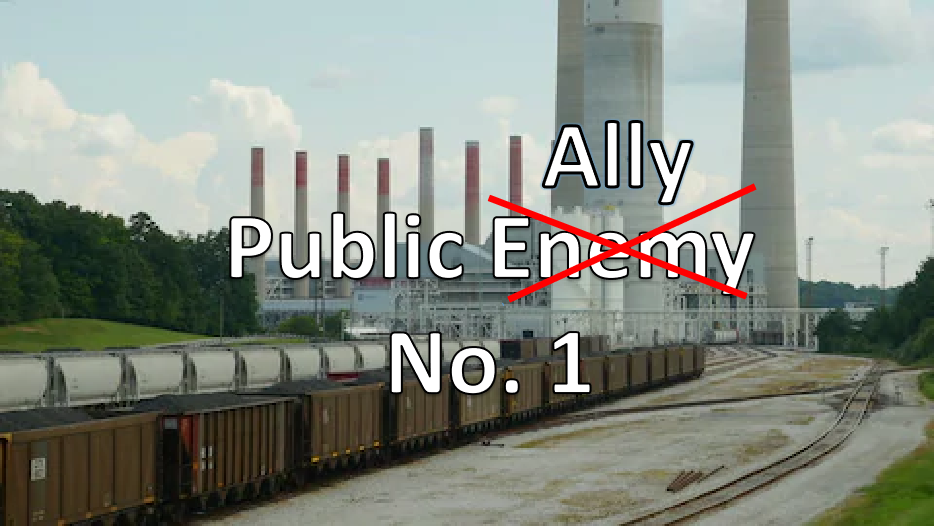
Then the narrative changed, and the industry went from relative obscurity to Public Enemy Number One. By 2019, public animosity towards it reached a peak, with orchestrated mass protests around the globe. 2020 brought a near-death experience as Russia and OPEC decided to decimate prices in a battle for market control, and all the anti-hydrocarbon protesters switched from protesting to cheering, famously claiming that “oil was dead”, that oil prices would never recover because EVs were causing rapid demand destruction, and that the humane thing to do now was to justly transition all hydrocarbon workers to other industries.

Even typing that stuff now sounds like an alien experience, like walking around in a crowd without a mask.

The reason those conversations feel so outdated is because, today, it is clear that oil is about as dead as the internet. Some will of course say that high oil prices will hasten a transition to renewables, and that is true that it will make renewables more cost competitive (though still no match on the reliability front).

But consider that a rapid transition to renewables is impossible from a mining perspective alone.

The IEA has said that a global Net Zero 2050 transition would require four times the number of critical mineral mines by 2040 (a virtual impossibility when governments are making mining harder everywhere).  And the Geological Society of Finland calculated that a full transition via renewables/EVs would require more critical metals and minerals than there are known global reserves.

If you are still on the fence as to whether hydrocarbons’ days are numbered, consider that Germany, the world’s most advanced energy-transition country, just days ago mused that drilling for new oil/gas deposits in the arctic sounds like a pretty good idea.

Consider also that this is the new-ish Green-led government saying this. Keep in mind also that any arctic development takes years at a minimum, so these developments have nothing to do with this immediate crisis. If Germany is plotting decade-length oil/gas developments, that tells you all you need to know about the demise of hydrocarbons. There isn’t one.

But that doesn’t answer the question at hand. What will people in the industry do? Will they bolt and get retrained in something else? There are a variety of situations of course, but one is far more ominous than the others. Here’s a bit of a dissection.

Process people will most likely keep processing; any occupations that are in perpetual flow states will likely not stop because of a lack of employees. If you are a gas marketer or pipeline scheduler or refinery manager, there isn’t a visible break point in the continuity of business.

But producers are different. Much different. Next year’s barrel of production won’t necessarily and automatically appear as part of a continuous flow. A lot of very capable brain power needs to be enacted, crews hired and managed, etc. Finding and developing new oil/gas flows is a choice.

If no one chooses to find and produce more petroleum, the flow slows, then stops. If geological talent dries up/retires/moves on, new production doesn’t just happen. Same with drilling crews or completions experts or – dare I say it – truckers.

Anti-hydrocarbon sentiment rums deep in academic institutions, yet it is those very institutions new employees will have to navigate if they are to land in the oil patch. It is no longer “just another option”. There is stigma attached to petroleum programs.

There is venom coming your way from complete strangers. It should then be no surprise that students are acting accordingly; they are going elsewhere. In one US study, from 2016-19, the US petroleum engineering student count fell by 60 percent, and no doubt has fallen further since. Even here in the heart of the Canadian oil patch, the University of Calgary has suspended the petroleum engineering program after the student count fell to an all time low of 10 – and that’s over a two year period.

What if no one chooses to look for oil anymore? Yes, ten thousand western elites will cheer wildly, but billions of trucker-grade people around the world that need that fuel for survival will say WTF, or some such local equivalent.

Those ten thousand western elites will tell all the global plebeians Hey, don’t worry! Solar panels are on the way. And the billions will say Yeah…but can I get a fridge that has power for more than six hours a day? And western elites will say Nope! But don’t worry batteries are on the way. And billions of those plebeians will say Great! When? And western elites will say Battery storage is cheaper than its ever been! And the plebes will say Great! When? And western elites will say Death to fossil fuels! And the plebes will ponder in awe the presumed mysticism and superiority of elite non-sequiturs, little conversational re-directs that the great unwashed masses simply aren’t worthy of comprehending, and then they will starve to death.

And the hydrocarbon producers will be sitting there wondering what to do next. They’ll answer the phone and second cousin Moonbeam from Toronto or San Francisco will be shrieking about how you’re killing the planet.  But you’ll turn on the news and hear that it is a moral imperative to produce more oil since all you oil guys are rolling in money which will be true.  But then the politicians will be saying ‘We’ll take that windfall money btw and then whatever is left better be going into green projects.  But yes you had better increase production right now and we mean right now but only for this year and then everyone should divest fossil fuels.  And we’ll see you in court for all the emissions you’ve unilaterally created over the past century, and maybe the fines will be deductible from the windfall tax and maybe not.  We’ll let you know when we’re good and ready.’.

If this sounds melodramatic it isn’t. In fact, the situation is far more critical than it sounds, in terms of global impact: there is a multi-trillion dollar behemoth of a fuel system that keeps humanity alive. It is 80 per cent hydrocarbon-based. There is at present no substitute. Most parts of that system function conditionally – they require a non-stop flow of hydrocarbons.

The various components of this huge system have “something to do” because, and only because, a relatively small group of people and entities at the origin of that system, the upstream, choose to keep it full. This small group looks at seismic, looks at well logs, drills wells, does production plans, builds small scale infrastructure to bring this energy life-blood on stream. Without those few people the system withers just as does a plant pulled from the ground.

A lack of expertise and/or interest in bringing new hydrocarbons to market will mean that the world’s supply dries up. Good, the ten thousand activists will say. Good, you might say, let’s see who needs who. But these other seven-plus billion won’t be too thrilled at all. No fuel, no fertilizer, no food. All because of choices we’ve made here in the west.

So? Will you continue to power the world or not? A lot of hungry mouths are desperate to hear a yes. Those in power here in the west, the ones that control your economic destiny, have a crazed and volatile look in their eyes as they try to figure it all out, but are publicly unable to support you because they’ve been kicking you in the ribs for a long time and it’s kind of hard at that point to stop and call all the other kickers bullies.

Don’t look at me, I have no idea what happens next. All I can say is that at the point it becomes optional, I will choose not to put my head in the vise any longer. I suspect I am not alone.

Postscript on Petroleum Companies \Outlook and Viability

Outlook 2022: Oil Industry from Proshare

Chart 22: Global oil demand (mb/d) 2019 -2022

Source: OPEC, Proshare Research * OPEC’s Predictions

In the OECD countries, there were larger-than-expected oil demands in H1 2021. However, oil demand struggled to recover to the pre-pandemic level due to lower demand for industrial and transportation fuels for the rest of the year. Oil demand within the OECD for 2021 mirrored the slow phase of economic growth due to supply chain disruptions and the uptick in COVID-19 cases.

Meanwhile, non-OECD’s oil demand in 2021 fluctuated for the better part of the year on demand swings from China and India. China’s crude imports started the year relatively high but fell to an average of 8.9 mb/d in October, the lowest since February, as refiners lacked import quotas and mobility remained limited on the back of the Zero-Covid-19 policy implemented in the country. India’s crude imports also fell to an average of 4.0 mb/d in October, following 2 months of successive gains. Thus, the Covid-19 and supply chain induced soft patches in H2 2021 across Asia impacted considerably on the global oil demand in 2021.

Illustration 30: Determinants of Crude Demand in 2021

Oil Supply

The global oil supply for the year 2021 was driven mainly by the decision of OPEC+, which strived to achieve balance in the oil market.

The share of OPEC in global oil production stood at about 27.7% in 2021, with an average production of about 26.32 mb/d (see chart 24 below).

Chart 24: Global Oil Supply (mb/d) 2019 – 2022

Source: OPEC, Proshare Research * OPEC’s Predictions

Oil Prices

The tightness in the market kept oil prices elevated in 2021. Despite the lingering Covid-19 pandemic, demand had more robust fundamentals while supply was constrained by underinvestment, low spare capacity, and outages. The global oil market began the new year 2021 with a price rally above the 2020 average, and both benchmark contracts reached their 2021 highest in October, with Brent at US$86.70 and WTI at US$85.41 per barrel. Brent price averaged US$71.2 per barrel in 2021, up by 63.3% Y-o-Y above the US$43.6 per barrel average in 2020. Brent increased from about US$51 per barrel in January 2021 to about US$79 per barrel in December 2021, representing a gain of about +55% YTD (see chart 25 below).

Chart 25: Brent Crude Price in 2021 (US$/barrel)

Source: Oilprice, Proshare Research