SBC: Social Benefits of Carbon

Recently I posted on the Social Cost of Carbon: Origin and Prospects, which has become a focus for the Trump transition team. An article from Bloomberg provided a good historical context and overview of that policy instrument. The discussion noted major issues with how the damages are estimated and focused on how the calculation depends greatly upon the arbitrary choice of discount rate.
Several commenters raised a quite separate problem, namely that SCC is biased by addressing only estimated damages from CO2 and not the social benefits. That is not surprising since the entire purpose of the SCC is to get a large enough dollar figure to justify imposing expensive regulations, supposedly to avoid the damages by reductions in CO2 emissions. The framers had no interest or incentive to reduce damage estimates by considering benefits.
However a normal cost/benefit analysis would only project damages net of the expected benefits, which is clearly not the case here. Let’s consider three categories of Social Benefits of Carbon which properly must be included, rather than ignored.
Social Benefits from the Energy
Climate advocates assume that burning fossil fuels provide immediate benefits, such as electrical power or horsepower, which are paid for in the purchase of the fuels and realized by the consumers. Thus the social costs pertain only to future damages not covered by the fuel market prices. This view is achieved by wearing blinders to many obvious future social benefits attributable to the reliable and affordable energy from fossil fuels.
Alex Epstein (here) is among those who demonstrate from public information sources comparisons between societies who use carbon fuels extensively and those who do not. The contrast is remarkable: Societies with fossil fuels have citizens who are healthier, live longer, have higher standards of living, and enjoy cleaner air and drinking water, to boot. Not only do healthier, more mobile people create social wealth and prosperity, carbon-based energy is heavily taxed by every society that uses it. Those added government revenues go (at least some of it) into the social welfare of the citizenry. By almost any measure, carbon-based energy makes the difference between developed and underdeveloped populations.

Social Benefits from CO2 Fertilization
SCC excludes any consideration of the positive effects upon the biosphere from higher concentrations of CO2 in the atmosphere. It has been proven by numerous studies that plants thrive when more than 400ppm of CO2 are in the air, and greenhouse operators routinely add CO2 to double or triple the amount inside their facilities.
Yet climatists are at pains to discredit the benefits of more CO2.
A few years ago a scientist analyzed satellite imagery and discovered that the planet is greening (adding plant coverage) at a higher rate most likely due to more CO2 in the air. Climate activists are putting pressure upon these researchers to recant their findings.
A recent post Researchers Against CO2 revealed how activist scientists are trying to overturn the extensive biological evidence that plants love CO2. Field experiments are conducted claiming that plants don’t always grow bigger and faster with more CO2 when there are other limiting factors such as moisture, sunlight or soil nutrients. Their logic fails since more CO2 doesn’t cause the lack of other growth factors, and reducing CO2 will not improve those circumstances.
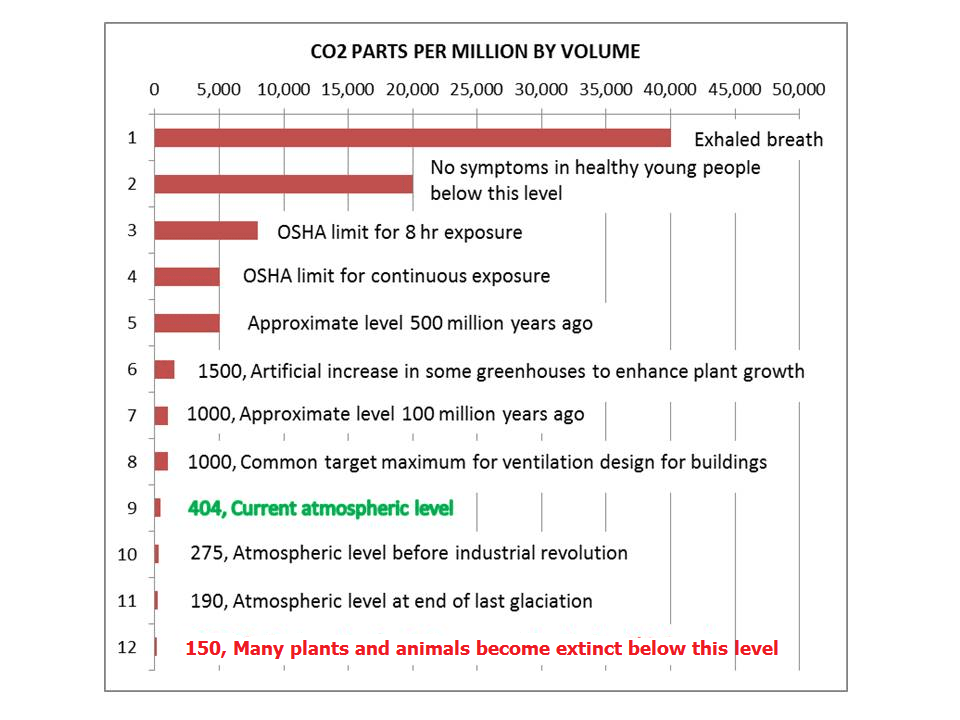
Another attack on CO2 benefits is the claim of ocean acidification, and I would not be surprised if SCC includes damage estimates from this source. Facts on the ground (or in this case, the oceans) do not support the claims, as reported in this post on Basics of Ocean Acidification.

Even crabs love CO2.
Social Benefits from Global Warming
Here we face the full force of billions of dollars of research studies on the damaging impacts from a few degrees of temperature increase. Over the years, everything has been shown to suffer from global warming, from A to Z. From Acne to Zika virus, and every letter in between: Bees, Civil wars, Diseases, Extinctions, Fish, etc.
Here’s the thing: Social Cost of Carbon is actually an attempt to estimate the benefits of preventing all those A to Z damages. But where are the estimates of benefits by preventing damages from global cooling?
A few researchers such as Richard Tol have looked objectively at warming scenarios, and identified clear social benefits. One study (here) concluded that an additional degree Celsius of warming by 2040 would likely result in 800,000 fewer deaths each year. Is that not a benefit to be reckoned? Reasonable people conclude that the last 1°C of warming was a boon to civilization, and the next 1°C is likely to also be a blessing.
There are problems with this category. How do you put dollar values on saving human lives, or projected reductions in crops due to colder weather? These are the same problems bedeviling the SCC calculations.
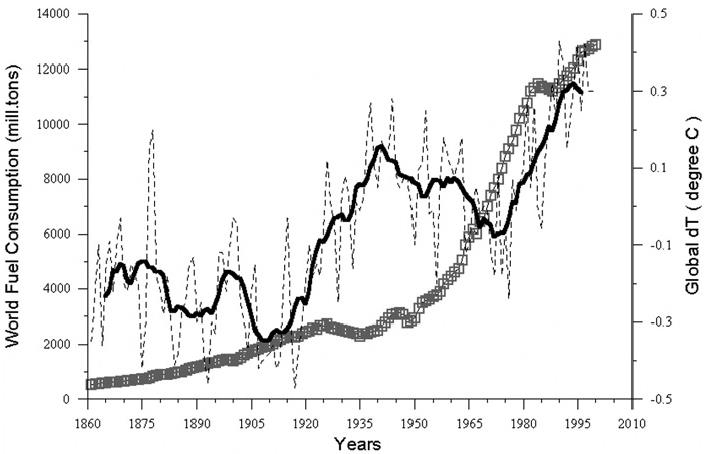
Further, many are wary of accepting the premise that carbon-based fuels do in fact cause temperatures to rise. Certainly the poor correlation between fuel consumption and global mean temperatures (GMT) does not convince (more here). Still, the argument can be made that even if you believe in man made global warming, policy analysis must also consider the benefits from a warmer world.
Summary
Calculating future costs and benefits from using carbon-based fuels is much like going down Alice’s rabbit hole. Things get distorted, turned upside down and sideways. Or to change the metaphor: Beware: this swamp has alligators.


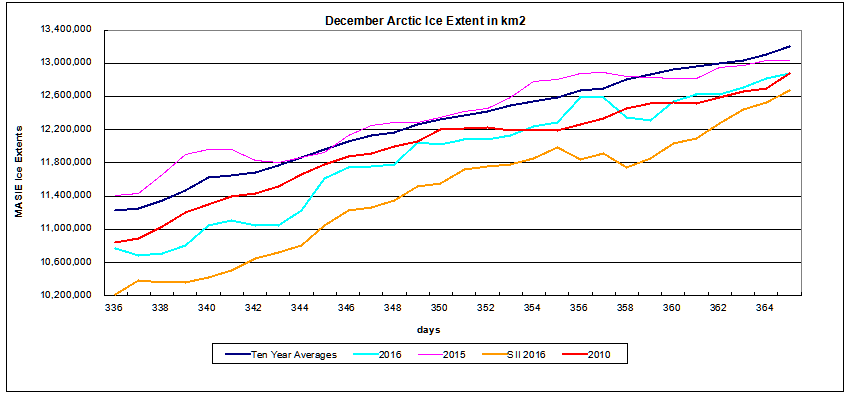

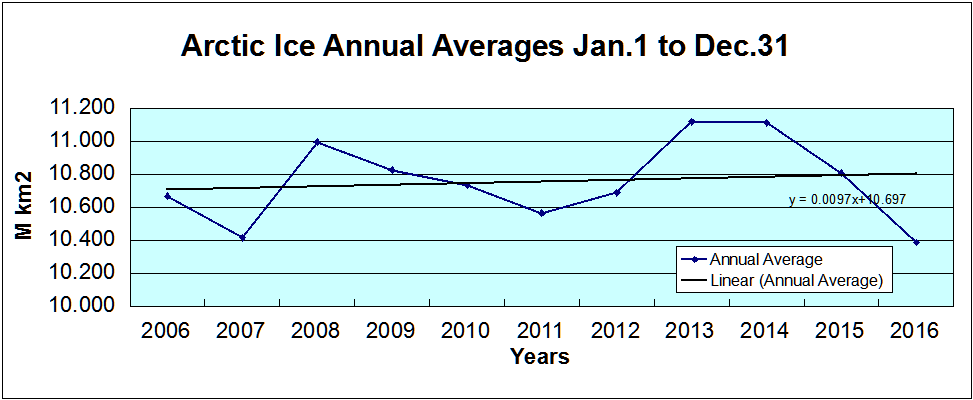







![Figure 1: The Svalbard temperature record 1912–2010 [4], showing the mean annual air temperature (MAAT), the average summer temperature (JJA), and the average winter temperature (DJF). Thin lines show annual values, and thick lines show the simple 5 yr average. The linear MAAT increase 1912–2010 is 0.23°C per decade.](https://rclutz.com/wp-content/uploads/2016/12/175296-fig-001.jpg)





 Science Matters