Silence of Conservative Lambs

The 1991 blockbuster movie revolved around meek, silent victims preyed upon by malevolent believers in their warped, twisted view of the world.  A comparison can be drawn between how today’s conservative thinkers and politicians respond to advocates of the pernicious global warming/climate change ideology. Instead of challenging and pushing back against CO2 hysteria, and speaking out with a rational climate perspective, Republicans in the US, and Conservatives in Canada and elsewhere are meek and silent lambs in the face of this energy slaughter.  Worse, when they do speak it is to usually to pander and try to appease offering proposals for things like carbon taxes or other non-remedies for a non-problem, essentially ceding the case to leftists.

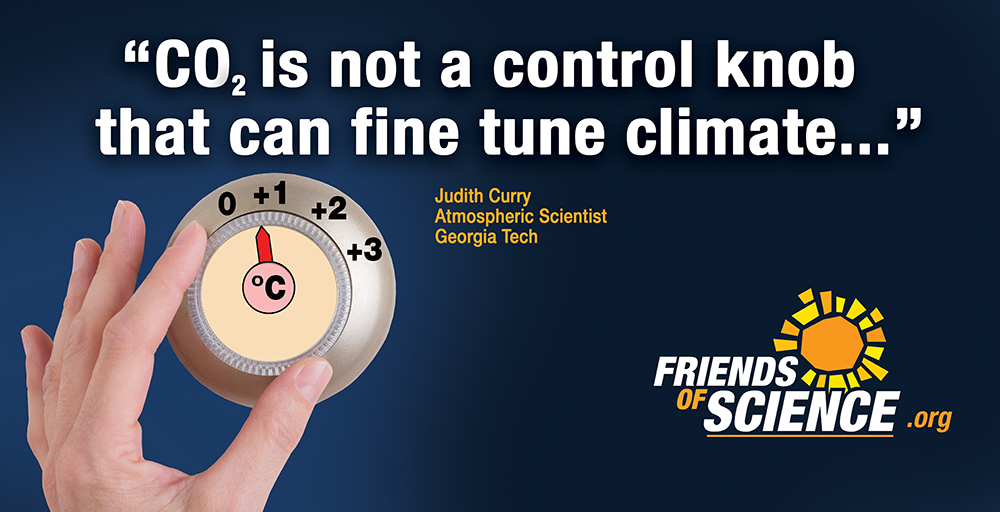
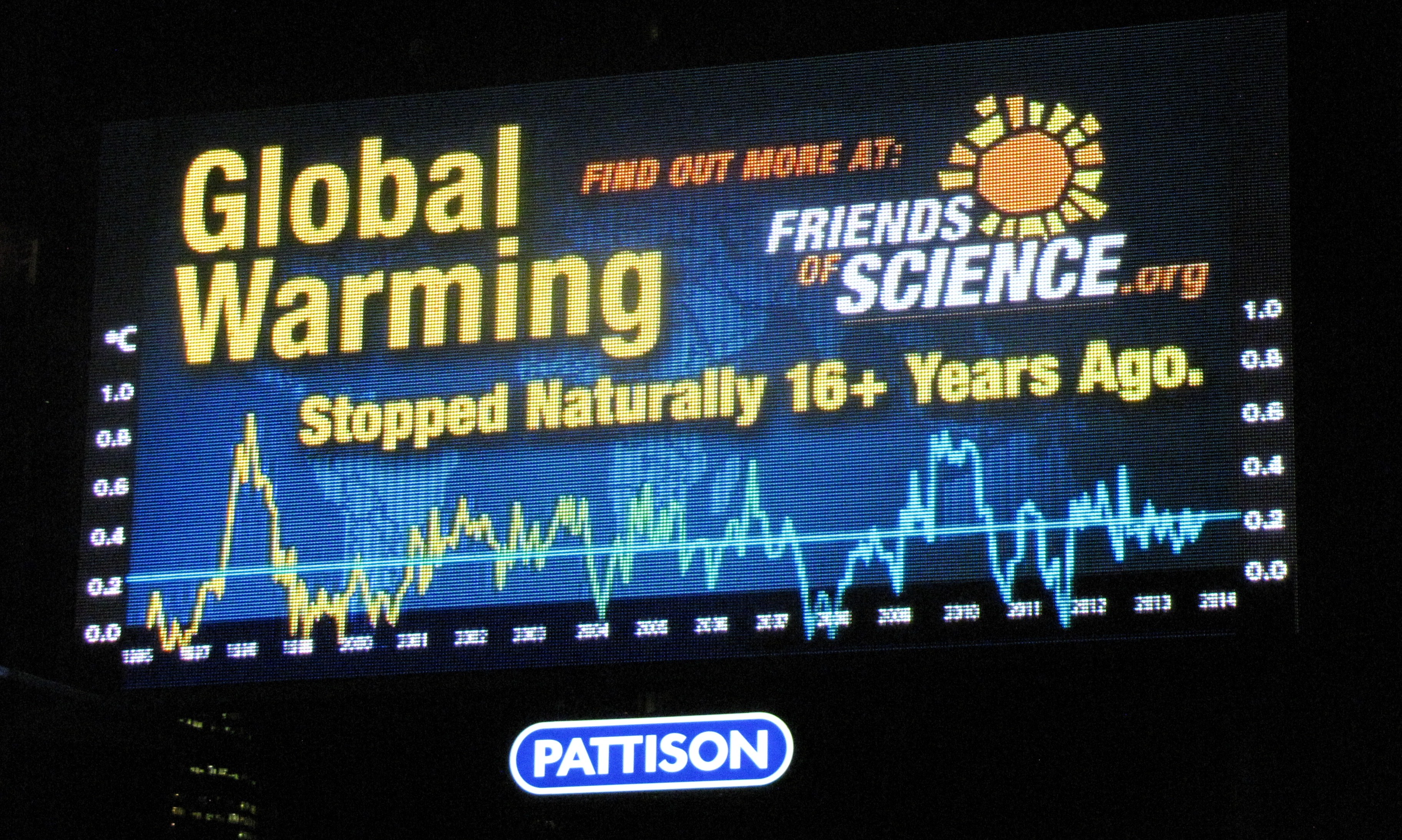
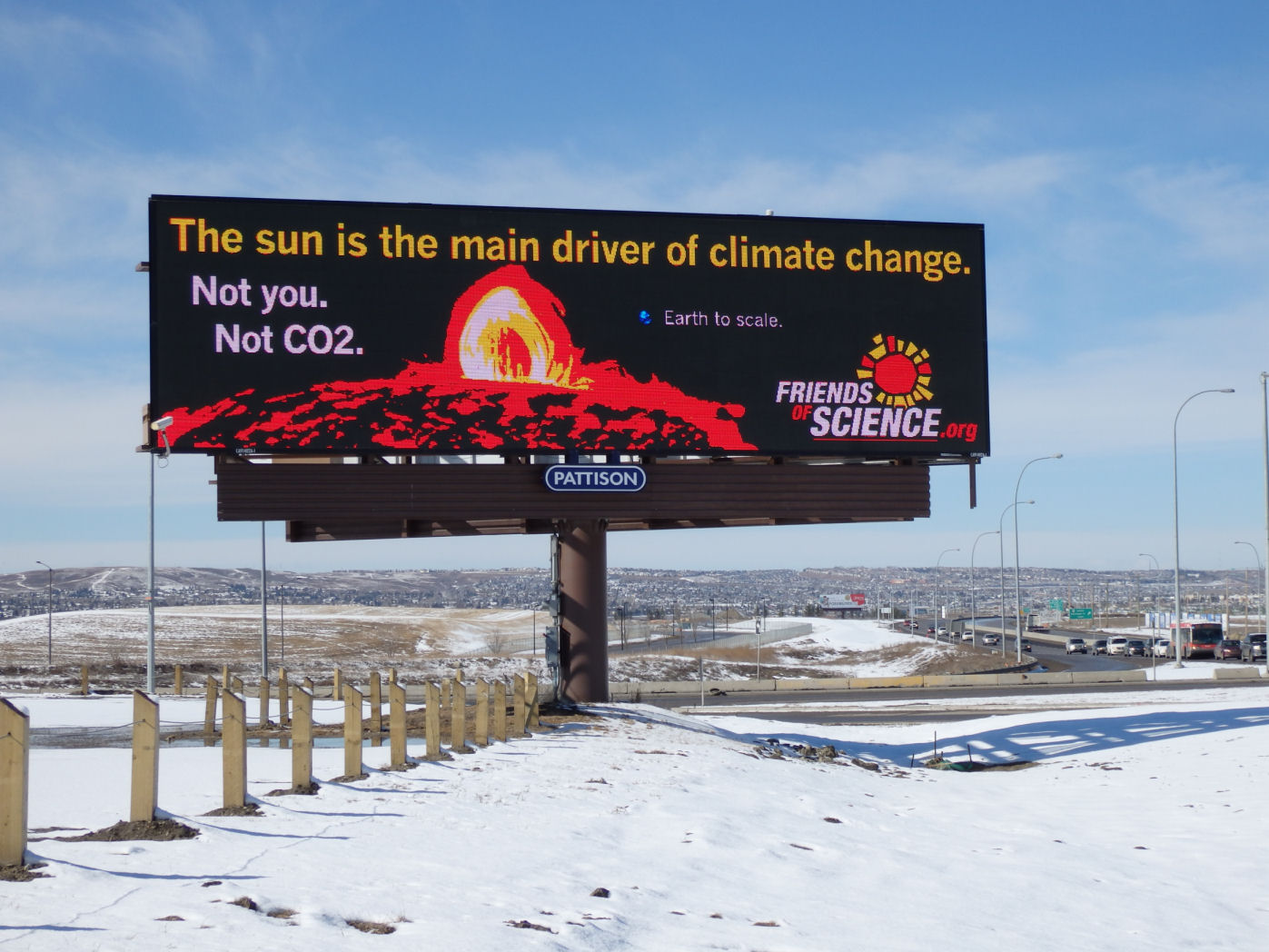
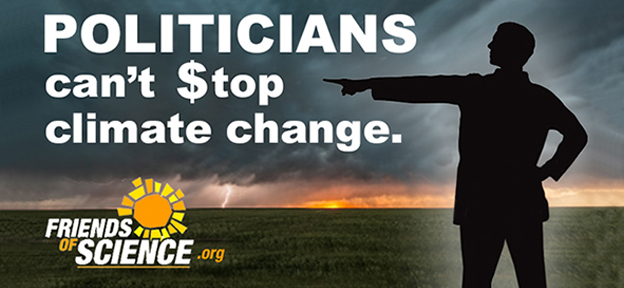
Tom Harris of International Climate Science Coalition – Canada explains in his Financial Post article Tom Harris: The Tories should shape climate opinion, not just respond to it.  Excerpts in italics with my bolds and added images from Friends of Science billboard campaign.

Grassroots conservatives need to ask CPC leadership candidates why, if they really support Canadian energy, they don’t contest climate alarmism

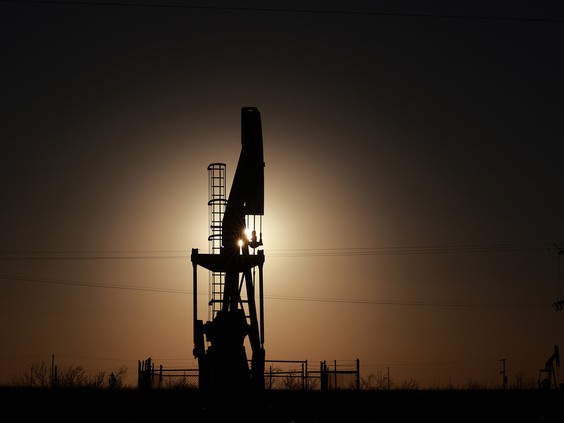
When CPC leadership candidates defend Canadian oil and gas, they either support, acquiesce to, or say nothing about the climate scare. PHOTO BY JOE RAEDLE/GETTY IMAGES

The common wisdom among candidates for leadership of the Conservative Party of Canada (CPC) is that the party must have a credible plan to reduce greenhouse gas emissions if it is to have a fighting chance to form the next government. As former Quebec premier Jean Charest said in the Edmonton debate on May 11, “we will not be elected as a political party if we’re not credible” about putting a price on carbon for large emitters.

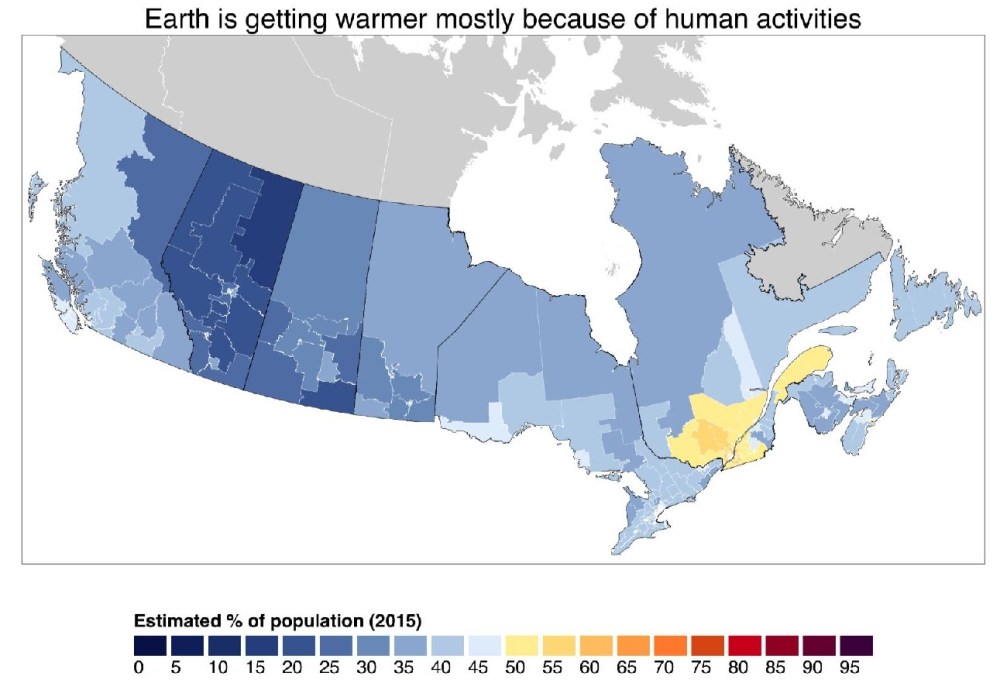
The strategists’ thinking is that, given current public support for reducing emissions to “stop climate change,” the CPC has no choice but to follow along or risk electoral defeat. And public opinion polls, like one from Abacus Data last October, do typically find that a majority of Canadians, in that poll 66 per cent, “would like to see governments in Canada put more emphasis on reducing emissions.”

[For the politics of climate polling see Uncensored: Canadians View Global Warming]

But the strategists are wrong. The candidates are giving up a golden opportunity to win the votes, not just of the many grassroots conservatives who oppose the climate scare,
but of Canadians at large in the next election.

A 2012 paper published in the journal Climatic Change suggests why. Three scholars — Robert J. Brulle of Drexel University, Jason Carmichael of McGill and J. Craig Jenkins of Ohio State — looked at 74 separate surveys over a nine-year period to try to figure out which factors had the greatest influence on public views on climate change. They considered five possibilities: extreme weather events, scientific information, media coverage, advocacy, and what politicians and political parties were saying on the subject. Surprisingly, they found that neither extreme weather events nor the promulgation of scientific information had a significant impact. Media coverage did, but the strongest effect came from the positions of competing politicians and political parties.

When politicians across the political spectrum supported the narrative
of man-made climate change, the public’s demand for action rose.

We see that today in Canada, with all major political parties supporting action on greenhouse gas emissions. On the other hand, when politicians questioned the narrative, as Congressional Republicans frequently did, the public’s demand for action dropped — substantially. The scholars’ analysis supported the 2009 conclusion of Harvard University’s Susan McDonald that: “When elites have consensus, the public follows suit and the issue becomes mainstreamed.

When elites disagree, polarization occurs, citizens rely on other indicators
to make up their minds.”

These findings are consistent with other studies that have demonstrated the leading role politicians and political parties play in shaping public opinion on issues. It’s a little like the tail wagging the dog but public opinion supporting government climate policy seems at least partly due to the lack of coherent opposition to the policy on the part of opinion-makers — especially elected officials.

If that’s true, then instead of citing public opinion polls that support climate policies they may be skeptical of, why don’t politicians and political strategists work to change public opinion? As conservative strategist and former policy aide to Stephen Harper, Joseph Ben-Ami, put it in a 2021 study for ICSC-Canada: “The answer may come down to inexperienced politicians and their advisers not understanding their power to influence public opinion. They look at polls and conclude that they have no hope of getting elected unless they climb onto the current public opinion bandwagon.

They fail to understand that the reason the public believes what it does is largely because they (politicians) aren’t making the opposite case.”

This phenomenon is widespread in Canada, and on many topics, not just climate change. At all levels of government, politicians use language and promote policies they very likely disagree with because they think public opinion leaves them no choice. As Ben-Ami argues, the result is a “feedback loop” where politicians’ “response” to public opinion is in reality the principal driver of the public opinion to which they are supposedly responding. The more obsequious their responses, the more entrenched that public opinion becomes, which then results in even more obsequious responses from even more frightened politicians.

Climate activists don’t pull their punches. They want an end
to all of Canada’s oil and gas development as soon as possible.

And, sadly, they are being helped by many in the press, government and other institutions. But a fast phase-out would be immensely costly. Besides contributing $105 billion to Canada’s GDP in 2020, oil and gas provided $10 billion in average annual revenue to governments between 2017 and 2019. Yet, when CPC leadership candidates defend Canadian oil and gas, they either support, acquiesce to, or say nothing about the climate scare.

Grassroots conservatives need to ask the candidates why, if they really support Canadian energy, they don’t contest climate alarmism, which is by far the greatest threat to that energy.

Tom Harris is executive director of International Climate Science Coalition – Canada.

Footnote: 

The billboards are from a campaign to inform the public by Friends of Science, not to be confused with the predatory Fiends  Friends of the Earth in the UK.

Calgary Climate Change Billboard campaign shows
Five Key Points of Cli-Sci Uncertainty says Friends of Science


Climate Politics Drama Thickens

This Netflix show is just releasing its fourth season where I live, and it promises a look into climate political intrigue.  For those not familiar, the historical protagonist of Borgen is Birgitte Nyborg (Sidse Babett Knudsen), who in Season 1 became the first woman to take up the post of Prime Minister in Denmark. She portrays a determined politician, shrewd and willing to engage in political street fighting in order to gain and to keep power.  She is also an avatar of the progressive globalist contemporary leader, embracing the woke ideology of diversity, nanny state intervention, and of course saving the planet from CO2.

This new season presents a juicy predicament for Birgitte, who is now Foreign Minister under another female PM.  The fourth season opens with the discovery of major oil fields in Greenland. Local politicians announce this without first consulting with their Danish counterparts – a problem of no small importance, since the international interests of the island are the responsibility of the government of Denmark. It’s also a bit of a headache for Birgitte, who was elected under a program that promised commitment to fighting climate change and therefore shouldn’t defend Greenland’s desire to exploit this unexpected new resource.

This is further complicated when, discussing it with other Nordic colleagues, Birgitte discovers that Russia and China would have interests linked to the Greenlandic issue, making a situation that was far from easy from the start even more delicate. Birgitte’s knee-jerk public statement in response to the oil discovery is along the lines:  “We’ve committed ourselves to zero emissions by 2050, and this can’t be allowed to defeat that achievement.”  That zero commitment was made so as to belong in the Globalist ranks, without any critical examination of IPCC dubious suppositions.

Meanwhile,  the Greenlanders are enthralled with the prospect of prosperity and a leap forward in their standard of living. Presumably the writers will have their avatar win by holding to her progressive line, so a St. Paul Damascus awakening is highly unlikely in the coming episodes.

Still, stranger things have happened, such as the satirical blast of lucidity
in the final episode of the BBC TV show, Yes, Prime Minister.

Update Dec. 2019 Yes PM Pokes Fun at Climatism

GWPF published a letter from the late Sir Antony Jay, co-creator of Yes, Minister and Yes, Prime Minster, attacking the BBC for its blatant bias on climate change 8 years ago.  It seems timely to repost the final episode from the final season addressing the topic of global warming/climate change.  As you see, climate politics have not changed very much.

Part 1 of the program is here:

Part 2

Previously I posted this:

A humorous look at why the global warming campaign and the triumphal Paris COP make sense.

Yes Minister explains it all in an episode from 2013.  This is an all-too-realistic portrayal of political climatism today.

When I realized that BBC had blocked the viewing of the video, I sought and found the subtitles for Yes Prime Minister 2013, Episode 6, “A Tsar is Born”.  That final episode for the series began with the dialogue in the first video above.

Below is  the dialogue that formed the episode conclusion, and which was the content of the blocked video.

The Characters are:

Sir Humphrey Appleby
Cabinet Secretary

Jim Hacker
Prime Minister

Claire Sutton
Special Policy Adviser

Bernard Woolley
Principal Private Secretary to the Prime Minister

(Dialogue beginning at 20:16 of “A Tsar is Born”)

Humphrey I have returned with the answer to all your problems.
Global warming.

Jim I thought you were against it?

Humphrey Everybody’s against it, Prime Minister.
I suddenly realised that is the beauty of it.
We can get a unanimous agreement with all of our European partners
to do something about it.

Jim But how can we do something about
something that isn’t happening?

Humphrey It’s much easier to solve an
imaginary problem than a real one.

Jim You believe it’s real?

Humphrey Do you? I don’t know.

Jim Neither do I. Haven’t got the faintest idea!

Humphrey But it doesn’t matter what we think.
If everyone else thinks it’s real, they’ll all want to stop it.
So long as it doesn’t cost too much.
So the question now is, what are we going to do about it?

Jim But if it isn’t happening, what can we do about it?

Humphrey Oh, there’s so much we can do, Prime Minister.
We can impose taxes, we can stiffen European rules about
carbon emissions, rubbish disposal.

We can make massive investments in wind turbines.
We can, in fact, Prime Minister, under your leadership, agree to save the world.

Jim Well, I like that!
But Russia, India, China, Brazil, they’ll never cooperate.

Humphrey They don’t have to. We simply ask them to review their emissions policy.

Jim And will they?

Humphrey Yes. And then they’ll decide not to change it.
So we’ll set up a series of international conferences.
Meanwhile, Prime Minister, you can talk about the future of the planet.

Jim Yes.

Humphrey You can look statesmanlike.
And it’ll be 50 years before anybody can possibly prove you’re wrong.
And you can explain away anything you said before by saying the computer models were flawed.

Jim The voters will love me!

Humphrey You’ll have more government expenditure.

Jim Yes. How will we pay for it? We’re broke.

Humphrey We impose a special global warming tax on fuel now,
but we phase in the actual expenditure gradually. Say, over 50 years?
That will get us out of the hole for now.

Bernard The Germans will be pleased.
They have a big green movement.

Claire And we can even get the progs on board!

Bernard As long as they get more benefits than everyone else.

Jim My broadcast is on Sunday morning.

Humphrey You have a day to get the conference to agree.

Jim That’s not a problem.
The delegates will be desperate for something to announce
when they get home.
There is one problem.
Nothing will have actually been achieved.

Humphrey It will sound as though it has.
So people will think it has.
That’s all that matters!

(Later following the BBC interview, beginning 27:34)

Bernard Oh, magnificent, Prime Minister!

Humphrey I think you got away with it, Jim,
but the cabinet will have been pretty surprised.
We’ll have to square them fast.

Jim Bubbles!

Humphrey We’re not there yet.
After that interview, you’ll need to announce some pretty impressive action.

Jim An initiative.

Humphrey Yes.

Claire A working party?

Humphrey Bit lightweight.

Bernard A taskforce?

Humphrey Not sure.

Jim Do we have enough in the kitty?

Claire It could be one of those initiatives that you announce
but never actually spend the money.

Jim Great. Like the one on child poverty.

Bernard Maybe it should be a government committee?

Jim Well what about a Royal Commission?

Humphrey Yes!
It won’t report for three years, and if we put the right people
on it, they’ll never agree about anything important.

Jim Right! A Royal Commission!
No, wait a minute, that makes it sound as if we think
it’s important but not urgent.

Claire Well, what about a Global Warming Tsar?

Jim Fine! Would that do it?

Humphrey No, I think it might need a bit more than that, Prime Minister.
It’ll mean announcing quite a big unit, and an impressive salary for that Tsar,
to show how much importance you place upon him.

Jim No problem. Who would it be?

Humphrey Ah, well, it can’t be a political figure.
That would be too divisive.
It has to be somebody impartial.

Jim You mean a judge?

Humphrey No, somebody from the real world.
Somebody who knows how to operate the levers of power,
to engage the gears of the Whitehall machine,
to drive the engine of government.

Jim That’s quite a tall order.
Anybody got any ideas?

Humphrey… Could you?

Bernard Oh!

Humphrey Yes, Prime Minister.

The End.

Footnote

CO2 hysteria is addictive. Here’s what it does to your brain:

Just say No!

The Cooling Also Not Our Fault

With the lack of global warming and the steep decline of surface temperatures the last 6 to 8 months, climatists are pivoting to the notion invented by the infamous M. Mann, AKA Mr. Hockey Stick (aiming to erase the Medieval warming period).  The reasoning is convoluted, as you might expect given the intent to blame cold weather on global warming.  The claim is that burning fossil fuels causes the North Atlantic Current to slow down and bring cold temperatures to the Northern Hemisphere.  The video below is an excellent PR piece promoting this science fiction as though it were fact.


The link below allows you to view it in its natural habitat (USA Today)

https://www.usatoday.com/videos/tech/science/2019/03/20/ocean-conveyor-belt-slowdown-could-lead-major-climate-changes/3223463002/

Science Facts to Counter Science Fiction

Natural variability has dominated Atlantic Meridional Overturning Circulation since 1900
Mojib Latif et al. published April 2022 Nature Climate Change.  Excerpts in italics with my bolds.

Abstract

There is debate about slowing of the Atlantic Meridional Overturning Circulation (AMOC), a key component of the global climate system. Some focus is on the sea surface temperature (SST) slightly cooling in parts of the subpolar North Atlantic despite widespread ocean warming. Atlantic SST is influenced by the AMOC, especially on decadal timescales and beyond. The local cooling could thus reflect AMOC slowing and diminishing heat transport, consistent with climate model responses to rising atmospheric greenhouse gas concentrations.

Here we show from Atlantic SST the prevalence of natural AMOC variability since 1900. This is consistent with historical climate model simulations for 1900–2014 predicting on average AMOC slowing of about 1 Sv at 30° N after 1980, which is within the range of internal multidecadal variability derived from the models’ preindustrial control runs. These results highlight the importance of systematic and sustained in-situ monitoring systems that can detect and attribute with high confidence an anthropogenic AMOC signal.

Main

Global surface warming (global warming hereafter) since the beginning of the twentieth century is unequivocal, and humans are the main cause through the emission of vast amounts of greenhouse gases (GHGs), especially carbon dioxide (CO2)1,2,3. The oceans have stored more than 90% of the heat trapped in the climate system caused by the accumulation of GHGs in the atmosphere, thereby contributing to sea-level rise and leading to more frequent and longer lasting marine heat waves4. Moreover, the oceans have taken up about one third of the total anthropogenic CO2 emissions since the start of industrialization, causing ocean acidification5. Both ocean warming and acidification already have adverse consequences for marine ecosystems6. Some of the global warming impacts, however, unfold slowly in the ocean due to its large thermal and dynamical inertia. Examples are sea-level rise and the response of the Atlantic Meridional Overturning Circulation (AMOC), a three-dimensional system of currents in the Atlantic Ocean with global climatic relevance7,8,9,10.

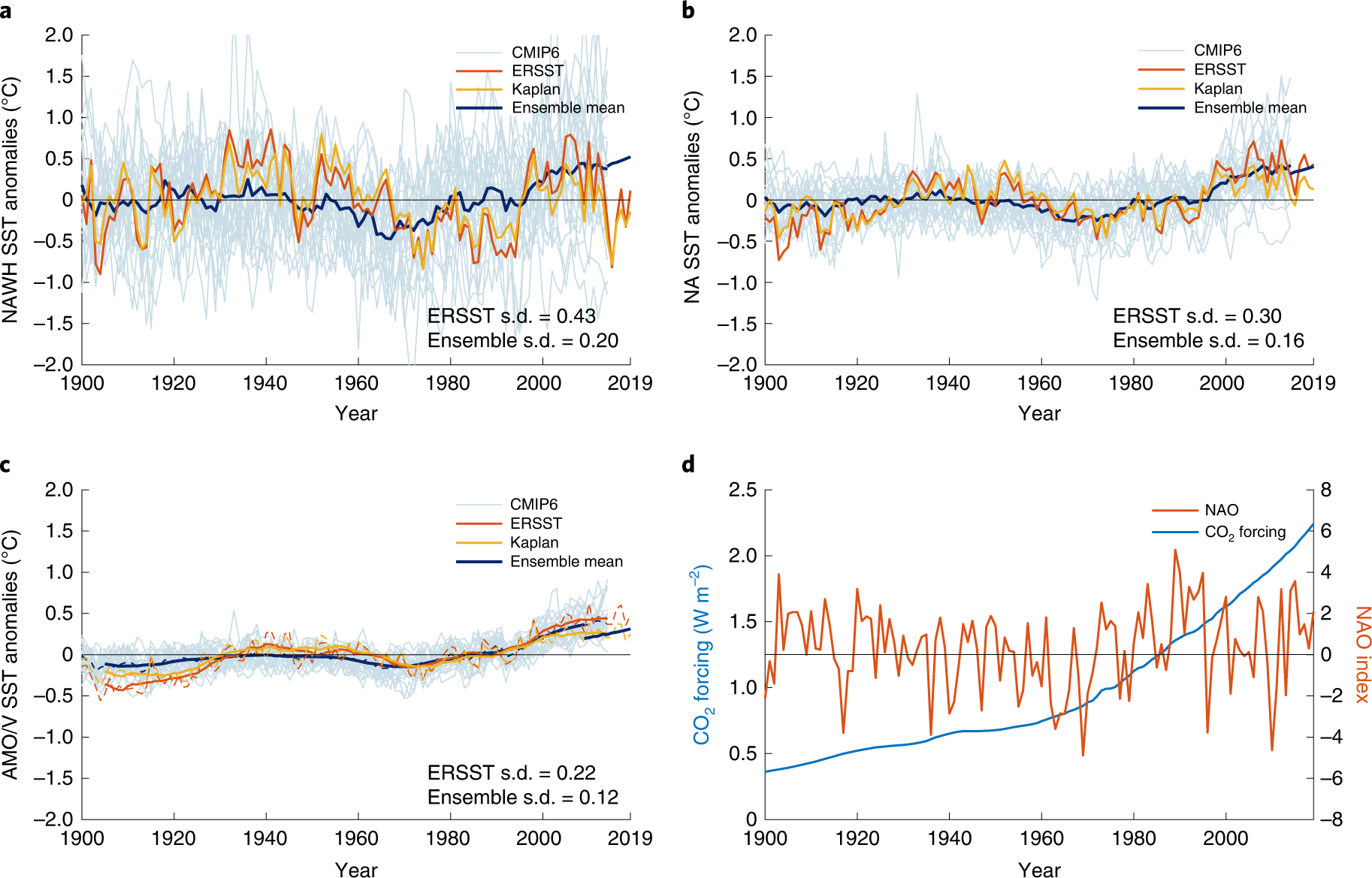
[Comment: The paragraph above is the obligatory statement of fidelity to the Climatist Creed. All the foundational claims are affirmed with references to prove the authors above reproach, and not to be dismissed as denialists.  As further evidence of their embrace of IPCC consensus science, consider the diagrams below.

a, The NAWH SST index (°C), defined as the annual SST anomalies averaged over the region 46° N–62° N and 46° W–20° W. Observations for 1900–2019 from ERSSTv.5 (orange) and Kaplan SST v.2 (yellow), and ensemble-mean SST for 1900–2014 (dark blue line) from the historical simulations with the CMIP6 models and the individual historical simulations (thin grey lines) are shown. b, Same as a but for the NA-SST index (°C), defined as the annual SST anomalies averaged over the region 40° N–60° N and 80° W–0° E. c, Same as a but for the AMO/V (°C) index, defined as the 11-year running mean of the annual SST anomalies averaged over the region 0° N–65° N and 80° W–0° E. The SST indices in a–c are calculated as area-weighted means. d, NAO index (dimensionless) for 1900–2019 (red), defined as the difference in the normalized winter (December–March) sea-level pressure between Lisbon (Portugal) and Stykkisholmur/Reykjavik (Iceland). The blue curve indicates the equivalent CO2 radiative forcing (W m−2) for 1900–2019, which is taken from the Representative Concentration Pathway (RCP) SSP5-8.5 after 2014.

Chart d shows the NAO fluxes compared to a CO2 forcing curve based upon the much criticized RCP 8.5 scenario, which is not “business-as-usual” but rather “business-impossible.” Using it shows the authors bending over backwards to give every chance for confirming the alarming slowdown narrative.  The next paragraph gives the entire game away]

Climate models predict substantial AMOC slowing if atmospheric GHG concentrations continue to rise unabatedly1,11,12,13,14. Substantial AMOC slowing would drive major climatic impacts such as shifting rainfall patterns on land15, accelerating regional sea-level rise16,17 and reducing oceanic CO2 uptake. However, it is still unclear as to whether sustained AMOC slowing is underway18,19,20,21,22. Direct ocean-circulation observation in the North Atlantic (NA) is limited9,23,24,25,26,27. Inferences drawn about the AMOC’s history from proxy data28 or indices derived from other variables, which may provide information about the circulation’s variability (for example, sea surface temperature (SST)21,29,30, salinity31 or Labrador Sea convection32), are subject to large uncertainties.

Discussion

Observed SSTs and a large ensemble of historical simulations with state-of-the-art climate models suggest the prevalence of internal AMOC variability since the beginning of the twentieth century. Observations and individual model runs show comparable SST variability in the NAWH region. However, the models’ ensemble-mean signal is much smaller, indicative of the prevalence of internal variability. Further, most of the SST cooling in the subpolar NA, which has been attributed to anthropogenic AMOC slowing21, occurred during 1930–1970, when the radiative forcing did not exhibit a major upward trend. We conclude that the anthropogenic signal in the AMOC cannot be reliably estimated from observed SST. A linear and direct relationship between radiative forcing and AMOC may not exist. Further, the relevant physical processes could be shared across EOF modes, or a mode could represent more than one process.

A relatively stable AMOC and associated northward heat transport during the past decades is also supported by ocean syntheses combining ocean general circulation models and data76,77, hindcasts with ocean general circulation models forced by observed atmospheric boundary conditions78 and instrumental measurements of key AMOC components9,22,79,80,81.

Neither of these datasets suggest major AMOC slowing since 1980, and neither of the AMOC indices from Rahmstorf et al.20 or Caesar et al.21 show an overall AMOC decline since 1980.

Contextual Background

From the Energy MIx Changes in Atlantic Current May Fall Within Natural Variability.  

In the February, 2022, edition of the journal Nature Geoscience, researchers at the University of Maryland Center for Environmental Science urged more detailed study of the notoriously complex Atlantic Meridional Overturning Circulation (AMOC). Now, oceanographer Mojib Latif and his team from the GEOMAR Helmholtz Centre for Ocean Research in Kiel, Germany are repeating that call in a paper just published in the journal Nature Climate Change.

The latest study describes the AMOC as a “three-dimensional system of current in the Atlantic Ocean with global climatic relevance.”

The February study responded to an August 2021 warning from the Potsdam Institute
that the AMOC has become wildly unstable and dangerously weak
due to global warming caused by human activity.

The authors of the latest study affirm that the Earth’s oceans have taken up more than 90% of the accumulated heat and roughly a third of all CO2 emissions since the dawn of the industrial age, leading to clearly measurable and devastating impacts like marine heat waves, sea level rise, and ocean acidification.

But it isn’t easy to confirm that the Atlantic circulation is actually slowing, partly because the ocean possesses such “large thermal and dynamical inertia.”

It is also extremely difficult to directly observe ocean circulation patterns in the North Atlantic, and proxies like sea surface temperature are “subject to large uncertainties,” the scientists say. Based on the available data, the GEOMAR study attributes localized sea surface cooling in the North Atlantic since 1900 to natural AMOC variability—not, as had been hypothesized, to a global heating-induced breakdown in the AMOC’s capacity to transfer heat.

Footnote:

See also from Science Norway Researchers and the media need to stop crying ‘wolf’ about the Gulf Stream


Radio Waves Over UN False Alarms

Tuesday I was interviewed on the radio regarding my rebutting UN False Alarms.  The image is a screen capture, and I didn’t know how to extract the audio file or embed the radio page.  With some help from my grandson, you can hear my segment below (a few commercials included).

The interview is also on the station website linked below.  My segment begins at 34:40 to the end

https://www.am1100theflag.com/show-episodes/48391-5-24-22-the-chris-berg-show?fbclid=IwAR3H1QsRKzveHDxOjf152b_49glhwX1I0zOSSXUvxm_pcuIIWGWauQBOWW0

Post Discussed in Interview Above

The Climate Crisis du jour comes from the World Meteorological Organization (WMO) public relations (PR) announcement Four key climate change indicators break records in 2021. 

As we shall see, each of them, along with other WMO claims, depends on first buying the story of global warming/climate change, and then looking at the world in a myopic, lop-sided way to confirm an alarmist POV.  Below are discussions of the main points from this latest attempt to monger fear in support of the IPCC agenda.

Sea Level Rise is Accelerating!  Not.

WMO says: Global mean sea level reached a new record high in 2021, after increasing at an average 4.5 mm per year over the period 2013 -2021. This is more than double the rate of between 1993 and 2002 and is mainly due to the accelerated loss of ice mass from the ice sheets. This has major implications for hundreds of millions of coastal dwellers and increases vulnerability to tropical cyclones.

WMO Proof:
Rational Response

Altimetry Estimates Are Unreliable
Tidal Gauges show slow, steady coastal rise
Land subsiding or rebounding Makes Local Differences

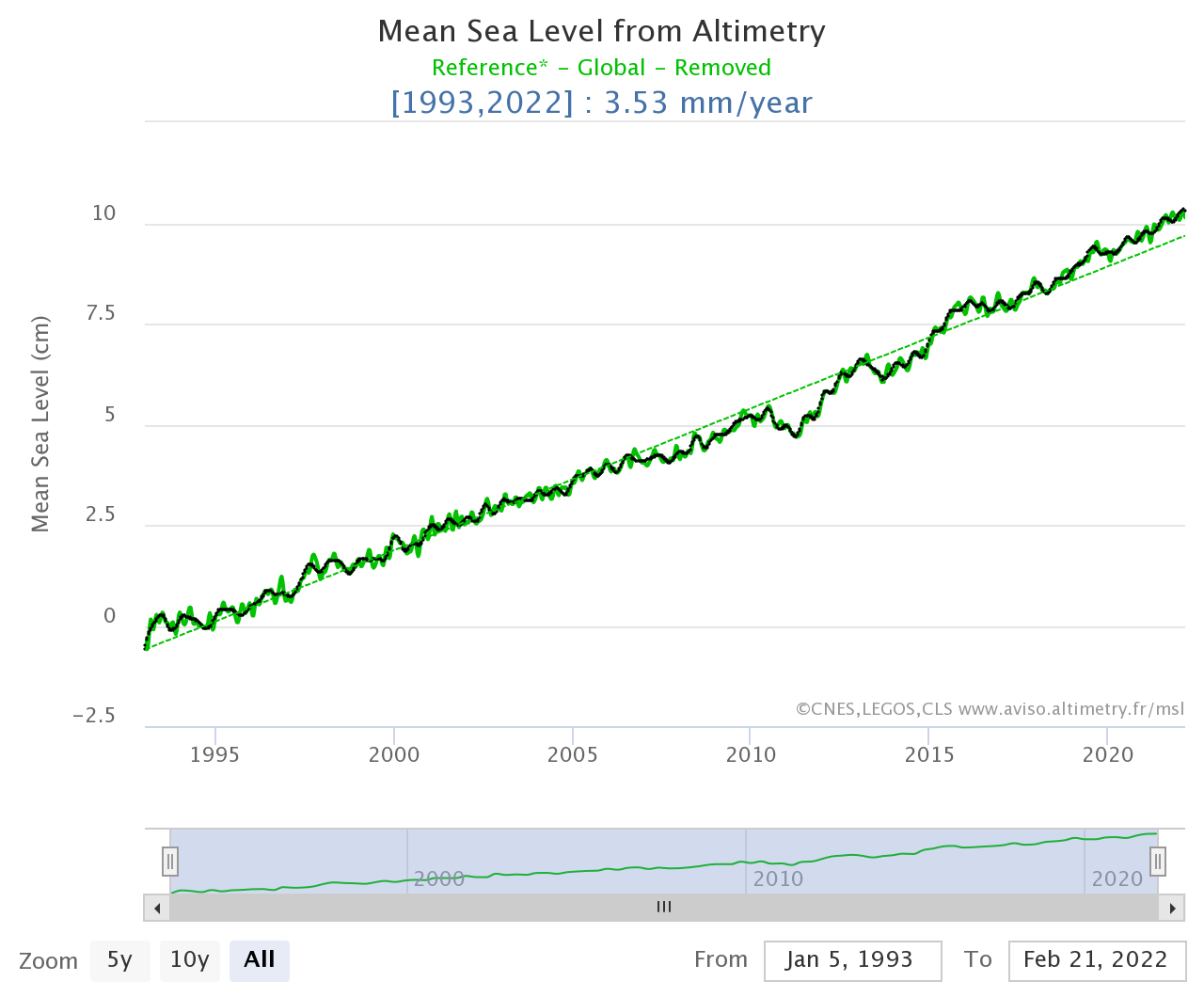
The claim of accelerating sea level rise depends on estimates from satellites regarding the entire ocean, such as this one:

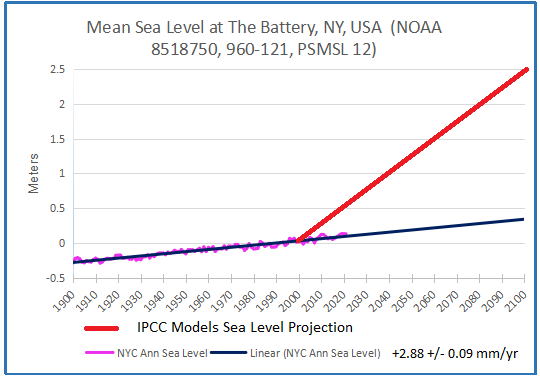
There was an adjustment made to the dataset, and the “acceleration” comes by starting from the dip in 2013.  Moreover, this is a highly processed reconstruction that is contradicted by tidal gauge measurements at the coastlines where people live and where the issue matters.  For example, take New York City, where J. Hansen predicted flooding by 2009:

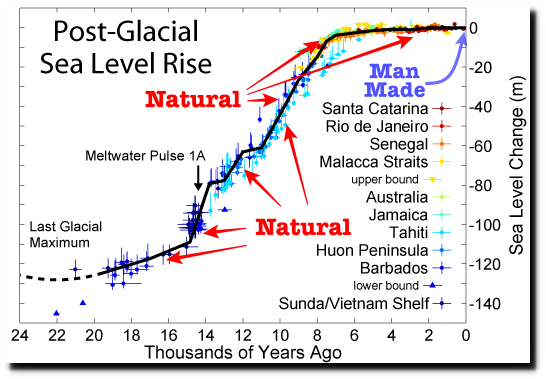
Already in 2021, observations have diverged greatly from the model-projected sea level rise, and there are many other examples confirming this. And do remember the longer range perspective on sea levels:

Earth’s Cryosphere is Melting!  Not.

WMO Says:  Cryosphere: Although the glaciological year 2020-2021 saw less melting than in recent years, there is a clear trend towards an acceleration of mass loss on multi-decadal timescales. On average, the world’s reference glaciers have thinned by 33.5 meters (ice-equivalent) since 1950, with 76% of this thinning since 1980. 2021 was a particularly punishing year for glaciers in Canada and the US Northwest with record ice mass loss as a result of heatwaves and fires in June and July. Greenland experienced an exceptional mid-August melt event and the first-ever recorded rainfall at Summit Station, the highest point on the ice sheet at an altitude of 3 216 m.

Rational Response

The warning about coastal flooding is based on fears that the sea will rise because frozen water will be added to the current ocean volume.  A lot of reporting claims Arctic Sea Ice is retreating, not mentioning this is drift ice, floating on water, and thus not a threat to increase water volume.  Even so, the quasi-60 year cycle of Arctic ice extents has been flat since it’s most recent bottom in 2007.

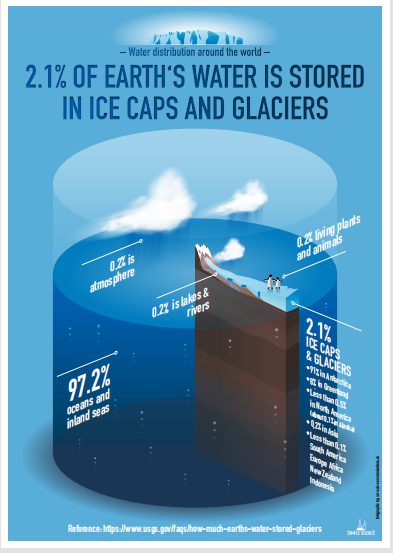
More pertinent is the concerns raised over land-based ice that does have the potential to add water to the ocean.  For perspective, consider this:

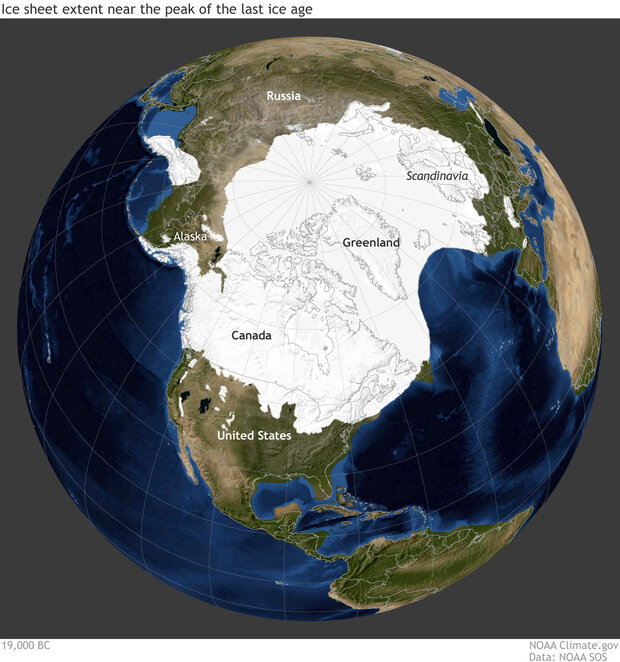
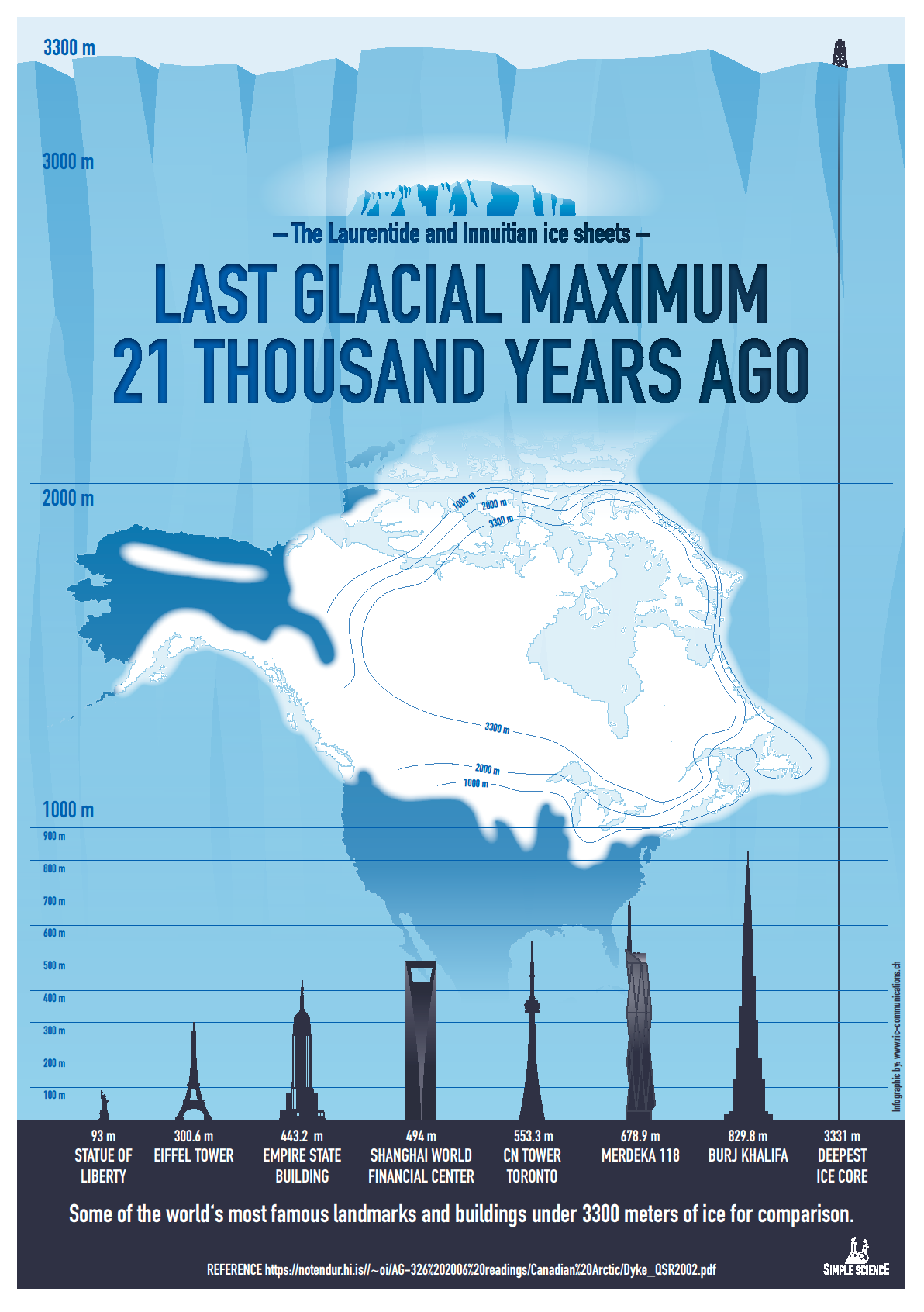
To consider the impact of the above ice sheet melting, compare the thickness of the Laurentide ice sheet with some of our civilization’s landmarks (H/T RiC Communications):

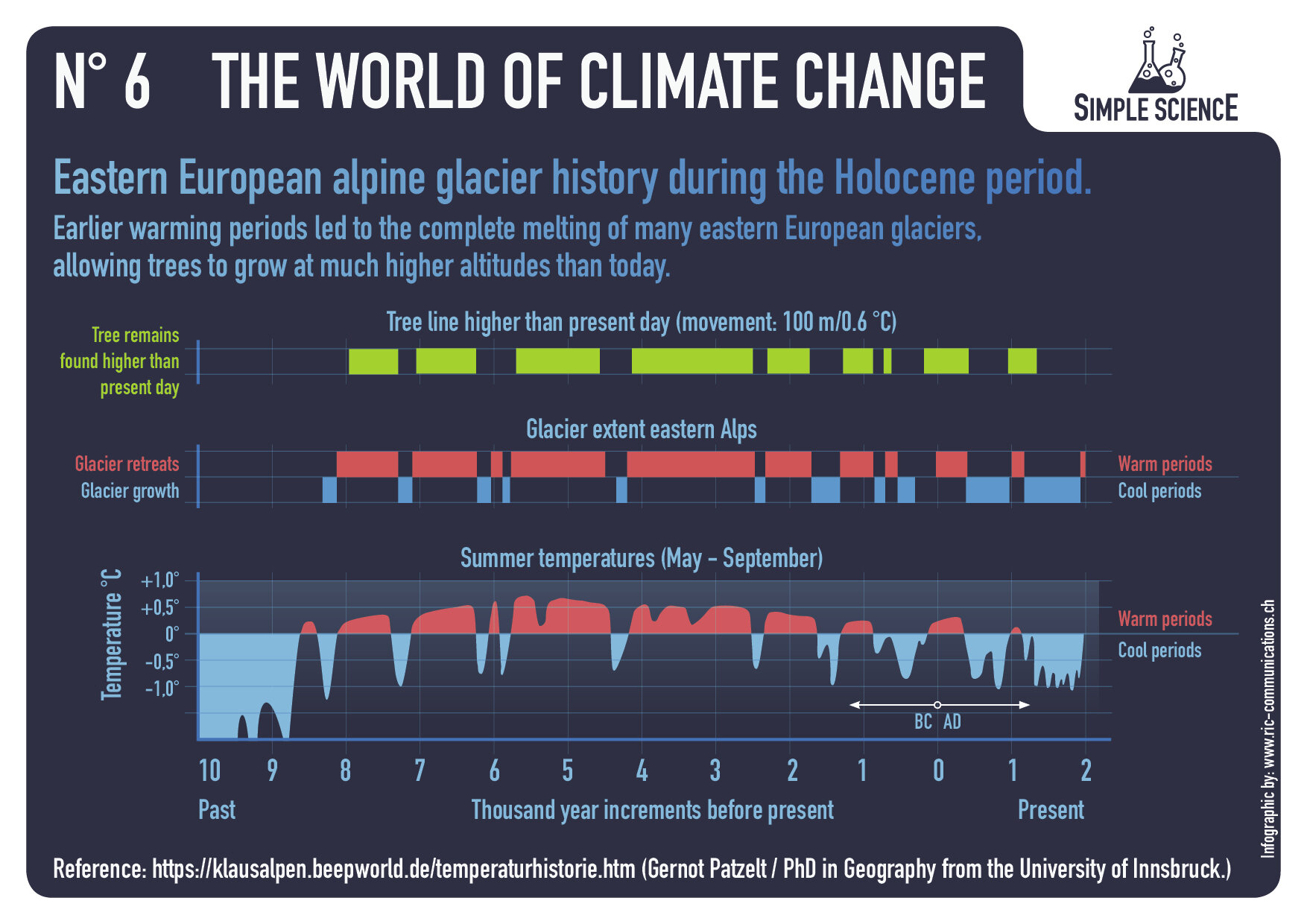
With much ado about any retreat of land glaciers, no matter how small or short-lived, many people are unaware of the natural range of glacier fluctuations.  For example, alpine glaciers:

Amid numerous periods of warming and cooling, hidden is the fact that Alpine glaciers were much smaller in the past, as evidenced by higher tree lines previous to the modern era.

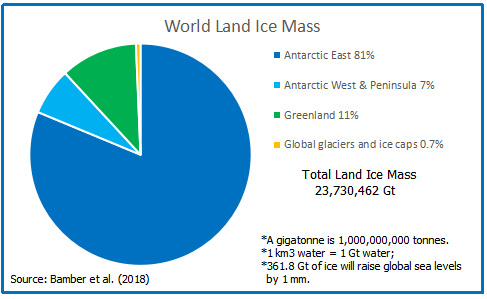
The great majority of land ice is located firstly upon Antarctica, and secondly on Greenland.  While there are fluctuations up and down, the trend is far from certain, and very small compared to the mass of these two ice sheets.

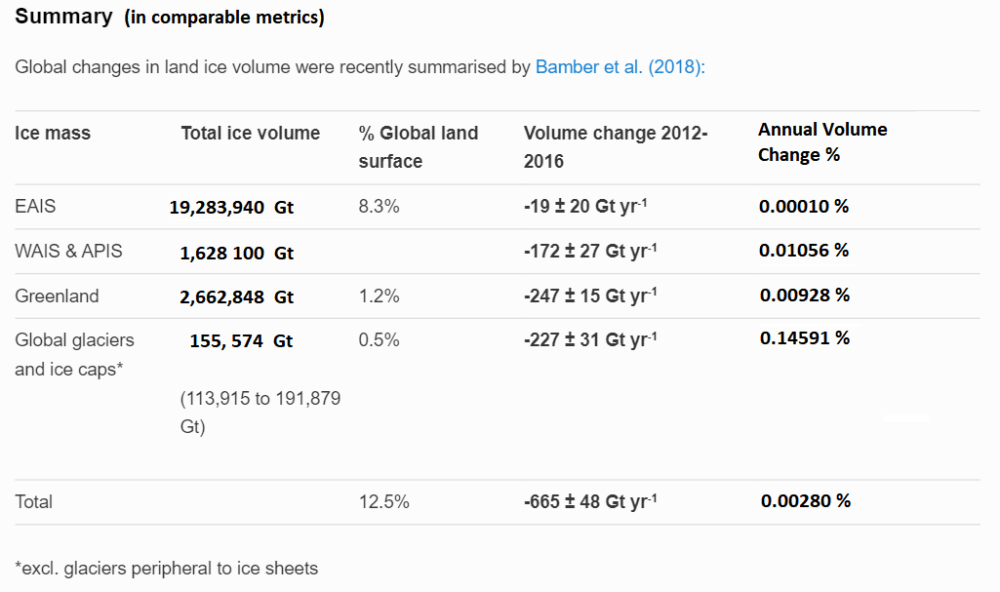
A recent study by Bamber et al. provides perspectives on the amplitude of ice sheet changes:

Here the realities are obvious 99% of the world land ice is on top of Antarctica (88%) and Greenland (11%). All the fuss in the media above concerns fluctuations in less than 1% of glacier mass. Secondly, the bottom line is should present melt rates continue ( a big if ) the world would lose 3% of land ice in 1000 years. Note also the wide range of estimates of the smallest category of glaciers, and also the uncertain reported volume change for East Antarctica. Note that the melt rates are for 2012 to 2016, leaving out lower previous rates and periods when ice mass gained.

Global Temperatures are Going Ever Higher!  Not.

WMO says:  The global annual mean temperature in 2021 was around 1.11 ±0.13 °C above the 1850-1900 pre-industrial average, less warm than some recent years owing to cooling La Niña conditions at the start and end of the year. The most recent seven years, 2015 to 2021, are the seven warmest years on record. 

Rational Response:

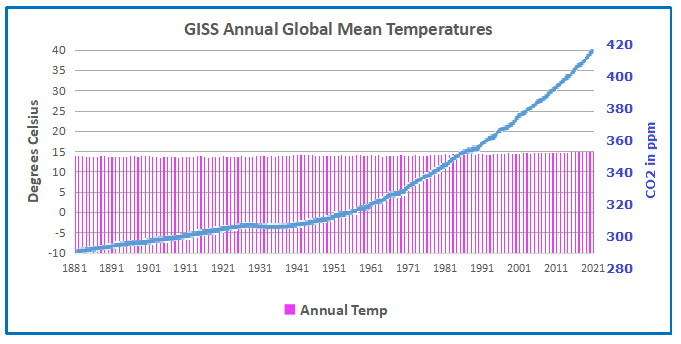
Seen in the context of annual ranges of temperatures, a rise of 1 degree Celsius over 150 years would escape our notice were it not for alarmists constantly beating drums about it.

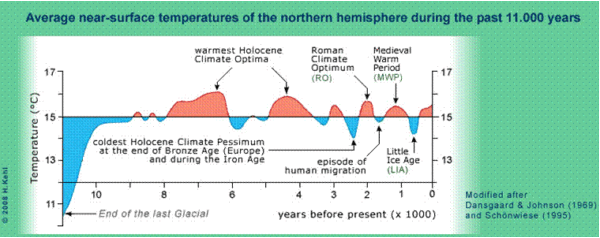
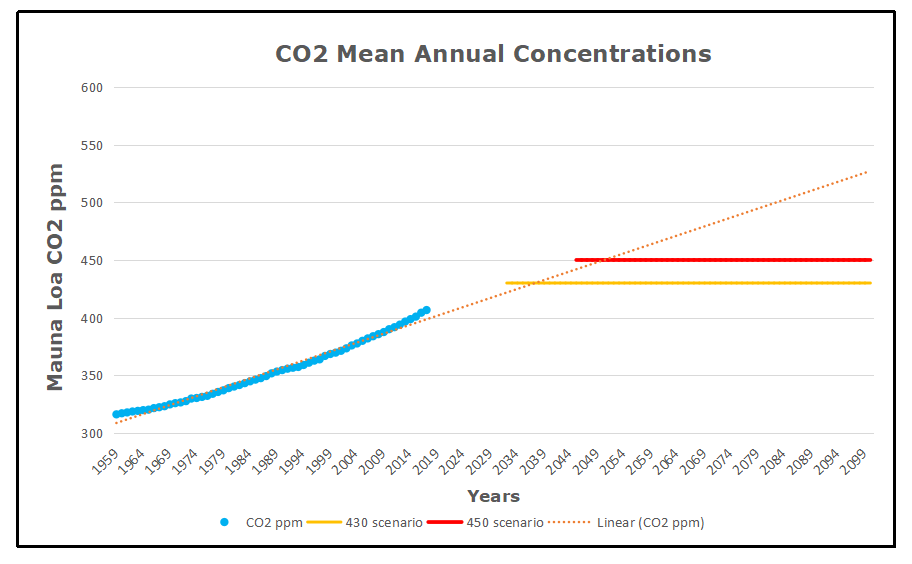
The geological and paleontological evidence overwhelmingly says that today’s average global temperature of about 15 degrees C and CO2 concentrations of 420 ppm are nothing to fret about. Even if they rise to about 17–18 degrees C and 500–600 ppm by the end of the century, it may well balance or improve the lot of mankind.

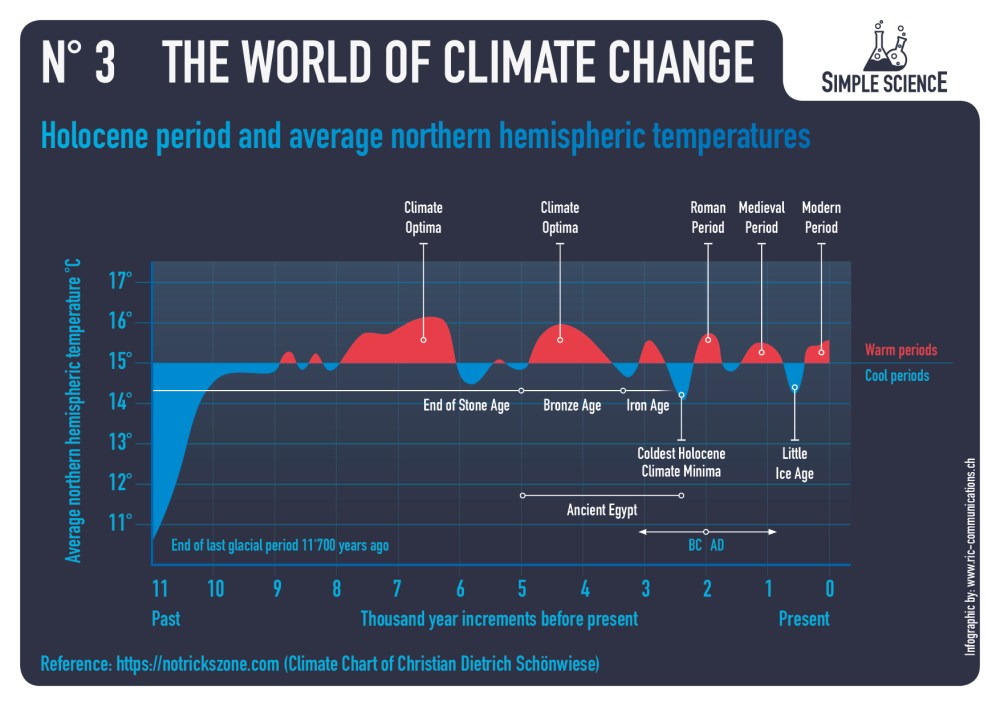
After all, bursts of civilization during the last 10,000 years uniformly occurred during the red portions of the graph below. The aforementioned river civilizations—the Minoan, the Greco-Roman era, the Medieval flowering, and the industrial and technological revolutions of the present era. At the same time, the several lapses into the dark ages happened when the climate turned colder (blue).

And that’s only logical. When it’s warmer and wetter, growing seasons are longer, and crop yields are better—regardless of the agricultural technology and practices of the moment. And it’s better for human and community health, too—most of the deadly plagues of history have occurred in colder climates, such as the Black Death of 1344–1350.

Greenhouse Gases Higher Than Ever!  Not.

WMO says: Greenhouse gas concentrations reached a new global high in 2020, when the concentration of carbon dioxide (CO2) reached 413.2 parts per million (ppm) globally, or 149% of the pre-industrial level. Data from specific locations indicate that they continued to increase in 2021 and early 2022, with monthly average CO2 at Mona Loa in Hawaii reaching 416.45 ppm in April 2020, 419.05 ppm in April 2021, and 420.23 ppm in April 2022.

Rational Response:

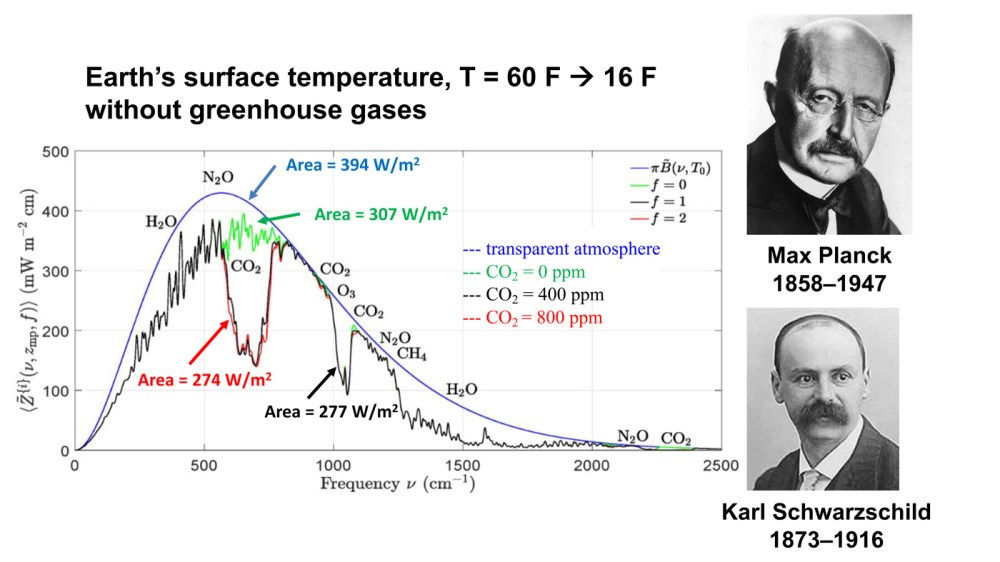
The Radiative effect from increasing CO2 has been saturated, so that the next doubling from 400 to 800 ppm will barely affect temperatures.  From William Happer presentation:

Schwarzschild was the theorist who first figured out how the real Earth, including the greenhouse gases in its atmosphere, radiates to space. That is described by the jagged black line. The important point here is the red line. This is what Earth would radiate to space if you were to double the CO2 concentration from today’s value. Right in the middle of these curves, you can see a gap in spectrum. The gap is caused by CO2 absorbing radiation that would otherwise cool the Earth. If you double the amount of CO2, you don’t double the size of that gap. You just go from the black curve to the red curve, and you can barely see the difference. The gap hardly changes.

Yet, the Climate Crisis Narrative employs two deceptive devices which are contradicted by earth’s climate history:

a. Planetary temperatures have been far higher than today, both long ago (over 600 million years) and recently (last 10,000 years) with no doomsday loop occurring.

b. It is claimed global warming is a one-way street from rising GHGs, when in fact higher CO2 concentrations are a consequence and by-product, not a driver and cause, of the current naturally rising temperatures.

The alleged harm from CO2 is from warming, and the warming observed is much, much less than predictions. In fact, warming as small as we are observing is almost certainly beneficial. It gives slightly longer growing seasons. You can ripen crops a little bit further north than you could before. So, there is completely good news in terms of the temperature directly. But there is even better news. By standards of geological history, plants have been living in a CO2 famine during our current geological period.

The Ocean Is Turning Acid! Not.

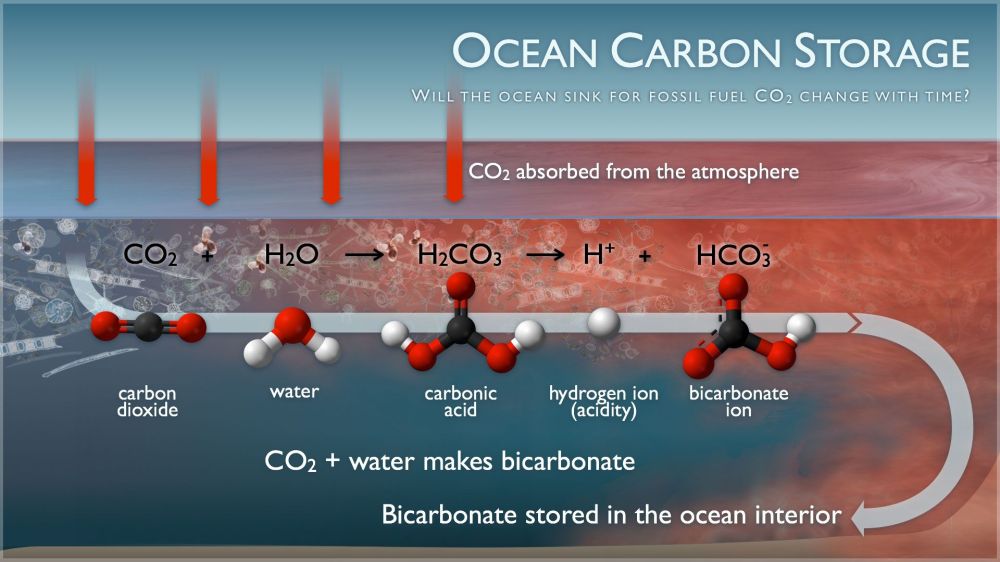
WMO says: Ocean acidification. The ocean absorbs around 23% of the annual emissions of anthropogenic CO2 to the atmosphere. This reacts with seawater and leads to ocean acidification, which threatens organisms and ecosystem services, and hence food security, tourism and coastal protection. As the pH of the ocean decreases, its capacity to absorb CO2 from the atmosphere also declines. The IPCC concluded that “there is very high confidence that open ocean surface pH is now the lowest it has been for at least 26,000 years and current rates of pH change are unprecedented since at least that time.”

Rational Response

Firstly ocean pH varies greatly on all time scales.  From US Senate testimony:

“In the oceans, major climate warming and cooling and pH (ocean pH about 8.1) changes are a fact of life, whether it is over a few years as in an El Niño, over decades as in the Pacific Decadal Oscillation or the North Atlantic Oscillation, or over a few hours as a burst of upwelling (pH about 7.59-7.8) appears or a storm brings acidic rainwater (pH about 4-6) into an estuary.”

Secondly, sea life is adapted to changing pH, and some prefer more acidic levels.  IPCC has ignored extensive research showing positive impacts on marine life from lower pH. These studies are catalogued at CO2 Science with this summary:

There are numerous observations of improvement in calcification of disparate marine life in realistic rates of PH change due to increased CO2.

“In the final graphical representations of the information contained in our Ocean Acidification Database, we have plotted the averages of all responses to seawater acidification (produced by additions of both HCl and CO2) for all five of the life characteristics of the various marine organisms that we have analyzed over the five pH reduction ranges that we discuss in our Description of the Ocean Acidification Database Tables, which pH ranges we illustrate in the figure below.”

“The most striking feature of Figure 11 is the great preponderance of data located in positive territory, which suggests that, on the whole, marine organisms likely will not be harmed to any significant degree by the expected decline in oceanic pH. If anything, in fact, the results suggest that the world’s marine life may actually slightly benefit from the pH decline.”

Finally,  massive mineral deposits ensure our ocean will remain non-acidic in coming centuries.  At Patrick Moore observed:

“It is a fact that people who have saltwater aquariums sometimes add CO2 to the water in order to increase coral growth and to increase plant growth. The truth is CO2 is the most important food for all life on Earth, including marine life. It is the main food for photosynthetic plankton (algae), which in turn is the food for the entire food chain in the sea.”

Summary:

The claim that the surface-water of the oceans has declined in pH from 8.2 to 8.1, since the industrial revolution, is based on sparse, contradictory evidence, at least some of which is problematic computer modeling. Some areas of the oceans, not subject to algal blooms or upwelling, may be experiencing slightly lower pH values than were common before the industrial revolution. However, forecasts for ‘average’ future pH values are likely exaggerated and of debatable consequences. The effects of alkaline buffering and stabilizing biological feedback loops seem to be underappreciated by those who carelessly throw around the inaccurate term “ocean acidification.”

Footnote on Climate Hype

Alarming claims are usually detected because they involve myopia, an error in perception, combined with lop-sided judgment weighing proportional significance of factors.

  1. CO2 Alarm is Myopic: Claiming CO2 causes dangerous global warming is too simplistic. CO2 is but one factor among many other forces and processes interacting to make weather and climate.

Myopia is a failure of perception by focusing on one near thing to the exclusion of the other realities present, thus missing the big picture. For example: “Not seeing the forest for the trees.” AKA “tunnel vision.”

2. CO2 Alarm is Lopsided: CO2 forcing is too small to have the overblown effect claimed for it. Other factors are orders of magnitude larger than the potential of CO2 to influence the climate system.

Lop-sided refers to a failure in judging values, whereby someone lacking in sense of proportion, places great weight on a factor which actually has a minor influence compared to other forces. For example: “Making a mountain out of a mole hill.”

To avoid myopia, pay attention to the temporal and spatial contexts for effects discussed.  To avoid lop-sided judgment, pay attention to the impact of factors proportional to the baseline inertia of climate system components.

Radio Interview Re UN False Alarms

Yesterday I was interviewed on the radio regarding my rebutting UN False Alarms.  The image is a screen capture, and I don’t know how to extract the audio file or embed the radio page.  But you can listen to the interview by following the link below.  My segment begins at 34:40 to the end (a few commercials included)

https://www.am1100theflag.com/show-episodes/48391-5-24-22-the-chris-berg-show?fbclid=IwAR3H1QsRKzveHDxOjf152b_49glhwX1I0zOSSXUvxm_pcuIIWGWauQBOWW0

Post Discussed in Interview Above

The Climate Crisis du jour comes from the World Meteorological Organization (WMO) public relations (PR) announcement Four key climate change indicators break records in 2021. 

As we shall see, each of them, along with other WMO claims, depends on first buying the story of global warming/climate change, and then looking at the world in a myopic, lop-sided way to confirm an alarmist POV.  Below are discussions of the main points from this latest attempt to monger fear in support of the IPCC agenda.

Sea Level Rise is Accelerating!  Not.

WMO says: Global mean sea level reached a new record high in 2021, after increasing at an average 4.5 mm per year over the period 2013 -2021. This is more than double the rate of between 1993 and 2002 and is mainly due to the accelerated loss of ice mass from the ice sheets. This has major implications for hundreds of millions of coastal dwellers and increases vulnerability to tropical cyclones.

WMO Proof:
Rational Response

Altimetry Estimates Are Unreliable
Tidal Gauges show slow, steady coastal rise
Land subsiding or rebounding Makes Local Differences

The claim of accelerating sea level rise depends on estimates from satellites regarding the entire ocean, such as this one:

There was an adjustment made to the dataset, and the “acceleration” comes by starting from the dip in 2013.  Moreover, this is a highly processed reconstruction that is contradicted by tidal gauge measurements at the coastlines where people live and where the issue matters.  For example, take New York City, where J. Hansen predicted flooding by 2009:

Already in 2021, observations have diverged greatly from the model-projected sea level rise, and there are many other examples confirming this. And do remember the longer range perspective on sea levels:

Earth’s Cryosphere is Melting!  Not.

WMO Says:  Cryosphere: Although the glaciological year 2020-2021 saw less melting than in recent years, there is a clear trend towards an acceleration of mass loss on multi-decadal timescales. On average, the world’s reference glaciers have thinned by 33.5 meters (ice-equivalent) since 1950, with 76% of this thinning since 1980. 2021 was a particularly punishing year for glaciers in Canada and the US Northwest with record ice mass loss as a result of heatwaves and fires in June and July. Greenland experienced an exceptional mid-August melt event and the first-ever recorded rainfall at Summit Station, the highest point on the ice sheet at an altitude of 3 216 m.

Rational Response

The warning about coastal flooding is based on fears that the sea will rise because frozen water will be added to the current ocean volume.  A lot of reporting claims Arctic Sea Ice is retreating, not mentioning this is drift ice, floating on water, and thus not a threat to increase water volume.  Even so, the quasi-60 year cycle of Arctic ice extents has been flat since it’s most recent bottom in 2007.

More pertinent is the concerns raised over land-based ice that does have the potential to add water to the ocean.  For perspective, consider this:

To consider the impact of the above ice sheet melting, compare the thickness of the Laurentide ice sheet with some of our civilization’s landmarks (H/T RiC Communications):

With much ado about any retreat of land glaciers, no matter how small or short-lived, many people are unaware of the natural range of glacier fluctuations.  For example, alpine glaciers:

Amid numerous periods of warming and cooling, hidden is the fact that Alpine glaciers were much smaller in the past, as evidenced by higher tree lines previous to the modern era.

The great majority of land ice is located firstly upon Antarctica, and secondly on Greenland.  While there are fluctuations up and down, the trend is far from certain, and very small compared to the mass of these two ice sheets.

A recent study by Bamber et al. provides perspectives on the amplitude of ice sheet changes:

Here the realities are obvious 99% of the world land ice is on top of Antarctica (88%) and Greenland (11%). All the fuss in the media above concerns fluctuations in less than 1% of glacier mass. Secondly, the bottom line is should present melt rates continue ( a big if ) the world would lose 3% of land ice in 1000 years. Note also the wide range of estimates of the smallest category of glaciers, and also the uncertain reported volume change for East Antarctica. Note that the melt rates are for 2012 to 2016, leaving out lower previous rates and periods when ice mass gained.

Global Temperatures are Going Ever Higher!  Not.

WMO says:  The global annual mean temperature in 2021 was around 1.11 ±0.13 °C above the 1850-1900 pre-industrial average, less warm than some recent years owing to cooling La Niña conditions at the start and end of the year. The most recent seven years, 2015 to 2021, are the seven warmest years on record. 

Rational Response:

Seen in the context of annual ranges of temperatures, a rise of 1 degree Celsius over 150 years would escape our notice were it not for alarmists constantly beating drums about it.

The geological and paleontological evidence overwhelmingly says that today’s average global temperature of about 15 degrees C and CO2 concentrations of 420 ppm are nothing to fret about. Even if they rise to about 17–18 degrees C and 500–600 ppm by the end of the century, it may well balance or improve the lot of mankind.

After all, bursts of civilization during the last 10,000 years uniformly occurred during the red portions of the graph below. The aforementioned river civilizations—the Minoan, the Greco-Roman era, the Medieval flowering, and the industrial and technological revolutions of the present era. At the same time, the several lapses into the dark ages happened when the climate turned colder (blue).

And that’s only logical. When it’s warmer and wetter, growing seasons are longer, and crop yields are better—regardless of the agricultural technology and practices of the moment. And it’s better for human and community health, too—most of the deadly plagues of history have occurred in colder climates, such as the Black Death of 1344–1350.

Greenhouse Gases Higher Than Ever!  Not.

WMO says: Greenhouse gas concentrations reached a new global high in 2020, when the concentration of carbon dioxide (CO2) reached 413.2 parts per million (ppm) globally, or 149% of the pre-industrial level. Data from specific locations indicate that they continued to increase in 2021 and early 2022, with monthly average CO2 at Mona Loa in Hawaii reaching 416.45 ppm in April 2020, 419.05 ppm in April 2021, and 420.23 ppm in April 2022.

Rational Response:

The Radiative effect from increasing CO2 has been saturated, so that the next doubling from 400 to 800 ppm will barely affect temperatures.  From William Happer presentation:

Schwarzschild was the theorist who first figured out how the real Earth, including the greenhouse gases in its atmosphere, radiates to space. That is described by the jagged black line. The important point here is the red line. This is what Earth would radiate to space if you were to double the CO2 concentration from today’s value. Right in the middle of these curves, you can see a gap in spectrum. The gap is caused by CO2 absorbing radiation that would otherwise cool the Earth. If you double the amount of CO2, you don’t double the size of that gap. You just go from the black curve to the red curve, and you can barely see the difference. The gap hardly changes.

Yet, the Climate Crisis Narrative employs two deceptive devices which are contradicted by earth’s climate history:

a. Planetary temperatures have been far higher than today, both long ago (over 600 million years) and recently (last 10,000 years) with no doomsday loop occurring.

b. It is claimed global warming is a one-way street from rising GHGs, when in fact higher CO2 concentrations are a consequence and by-product, not a driver and cause, of the current naturally rising temperatures.

The alleged harm from CO2 is from warming, and the warming observed is much, much less than predictions. In fact, warming as small as we are observing is almost certainly beneficial. It gives slightly longer growing seasons. You can ripen crops a little bit further north than you could before. So, there is completely good news in terms of the temperature directly. But there is even better news. By standards of geological history, plants have been living in a CO2 famine during our current geological period.

The Ocean Is Turning Acid! Not.

WMO says: Ocean acidification. The ocean absorbs around 23% of the annual emissions of anthropogenic CO2 to the atmosphere. This reacts with seawater and leads to ocean acidification, which threatens organisms and ecosystem services, and hence food security, tourism and coastal protection. As the pH of the ocean decreases, its capacity to absorb CO2 from the atmosphere also declines. The IPCC concluded that “there is very high confidence that open ocean surface pH is now the lowest it has been for at least 26,000 years and current rates of pH change are unprecedented since at least that time.”

Rational Response

Firstly ocean pH varies greatly on all time scales.  From US Senate testimony:

“In the oceans, major climate warming and cooling and pH (ocean pH about 8.1) changes are a fact of life, whether it is over a few years as in an El Niño, over decades as in the Pacific Decadal Oscillation or the North Atlantic Oscillation, or over a few hours as a burst of upwelling (pH about 7.59-7.8) appears or a storm brings acidic rainwater (pH about 4-6) into an estuary.”

Secondly, sea life is adapted to changing pH, and some prefer more acidic levels.  IPCC has ignored extensive research showing positive impacts on marine life from lower pH. These studies are catalogued at CO2 Science with this summary:

There are numerous observations of improvement in calcification of disparate marine life in realistic rates of PH change due to increased CO2.

“In the final graphical representations of the information contained in our Ocean Acidification Database, we have plotted the averages of all responses to seawater acidification (produced by additions of both HCl and CO2) for all five of the life characteristics of the various marine organisms that we have analyzed over the five pH reduction ranges that we discuss in our Description of the Ocean Acidification Database Tables, which pH ranges we illustrate in the figure below.”

“The most striking feature of Figure 11 is the great preponderance of data located in positive territory, which suggests that, on the whole, marine organisms likely will not be harmed to any significant degree by the expected decline in oceanic pH. If anything, in fact, the results suggest that the world’s marine life may actually slightly benefit from the pH decline.”

Finally,  massive mineral deposits ensure our ocean will remain non-acidic in coming centuries.  At Patrick Moore observed:

“It is a fact that people who have saltwater aquariums sometimes add CO2 to the water in order to increase coral growth and to increase plant growth. The truth is CO2 is the most important food for all life on Earth, including marine life. It is the main food for photosynthetic plankton (algae), which in turn is the food for the entire food chain in the sea.”

Summary:

The claim that the surface-water of the oceans has declined in pH from 8.2 to 8.1, since the industrial revolution, is based on sparse, contradictory evidence, at least some of which is problematic computer modeling. Some areas of the oceans, not subject to algal blooms or upwelling, may be experiencing slightly lower pH values than were common before the industrial revolution. However, forecasts for ‘average’ future pH values are likely exaggerated and of debatable consequences. The effects of alkaline buffering and stabilizing biological feedback loops seem to be underappreciated by those who carelessly throw around the inaccurate term “ocean acidification.”

Footnote on Climate Hype

Alarming claims are usually detected because they involve myopia, an error in perception, combined with lop-sided judgment weighing proportional significance of factors.

  1. CO2 Alarm is Myopic: Claiming CO2 causes dangerous global warming is too simplistic. CO2 is but one factor among many other forces and processes interacting to make weather and climate.

Myopia is a failure of perception by focusing on one near thing to the exclusion of the other realities present, thus missing the big picture. For example: “Not seeing the forest for the trees.” AKA “tunnel vision.”

2. CO2 Alarm is Lopsided: CO2 forcing is too small to have the overblown effect claimed for it. Other factors are orders of magnitude larger than the potential of CO2 to influence the climate system.

Lop-sided refers to a failure in judging values, whereby someone lacking in sense of proportion, places great weight on a factor which actually has a minor influence compared to other forces. For example: “Making a mountain out of a mole hill.”

To avoid myopia, pay attention to the temporal and spatial contexts for effects discussed.  To avoid lop-sided judgment, pay attention to the impact of factors proportional to the baseline inertia of climate system components.

UN False Alarms from Key Climate Indicators


The Climate Crisis du jour comes from the World Meteorological Organization (WMO) public relations (PR) announcement Four key climate change indicators break records in 2021. 

As we shall see, each of them, along with other WMO claims, depends on first buying the story of global warming/climate change, and then looking at the world in a myopic, lop-sided way to confirm an alarmist POV.  Below are discussions of the main points from this latest attempt to monger fear in support of the IPCC agenda.

Sea Level Rise is Accelerating!  Not.

WMO says: Global mean sea level reached a new record high in 2021, after increasing at an average 4.5 mm per year over the period 2013 -2021. This is more than double the rate of between 1993 and 2002 and is mainly due to the accelerated loss of ice mass from the ice sheets. This has major implications for hundreds of millions of coastal dwellers and increases vulnerability to tropical cyclones.

WMO Proof:
Rational Response

Altimetry Estimates Are Unreliable
Tidal Gauges show slow, steady coastal rise
Land subsiding or rebounding Makes Local Differences

The claim of accelerating sea level rise depends on estimates from satellites regarding the entire ocean, such as this one:

There was an adjustment made to the dataset, and the “acceleration” comes by starting from the dip in 2013.  Moreover, this is a highly processed reconstruction that is contradicted by tidal gauge measurements at the coastlines where people live and where the issue matters.  For example, take New York City, where J. Hansen predicted flooding by 2009:

Already in 2021, observations have diverged greatly from the model-projected sea level rise, and there are many other examples confirming this. And do remember the longer range perspective on sea levels:

Earth’s Cryosphere is Melting!  Not.

WMO Says:  Cryosphere: Although the glaciological year 2020-2021 saw less melting than in recent years, there is a clear trend towards an acceleration of mass loss on multi-decadal timescales. On average, the world’s reference glaciers have thinned by 33.5 meters (ice-equivalent) since 1950, with 76% of this thinning since 1980. 2021 was a particularly punishing year for glaciers in Canada and the US Northwest with record ice mass loss as a result of heatwaves and fires in June and July. Greenland experienced an exceptional mid-August melt event and the first-ever recorded rainfall at Summit Station, the highest point on the ice sheet at an altitude of 3 216 m.

Rational Response

The warning about coastal flooding is based on fears that the sea will rise because frozen water will be added to the current ocean volume.  A lot of reporting claims Arctic Sea Ice is retreating, not mentioning this is drift ice, floating on water, and thus not a threat to increase water volume.  Even so, the quasi-60 year cycle of Arctic ice extents has been flat since it’s most recent bottom in 2007.

More pertinent is the concerns raised over land-based ice that does have the potential to add water to the ocean.  For perspective, consider this:

To consider the impact of the above ice sheet melting, compare the thickness of the Laurentide ice sheet with some of our civilization’s landmarks (H/T RiC Communications):

With much ado about any retreat of land glaciers, no matter how small or short-lived, many people are unaware of the natural range of glacier fluctuations.  For example, alpine glaciers:

Amid numerous periods of warming and cooling, hidden is the fact that Alpine glaciers were much smaller in the past, as evidenced by higher tree lines previous to the modern era.

The great majority of land ice is located firstly upon Antarctica, and secondly on Greenland.  While there are fluctuations up and down, the trend is far from certain, and very small compared to the mass of these two ice sheets.

A recent study by Bamber et al. provides perspectives on the amplitude of ice sheet changes:

Here the realities are obvious 99% of the world land ice is on top of Antarctica (88%) and Greenland (11%). All the fuss in the media above concerns fluctuations in less than 1% of glacier mass. Secondly, the bottom line is should present melt rates continue ( a big if ) the world would lose 3% of land ice in 1000 years. Note also the wide range of estimates of the smallest category of glaciers, and also the uncertain reported volume change for East Antarctica. Note that the melt rates are for 2012 to 2016, leaving out lower previous rates and periods when ice mass gained.

Global Temperatures are Going Ever Higher!  Not.

WMO says:  The global annual mean temperature in 2021 was around 1.11 ±0.13 °C above the 1850-1900 pre-industrial average, less warm than some recent years owing to cooling La Niña conditions at the start and end of the year. The most recent seven years, 2015 to 2021, are the seven warmest years on record. 

Rational Response:

Seen in the context of annual ranges of temperatures, a rise of 1 degree Celsius over 150 years would escape our notice were it not for alarmists constantly beating drums about it.

The geological and paleontological evidence overwhelmingly says that today’s average global temperature of about 15 degrees C and CO2 concentrations of 420 ppm are nothing to fret about. Even if they rise to about 17–18 degrees C and 500–600 ppm by the end of the century, it may well balance or improve the lot of mankind.

After all, bursts of civilization during the last 10,000 years uniformly occurred during the red portions of the graph below. The aforementioned river civilizations—the Minoan, the Greco-Roman era, the Medieval flowering, and the industrial and technological revolutions of the present era. At the same time, the several lapses into the dark ages happened when the climate turned colder (blue).

And that’s only logical. When it’s warmer and wetter, growing seasons are longer, and crop yields are better—regardless of the agricultural technology and practices of the moment. And it’s better for human and community health, too—most of the deadly plagues of history have occurred in colder climates, such as the Black Death of 1344–1350.

Greenhouse Gases Higher Than Ever!  Not.

WMO says: Greenhouse gas concentrations reached a new global high in 2020, when the concentration of carbon dioxide (CO2) reached 413.2 parts per million (ppm) globally, or 149% of the pre-industrial level. Data from specific locations indicate that they continued to increase in 2021 and early 2022, with monthly average CO2 at Mona Loa in Hawaii reaching 416.45 ppm in April 2020, 419.05 ppm in April 2021, and 420.23 ppm in April 2022.

Rational Response:

The Radiative effect from increasing CO2 has been saturated, so that the next doubling from 400 to 800 ppm will barely affect temperatures.  From William Happer presentation:

Schwarzschild was the theorist who first figured out how the real Earth, including the greenhouse gases in its atmosphere, radiates to space. That is described by the jagged black line. The important point here is the red line. This is what Earth would radiate to space if you were to double the CO2 concentration from today’s value. Right in the middle of these curves, you can see a gap in spectrum. The gap is caused by CO2 absorbing radiation that would otherwise cool the Earth. If you double the amount of CO2, you don’t double the size of that gap. You just go from the black curve to the red curve, and you can barely see the difference. The gap hardly changes.

Yet, the Climate Crisis Narrative employs two deceptive devices which are contradicted by earth’s climate history:

a. Planetary temperatures have been far higher than today, both long ago (over 600 million years) and recently (last 10,000 years) with no doomsday loop occurring.

b. It is claimed global warming is a one-way street from rising GHGs, when in fact higher CO2 concentrations are a consequence and by-product, not a driver and cause, of the current naturally rising temperatures.

The alleged harm from CO2 is from warming, and the warming observed is much, much less than predictions. In fact, warming as small as we are observing is almost certainly beneficial. It gives slightly longer growing seasons. You can ripen crops a little bit further north than you could before. So, there is completely good news in terms of the temperature directly. But there is even better news. By standards of geological history, plants have been living in a CO2 famine during our current geological period.

The Ocean Is Turning Acid! Not.

WMO says: Ocean acidification. The ocean absorbs around 23% of the annual emissions of anthropogenic CO2 to the atmosphere. This reacts with seawater and leads to ocean acidification, which threatens organisms and ecosystem services, and hence food security, tourism and coastal protection. As the pH of the ocean decreases, its capacity to absorb CO2 from the atmosphere also declines. The IPCC concluded that “there is very high confidence that open ocean surface pH is now the lowest it has been for at least 26,000 years and current rates of pH change are unprecedented since at least that time.”

Rational Response

Firstly ocean pH varies greatly on all time scales.  From US Senate testimony:

“In the oceans, major climate warming and cooling and pH (ocean pH about 8.1) changes are a fact of life, whether it is over a few years as in an El Niño, over decades as in the Pacific Decadal Oscillation or the North Atlantic Oscillation, or over a few hours as a burst of upwelling (pH about 7.59-7.8) appears or a storm brings acidic rainwater (pH about 4-6) into an estuary.”

Secondly, sea life is adapted to changing pH, and some prefer more acidic levels.  IPCC has ignored extensive research showing positive impacts on marine life from lower pH. These studies are catalogued at CO2 Science with this summary:

There are numerous observations of improvement in calcification of disparate marine life in realistic rates of PH change due to increased CO2.

“In the final graphical representations of the information contained in our Ocean Acidification Database, we have plotted the averages of all responses to seawater acidification (produced by additions of both HCl and CO2) for all five of the life characteristics of the various marine organisms that we have analyzed over the five pH reduction ranges that we discuss in our Description of the Ocean Acidification Database Tables, which pH ranges we illustrate in the figure below.”

“The most striking feature of Figure 11 is the great preponderance of data located in positive territory, which suggests that, on the whole, marine organisms likely will not be harmed to any significant degree by the expected decline in oceanic pH. If anything, in fact, the results suggest that the world’s marine life may actually slightly benefit from the pH decline.”

Finally,  massive mineral deposits ensure our ocean will remain non-acidic in coming centuries.  At Patrick Moore observed:

“It is a fact that people who have saltwater aquariums sometimes add CO2 to the water in order to increase coral growth and to increase plant growth. The truth is CO2 is the most important food for all life on Earth, including marine life. It is the main food for photosynthetic plankton (algae), which in turn is the food for the entire food chain in the sea.”

Summary:

The claim that the surface-water of the oceans has declined in pH from 8.2 to 8.1, since the industrial revolution, is based on sparse, contradictory evidence, at least some of which is problematic computer modeling. Some areas of the oceans, not subject to algal blooms or upwelling, may be experiencing slightly lower pH values than were common before the industrial revolution. However, forecasts for ‘average’ future pH values are likely exaggerated and of debatable consequences. The effects of alkaline buffering and stabilizing biological feedback loops seem to be underappreciated by those who carelessly throw around the inaccurate term “ocean acidification.”

Footnote on Climate Hype

Alarming claims are usually detected because they involve myopia, an error in perception, combined with lop-sided judgment weighing proportional significance of factors.

  1. CO2 Alarm is Myopic: Claiming CO2 causes dangerous global warming is too simplistic. CO2 is but one factor among many other forces and processes interacting to make weather and climate.

Myopia is a failure of perception by focusing on one near thing to the exclusion of the other realities present, thus missing the big picture. For example: “Not seeing the forest for the trees.” AKA “tunnel vision.”

2. CO2 Alarm is Lopsided: CO2 forcing is too small to have the overblown effect claimed for it. Other factors are orders of magnitude larger than the potential of CO2 to influence the climate system.

Lop-sided refers to a failure in judging values, whereby someone lacking in sense of proportion, places great weight on a factor which actually has a minor influence compared to other forces. For example: “Making a mountain out of a mole hill.”

To avoid myopia, pay attention to the temporal and spatial contexts for effects discussed.  To avoid lop-sided judgment, pay attention to the impact of factors proportional to the baseline inertia of climate system components.

Global Warming Nudge Question

Selwyn Duke explains at American Thinker The global warming question that can change people’s minds.  Excerpts in italics with my bolds and added images.

Late last year, I got into a discussion with a fellow who was quite sold on the idea that man’s activities were warming the Earth. While not a hardcore ideologue, it was apparent the gentleman had accepted the climate change narrative presented by mainstream media and believed we truly were imperiling the planet. I didn’t say much to him initially, as we were engaged in some recreation, but later on I resurrected the topic and told him I just wanted to pose one question.

“What is the ideal average temperature of the Earth”? I asked.

It was clear he was without an answer, so I explained my rationale. “If we don’t know what the Earth’s ideal average temperature is,” I stated, “how can we know if a given type of climate change — whether naturally occurring or induced by man — is good or bad? After all, we can’t then know whether it’s bringing us closer to or moving us further away from that ideal temperature.”

It was as if a little light bulb had lit up in his head, and he said, “You know, that’s a good question!”

I haven’t seen the man since, as we were just two ships passing in the night, and I don’t know how his thinking has evolved (or regressed) between then and now. I do know, however, that someone who’d seemed so confident and perhaps even unbending in his position had his mind opened with one simple question and a 20-second explanation.

Of course, part of the question’s beauty is that no one can answer it. There is no “ideal” average Earth temperature, only a range within which it must remain for life as we know it to exist. At the spectrum’s lower end, polar creatures proliferate; at its higher end, tropical animals do (though warmer temperatures do breed more life, which is why the tropics boast 10 times as many species as does the Arctic. Moreover, crop yields increase when CO2 levels are higher).

This brings us to another important point: Apocalyptic warmist dogma is buttressed by the virtually unchallenged assumption that if man changes something “natural,” it is by definition bad. But this is prejudice. Most of us certainly don’t believe this, for instance, when humans cure disease and use science to preserve and extend human life (or that of our pets).

As for climate, there have been at least five major ice ages, and “the most recent one began approximately 3 million years ago and continues today (yes, we live in an ice age!),” informs the Utah Geological Survey. Then there was the Cryogenian period, during which the Earth was completely, or almost completely, covered with snow and ice.

If man had existed during that time, would it have been bad if his activities had raised the temperature a couple of degrees?

Within ice ages are shorter term cycles known as glacials (colder periods) and interglacials (warmer ones); glacials last approximately 100,000 years while interglacials last about 10,000 to 30,000 years. We’re currently in an interglacial called the Holocene Epoch, which began 11,500 to 12,000 years ago. This means that we could, conceivably, be poised to soon enter another more frigid glacial period.

Now, again, were this mitigated by a couple of degrees via man’s activities, would this be a bad thing?

In point of fact, warmists suggest this is the case. For example, citing research, science news magazine Eos wrote in 2016 that our Holocene Epoch “may last much longer because of the increased levels of atmospheric greenhouse gases resulting from human activity.”

Once more, would this be bad? Why? What’s that ideal average Earth temperature that this climate change would supposedly be moving us further away from? If you’re a member of one of the vast majority of Earth’s species, those prospering in (relative) warmth, it sounds like good news.

The question in question won’t cut any ice (pun intended) with those emotionally invested in the doom-and-gloom global warming thesis. After all, “You cannot reason a man out of a position he has not reasoned himself into,” to paraphrase Anglo-Irish satirist Jonathan Swift. But with the more open-minded majority, the question can turn down the heat on the fear.

See also World of Climate Change Infographics


On CO2 Sources and Isotopes

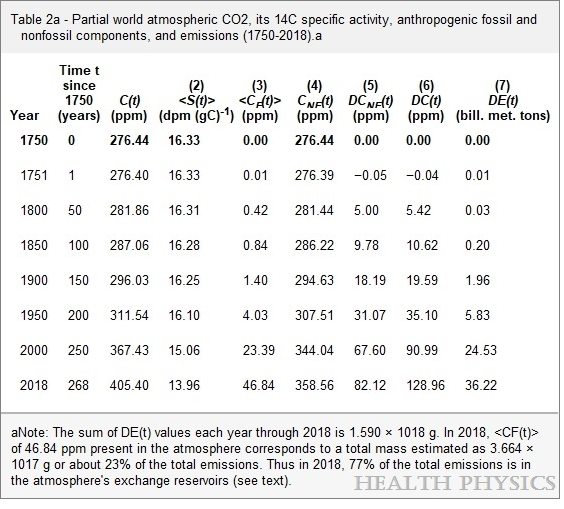
A recent rigorous analysis was published, creating discussion among those concerned with global warming/climate change science.  The paper is World Atmospheric CO2, Its 14C Specific Activity, Non-fossil Component, Anthropogenic Fossil Component, and Emissions (1750–2018) by Kenneth Skrable, George Chabot, and Clayton French at University of Massachusetts Lowell.

The analysis employs ratios of carbon isotopes to calculate the relative proportions of atmospheric CO2 from natural sources and from fossil fuel emissions. The results are welcomed by skeptics and repulsed by warmists. Excerpts in italics with my bolds.

The specific activity of 14C in the atmosphere gets reduced by a dilution effect when fossil CO2, which is devoid of 14C, enters the atmosphere. We have used the results of this effect to quantify the two components: the anthropogenic fossil component and the non-fossil component.  All results covering the period from 1750 through 2018 are listed in a table and plotted in figures.

These results negate claims that the increase in total atmospheric CO2 concentration C(t) since 1800 has been dominated by the increase of the anthropogenic fossil component. We determined that in 2018, atmospheric anthropogenic fossil CO2 represented 23% of the total emissions since 1750 with the remaining 77% in the exchange reservoirs. Our results show that the percentage of the total CO2 due to the use of fossil fuels from 1750 to 2018 increased from 0% in 1750 to 12% in 2018, much too low to be the cause of global warming.

Synopsis of Analytics

Readers will find in the the linked paper a complete description of the assumptions, definitions, data sources and equations leading to the above findings.  This post attempts to explain the logic of the analysis for a general audience, with excerpts in italics with my bolds.

Carbon-14 is a radioactive isotope of carbon having a half-life of 5,730 y. Carbon-14 atoms are produced in the atmosphere by interactions of cosmic rays, and they have reached an essentially constant steady state activity, i.e., disintegration rate, in the total world environment (Eisenbud and Gesell 1997). The age of fossil fuels is much longer than the 5,730 y half-life of the 14C radioactive isotope; consequently, fossil fuels are devoid of the 14C isotope. The units used in this paper are disintegrations per minute per gram of carbon abbreviated as dpm (gC)−1, the common units used in 14C dating.

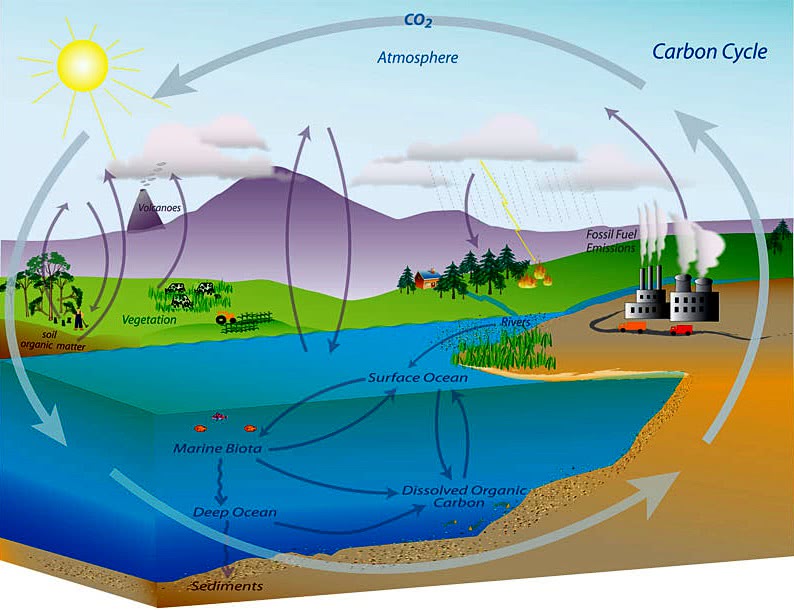
The global carbon cycle for CO2 is described by the Energy Information Administration (EIA 2020). Natural, two-way exchanges of CO2 occur between the atmosphere and its two exchange reservoirs, the oceans and terrestrial biosphere. Two-way exchanges with the atmosphere also occur from changes in land use. The ocean is the largest reservoir of CO2, and it contains 50 times that for the atmosphere and 19 times that for the terrestrial biosphere (Water Encyclopedia 2005). All of the two way exchanges are considered in this paper to be comprised of both the non-fossil component and the anthropogenic fossil component. Annual changes, DCNF(t) in CNF(t), in the atmosphere relative to the 1750 initial value, C(0), can be positive or negative depending on the net flow of CO2 between the atmosphere and its exchange reservoirs as well as on land use changes.

A one-way pathway of anthropogenic fossil CO2 into the atmosphere from fossil fuel combustion and industrial fuel processes since 1750 is represented by annual emissions,  DE(t), of anthropogenic fossil CO2 to the atmosphere, which have been increasing each year since 1750. These emissions over time t result in increasing annual mean anthropogenic fossil concentrations, CF(t), that result in values of 14C in C(t) that are increasingly lower than the initial value.

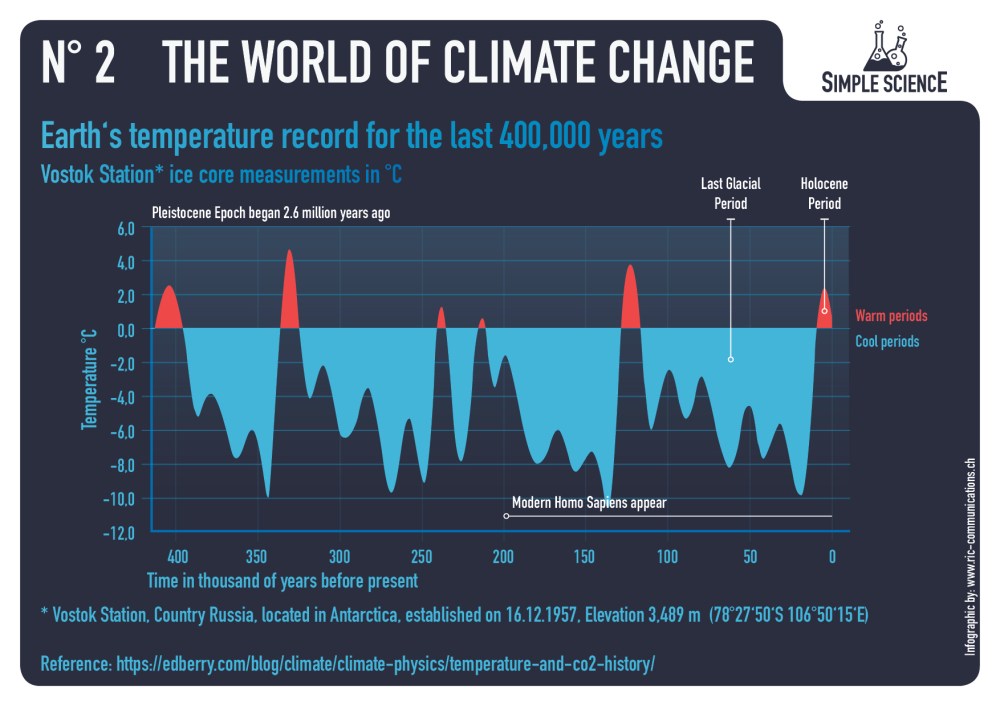
During the last long glacial period, the oceans absorbed a large amount of CO2 from the atmosphere. It appears in the figure that Earth is still in the Holocene interglacial period that started 11,500 y ago. Its peak temperature change over the 11,500 years, thus far in 1950, appears to be significantly less than those over the three previous interglacial periods. Its peak CO2 appears less than 300 ppm and less than the peak value in the previous interglacial period. Thus, the increase in CO2 that Earth has been experiencing since 1800 appears to have started more than 5,000 years ago.

A Wikipedia link for14C describes the increase in the concentration of 14CO2 in the atmosphere that resulted from high altitude nuclear bomb tests, circa 1955–1963. Based on the figure in the Wikipedia link, 14CO2 from the atmospheric bomb tests during this period would be significant in 1955 to about 2005. For the purpose of estimating the anthropogenic fossil and non-fossil components of CO2, measurements of 14C specific activities of atmospheric CO2 during this period should be corrected for the contribution from bomb tests. Outside of this period, no correction would be required.

The methodology used to calculate fossil concentrations CF(t) and non-fossil CNF(t) relies on two accepted facts:

(1) the initial total mole fraction C(0) of (280 ± 10) ppm before 1750 has been essentially constant for several thousand years (Prentice et al. 2018) and

(2) the production rate of 14C atoms in the atmosphere has been essentially constant for at least 15,000 years (Eisenbud 1997).

Therefore, the steady-state activity of 14C per unit volume of the atmosphere also would have been constant except for the redistribution of CO2 in the atmosphere in each year with its exchange reservoirs. The product is proportional to the activity per unit volume of the atmosphere, which varies each year depending on whether there is a net input or output, DCNF(t), of non-anthropogenic fossil CO2 in the atmosphere. The change in the product each year is independent of the value of CF(t) in the atmosphere because it contains no activity of 14C . Also, except for the dilution of S(0) by the anthropogenic fossil component, C(t), present in the atmosphere each year, the 14C would have remained constant at our chosen initial value, S(0), of 16.33 dpm (gC)−1 in 1750.

Based on a molecular weight of 44.01 g mole−1 for CO, the total mass of anthropogenic fossil CO2 present in the atmosphere in 2018 is calculated as 3.664 × 10¹⁷ g. The Table 2 value of 1,589.86 billion metric tons of anthropogenic fossil-derived CO2 emitted into the atmosphere in 1751 through 2018 (EIA 2020a and 2020b) represents 1.590 × 10¹⁸  g. The inference is that the quantity of anthropogenic fossil CO2 in the atmosphere in 2018 represents about 23% of the total amount of anthropogenic fossil-derived CO2 that had been released to the atmosphere since 1750.

Therefore, 77% of the total anthropogenic fossil emissions of CO2 then would be present in the atmosphere’s exchange reservoirs in 2018. These results differ significantly from those reported by others:

The assumption that the increase in CO2 since 1800 is dominated by or equal to the increase in the anthropogenic component is not settled science. Unsupported conclusions of the dominance of the anthropogenic fossil component of CO2 and concerns of its effect on climate change and global warming have severe potential societal implications that press the need for very costly remedial actions that may be misdirected, presently unnecessary, and ineffective in curbing global warming.

Footnote On Elements and Isodopes

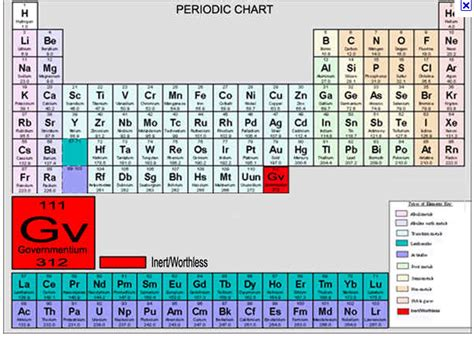
The study above, along with the foibles of the current US administration, reminds me of this announcement of a newly discovered element.

The new element is Governmentium (Gv). It has one neutron, 25 assistant neutrons, 88 deputy neutrons and 198 assistant deputy neutrons, giving it an atomic mass of 312, the heaviest of all.  These 312 particles are held together by forces called morons, which are surrounded by vast quantities of lefton-like particles called peons.

Since Governmentium has no electrons or protons, it is inert. However, it can be detected, because it impedes every reaction with which it comes into contact. A tiny amount of Governmentium can cause a reaction normally taking less than a second to take from four days to four years to complete.

Governmentium has a normal half-life of 3-6 years. It does not decay but instead undergoes a reorganization in which a portion of the assistant neutrons and deputy neutrons exchange places.  In fact, Governmentium’s mass will actually increase over time, since each reorganization will cause more morons to become neutrons, forming isodopes.

This characteristic of moron promotion leads some scientists to believe that Governmentium is formed whenever morons reach a critical concentration. This hypothetical quantity is referred to as critical morass.

When catalyzed with money, Governmentium becomes Administratium, an element that radiates just as much energy as Governmentium since it has half as many peons but twice as many morons. All of the money is consumed in the exchange, and no other byproducts are produced. It tends to concentrate at certain points such as government agencies, large corporations, and universities. Usually it can be found in the newest, best appointed, and best maintained buildings.

Scientists point out that administratium is known to be toxic at any level of concentration and can easily destroy any productive reaction where it is allowed to accumulate. Attempts are being made to determine how administratium can be controlled to prevent irreversible damage, but results to date are not promising.

Credit: William DeBuvitz, Heaviest Element Discovered

Beware Moving Climate Goalposts

Benjamin Zycher sounds the warning in his Real Clear Energy article Will the Climate Industry Move the Goalposts Again? Excerpts in italics with my bolds and added images.

Global temperature was on course to meet the 2-degree target without any emissions cuts.

The international climate alarmist industry comprises a number of special interests. There are the activists, fundamentally anti-human and deeply disingenuous, demanding that billions of the global poor suffer and die in order that the planet be “saved.” There are the “experts” in pursuit of bigger budgets and “research” grants. There are the editors of the peer-reviewed journals, transforming “science” into a propaganda exercise. There are the bureaucrats massively expanding their budgets and powers, the politicians seeking to transfer ever more wealth, and the journalists desperate to produce clickbait even as they remain invincible in their ignorance.

There are the official “environmental” groups whose business model is the use of political, regulatory, and judicial processes to steal other people’s property. There are the foundation officials writing checks in hot pursuit of invitations to the right cocktail parties. There are the Hollywood airheads addicted to thunderous applause on the red carpets. Don’t forget the corporate gasbags myopic, ignorant, incapable of ideological battle, and so naïve as actually to believe that they can placate the environmental Left. There are the international organizations striving toward utopia through ever-greater coercion. And – of course – there are the innumerable useful idiots engaged in virtue-signaling.

Yes, it is a diverse group indeed, but its members share two habits. The first is a common (but not universal) reluctance to confront the evidence on the nonexistent climate problem emergency crisis catastrophe apocalypse. Many scientists and policy scholars have discussed the fundamental inconsistency between the mainstream climate “existential threat” narrative and the actual evidence on climate phenomena. Even the Intergovernmental Panel on Climate Change, in its 5th (page 12-78) and 6th (page 12-115) assessment reports, is deeply dubious about the various severe effects – the horror stories – often asserted to be looming as impacts of anthropogenic (man-made) warming, particularly over the course of this century, the maximum time horizon that plausibly can be described as foreseeable.

The second is the purported limit on warming asserted to be necessary for global “safety,” a parameter that has been driven almost wholly by the political needs of the climate industry, and virtually not at all by “science.” Put aside the fact that the official “safety” limit shunts aside the distinction between natural and anthropogenic temperature trends; the climate industry simply asserts that all warming is anthropogenic. That is why it has not attempted to explain – for example – the sharp warming that occurred from 1910 to 1945, which could not have been caused by increasing atmospheric concentrations of greenhouse gases (GHG), principally carbon dioxide, which changed only from about 300 ppm to 310 ppm over that period. It is clear that some of the recent warming is anthropogenic, some is natural, and no one knows the respective magnitudes.

Recall from 2009 the official safe limit on warming: 2°C above pre-industrial levels, as decreed by the United Nations Framework Convention on Climate Change at the 15th Conference of the Parties in Copenhagen. That limit was repeated endlessly by all of the usual suspects; and the “pre-industrial” base period has been defined, reasonably, as the 1850–1900 time frame, that is, the decades immediately following the end of the little ice age. Can it surprise anyone that some warming would follow that period?

Unfortunately for the climate alarmists, the satellite temperature data are not cooperating with the “science.”

On average the climate models underlying the most recent (6th) IPCC assessment report predict 0.4°C of warming per decade for the period 1979–2019, and 0.5°C of warming per decade for 2019–2050, or, crudely, about 4–5°C of warming over the course of a century. The actual warming record as measured by the satellites for 1979–2019: 0.16°C per decade, or about 1.6°C per century. (The weather balloon measurements are virtually identical.)

Figure 8: Warming in the tropical troposphere according to the CMIP6 models. Trends 1979–2014 (except the rightmost model, which is to 2007), for 20°N–20°S, 300–200 hPa. John Christy (2019)

Accordingly, the actual data have created a massive problem for the climate industry: They suggest strongly that the 2°C “safety” limit will be achieved without any climate change/GHG policies at all. Unless the satellite data can be shown to be wrong – a task essentially impossible – the only option available to rescue the climate industry and its massive funding, perquisites, and powers is a change to the asserted “safety” limit.

Which is precisely what the climate industry has done. As of 2015, the safety limit now is 1.5°C, as the UNFCCC made clear:

“The universal agreement’s main aim is to keep a global temperature rise this century well below 2 degrees Celsius and to drive efforts to limit temperature increase even further to 1.5 degrees Celsius above pre-industrial levels. The 1.5 degree Celsius limit is a significantly safer defense line against the worst impacts of a changing climate.”

Yes, the IPCC, in a deeply dubious study, has moved the goalposts. The supreme silliness of that report is illustrated by its assertion (page 18) that as of 2018, “pathways that limit global warming to 1.5°C … show clear emission reductions by 2030.” In other words, we – the developed and the less-developed economies – had better get moving on serious reductions in GHG emissions over the next eight years, and this time we mean it. Note that for 1990–2019, annual global GHG emissions (Table B.1) grew by over 58 percent, and almost 13 percent for 2010–2019.

Let us consider now the latest satellite temperature data through December 2021: Since 1979, the average increase (“anomaly”) in the land/ocean temperature trend has been 0.14°C per decade, or about 1.4°C over the course of a century. Accordingly, the latest data remain inconsistent with the average of the climate models, and in particular continue to suggest that over the course of this century even the new, lower “safety” limit on global temperature increases might be achieved if there occurs a substantial cooling period, a phenomenon that is very far from implausible.

And so the climate alarmists cannot rest: They cannot risk an outcome in which even the new “safety” limit might be achieved without (forced) reductions in international GHG emissions. Because they obviously cannot wait until there is a cooling period, it is wholly reasonable to hypothesize that the “safety” limit will be reduced yet again. How this will be justified politically is far from clear – first the 2°C and then the 1.5°C safety limits received enormous publicity – and deep public skepticism about yet another movement of the goalposts would be a certainty. And so the justifications – the horror stories, the imminent arrival of the apocalypse, the mass die-offs purportedly already in process, the need for immediate capitulation to the demands of the climate industry, the denunciations of dissenters, etc. – will increase exponentially in decibel level, shrillness, and utter irrationality.

The admonitions and hysteria already are becoming ever louder. This reality is illustrated by the recent decision by Google to demonetize the most important science website reporting the monthly satellite temperature data – no, I am not kidding – because of “unreliable and harmful claims.” That is the Google characterization of two scientists – John R. Christy and Roy W. Spencer – and a website that has simply reported the satellite temperature record since 1979! In short, Google now is censoring the actual science in an effort to prop up the climate industry.

In its own way this process will be supremely amusing. But what else can the climate industry do to save the planet, and its own interests, and not necessarily in that order?

Footnote on Carbon Budgeting

People who take to the streets with signs forecasting doom in 11 or 12 years have fallen victim to IPCC 450 and 430 scenarios. For years activists asserted that warming from pre industrial can be contained to 2C if CO2 concentrations peak at 450 ppm. Last year, the SR1.5 lowered the threshold to 430 ppm, thus the shortened timetable for the end of life as we know it.  Fuller explanation at posts I Want You Not to Panic.  and Greta’s Spurious “Carbon Budget”


Climate & Covid Year in Review

Dave Barry provides at Miami Herald his usual droll witty take on events Dave Barry’s Year in Review: Wait, wasn’t 2021 supposed to be better than 2020?.  Some excerpts in italics along with my added comments and images.

Year in review 2021

Fortunately in 2021, we followed the Science, which decided that the coronavirus does not observe floor arrows. On the other hand, the Science could not make up its mind about masks, especially in restaurants. Should everybody in the restaurant wear them? Should only the staff wear them? Should people who are standing up wear them, but not people who are sitting down, which would seem to suggest that the virus can also enter our bodies via our butts? We still don’t know, and we can’t wait to find out what the Science will come up with for us next.

Anyway, our point is not that 2021 was massively better than 2020. Our point is that at least it was different. A variant, so to speak. And like any year, it had both highs and lows.

No, we take that back. It was pretty much all lows, as we will see when we review the key events of 2021, starting in…

January 2021

The spotlight now shifts to incoming President Joe Biden, who takes the oath of office in front of a festive throng of 25,000 National Guard troops. The national healing begins quickly as Americans, exhausted from years of division and strife, join together in exchanging memes of Bernie Sanders attending the inauguration wearing distinctive mittens and the facial expression of a man having his prostate examined by a hostile sea urchin.

Bjorn Lomborg:  Joe Biden will rejoin the Paris climate agreement soon after being inaugurated as president of the United States. Climate change, according to Biden, is “an existential threat” to the nation, and to combat it, he proposes to spend $500 billion each year on climate policies — the equivalent of $1,500 per person.

For Americans, President Barack Obama’s Paris promises carried a price tag of nearly $200 billion a year. But Biden has vowed to go much further, with a promise of net-zero by 2050. There is only one nation that has done an independent cost estimate of net-zero, namely New Zealand. The Kiwis found the average best-case cost is 16 percent of GDP, or a US cost of more than $5 trillion a year by mid-century.

These figures are unsustainable. Moreover, the US and other developed countries can achieve very little on their own. Imagine if Organization for Economic Cooperation and Development countries stopped all their emissions today and never bounced back. This would be utterly devastating economically yet would reduce global warming by the end of the century by less than 0.8 degrees.

There is a smarter way: investing a lot more in green-energy ­research and development. As Bill Gates says, “We’re short about two dozen great innovations” to fix climate. If we could innovate the price of green energy below fossil fuels, everyone would switch, eventually fixing climate change.

Joe Biden’s climate agenda is all about creating a crisis — not actually fixing one

February 2021

A massive ice storm blasts much of the nation, taking an especially brutal toll on Texas, where record-setting cold temperatures knock out power to large areas and wreak devastating havoc upon millions of cells in the brain of Sen. Ted Cruz, who, despite being (Just ask him!) the smartest person on the planet, decides this would be a good time to dash off to Cancun. Meanwhile the management of the Texas power grid is harshly criticized by members of Congress who could not personally reset a home circuit breaker without the help of at least four consultants and a pollster.

The Mars rover Perseverance collects scientific evidence proving that Mars is mostly dirt. AP

In the month’s most positive news, the NASA rover “Perseverance,” after traveling 293 million miles through space, lands safely on the surface of Mars. Technically it was supposed to land on Venus, but as a NASA spokesperson observes, “a planet is a planet.” The rover sends back breathtaking video revealing that Mars has an environment consisting — as scientists have long suspected — of dirt.

March 2021
Congressional Democrats pass the Biden administration’s COVID-19 relief package, which will cost $1.9 trillion, which the United States will pay for by selling baked goods to foreign nations. In a prime-time address after signing the bill, President Biden says there is “a good chance” that Americans will be able to gather together “by July the Fourth.” He does not specify which one.

Three hundred years ago, Vivaldi wrote “The Four Seasons.” It portrays the natural world, from birdsong to summer storms.  But the warming climate could radically alter the natural world by 2050, so a new version of “The Four Seasons” has been altered, too.

“We really wanted to walk that line between being too ridiculously catastrophic and kind of meaningfully changing this to make it sound what we think it might feel like to live in that time,” says Tim Devine of AKQA.

The design agency partnered with composers and scientists to develop an algorithm that translates projected environmental changes into musical changes. It allows them to create localized versions for any place where the piece is performed.

In the version played by Australia’s Sydney Symphony Orchestra, missing notes reflect declining bird populations, and the summer storm is more intense and prolonged.

April 2021

There is some welcome news on the COVID-19 front as the CDC declares that it is not necessary to wear a face mask “provided that you are fully vaccinated, and you are outdoors, and you are part of a small gathering, and everybody in this gathering has also been fully vaccinated, and all of you periodically, as a precaution, emit little whimpers of terror.” The CDC adds that “we, personally, plan to spend the next five to ten years locked in our bedroom.”

President Biden, in his first speech to Congress, promotes his infrastructure plan, which would cost $2.3 trillion, and his American Families plan, which would cost $1.8 trillion, with both plans to be funded by what the president describes as a “really big car wash.”
May 2021

The CDC further relaxes its COVID-19 guidelines in response to new scientific data showing that a lot of people have stopped paying attention to CDC guidelines. At this point these are the known facts about the pandemic in America:

— Many Americans have been vaccinated but continue to act as though they have not.

— Many other Americans have not been vaccinated but act as though they have.

— Many of those who got vaccinated hate Donald Trump, who considers the vaccines to be one of his greatest achievements.

— Many who refuse to get vaccinated love Donald Trump.

What do these facts tell us? They tell us that we, as a nation, are insane. But we knew that.

See Four Myths Drove Covid Madness

Myth: Sars-CV2 is a new virus and we have no defense.
Fact: Sars-CV2 has not been scientifically established as a virus.
Myth: Testing positive for Sars-CV2 makes you a disease case and a spreader.
Fact: PCR tests say nothing about you being ill or infectious.
Myth: Millions of people have died from Covid19.
Fact: Life expectancy is the same before and after Covid19.
Myth: Wearing masks prevents viral infection.
Fact: Evidence shows masks are symbolic, not effective.
June 2021

President Biden goes to Europe to participate in an important and historic photo opportunity with the other leaders of the G7 economic powers, which are Germany, Japan, the United Kingdom, the United States, Google, Facebook and Mattress Giant. In a formal joint statement issued after the meeting, the leaders declare that everybody had, quote, “a nice time.” Biden also meets with Queen Elizabeth II, who has met with every U.S. president since we started having them.
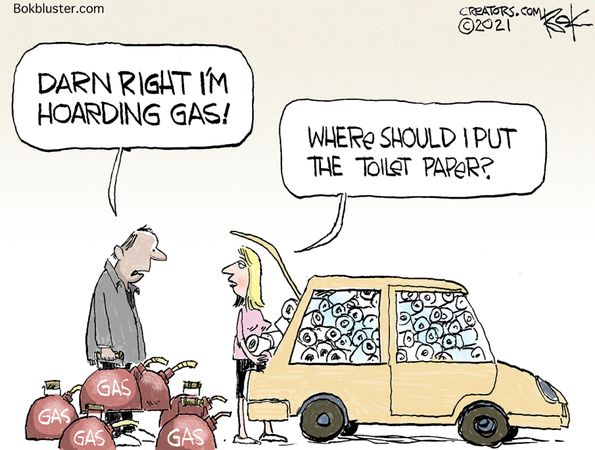
July 2021
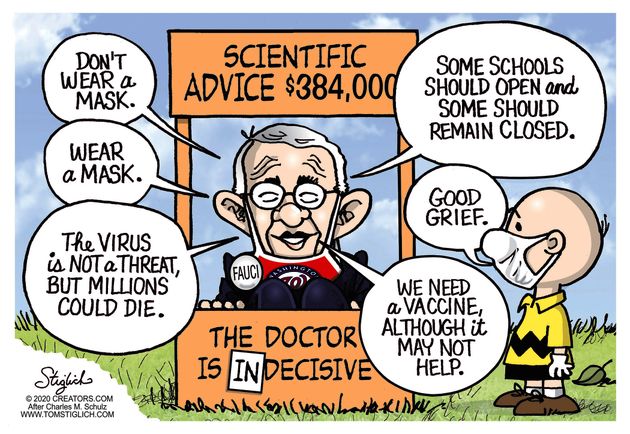
COVID-19, which we thought was almost over — this is like the eighth or ninth time we have thought this — appears to be surging again in certain areas because of the “Delta Variant,” which gets its name from the fact that it is spread primarily by fraternities. The problem is that many Americans have declined to be vaccinated, despite the efforts of pro-vaccine voices to change the minds of the skeptics by informing them that they are stupid idiots, which is usually a persuasive argument. In response to the surge, the CDC issues new guidelines urging Americans to “do the opposite of whatever we said in our previous guidelines, not that anyone is paying attention.”

In the month’s most upbeat story, Richard Branson and Jeff Bezos pioneer a new era in billionaire leisure travel by going up in private suborbital spacecraft. The two flights are radically different: Branson’s takes off in New Mexico and returns to earth in New Mexico; whereas Bezos takes off in Texas and comes down in Texas. Space enthusiasts say these missions will pave the way toward a future in which ordinary people with millions of spare dollars will be able to travel from one part of a state to a completely different part of that state while wearing matching outfits.

Athletes in the scaled-back Tokyo Olympics compete in the two-person flag-wave event. Koji Ito AP

In Tokyo, the pandemic-delayed 2020 Olympic games (motto: “Later, Smaller, Sadder”) finally get underway with the majestic Nasal Swab of Nations. This is followed by the ceremonial lighting of the Olympic Torch, which for safety reasons is a small vanilla-scented bath candle that is immediately extinguished to prevent it from attracting crowds. Let the games begin!

August 2021

The U.S. withdrawal from Afghanistan is similar to a soccer riot, but not as organized. Shekib Rahmani AP

American forces are withdrawn from Afghanistan, a country that, thanks to 20 years of our involvement, has been transformed — at a cost of many lives and more than $2 trillion — from a brutal, primitive undemocratic society into a brutal, primitive undemocratic society with a whole lot of abandoned American military hardware lying around. Most Americans agree that we have accomplished our mission, which is the same mission that the Russians had in Afghanistan before us, and the British had before them; namely, to get the hell out of Afghanistan.

The Biden administration, noting that the president has more than 140 years of experience reading Teleprompter statements about foreign policy, assures everyone that it has a Sound Exit Plan allowing for Every Possible Contingency, and insists that the withdrawal is going well. This assessment is confirmed by observers on the ground, particularly Jen Psaki, with the ground in her case being the White House Press Briefing Room. Observers who are actually in Kabul paint a somewhat darker picture of the withdrawal, more along the lines of what would have happened if the Hindenburg had crashed into the Titanic during a soccer riot.

Meanwhile global climate change continues to be a big concern as scientists release disturbing satellite images showing that the Antarctic ice sheet, for the first time in thousands of years, has developed a Dairy Queen.

September 2021

Massive leftist backlash against Ivermectin Explained

Treatment protocols with HCQ or Ivermectin + nutritional supplements fill the the need for early home treatment.

Connor Harris explains in his City Journal article Try a Dose of Skepticism.  Excerpts in italics with my bolds.

Ivermectin may or may not work against Covid-19, but media coverage of the drug has been sneering, inaccurate—and revealing.

“You are not a horse. You are not a cow. Seriously, y’all. Stop it,” read a recent viral tweet warning readers away from using a certain medication to treat Covid-19. The tone of affectedly folksy condescension would be expected from any of thousands of Twitter-addicted progressive journalists, but less so from the official account of the United States Food and Drug Administration. Perhaps even more surprising, the tweet linked to a warning advising readers not to take a drug, ivermectin, that has been used in humans for decades and is a standard Covid-19 treatment in much of the world.

The media’s recent reporting on ivermectin is a fitting sequel to their reporting on hydroxychloroquine near the beginning of the pandemic—but not, as received opinion would have it, because both are tales of red-state yokels duped into taking poisonous phony remedies. As in the earlier case, media coverage of ivermectin exemplifies how the liberal political class’s bias, and its confusion of respect for science with blind trust in a scientific establishment, impairs their skepticism and their capacity to appraise complex scientific questions.  See Why the Leftist Backlash Against Ivermectin
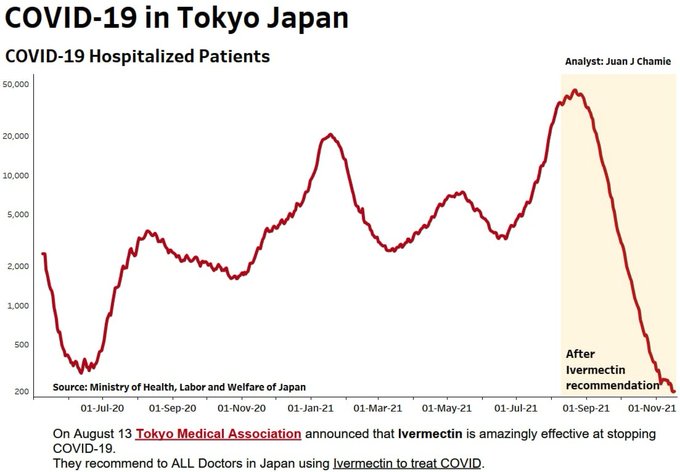
October 2021

Speaking of threats: American military and intelligence officials express concern over reports that China has tested a nuclear-capable hypersonic missile, although a Chinese Foreign Ministry spokesperson states that it was “probably a bat.”

In other disturbing developments, Facebook suffers a worldwide outage lasting several harrowing hours, during which billions of people are forced to obtain all of their misinformation from Twitter. Later in the month Facebook Chief Execudroid Mark Zuckerberg announces that, to better reflect Facebook’s vision for the future, the parent company is changing its name to the Washington Redskins.

One of the year’s celebrity space travelers is William Shatner, 90, whose suborbital voyage lasts 10 minutes, including two bathroom breaks. Mario Tama TNS

But there is also inspiring news in October, provided by 90-year-old actor William Shatner, who boards a Blue Origin suborbital capsule and successfully travels from one part of Texas to another part of Texas in a subhistoric mission lasting 10 minutes, including two bathroom stops.

November 2021

Biden heads to Glasgow, a city located in Scotland or possibly Wales, to participate in COP26, a 190-nation conference on climate change attended by 30,000 political leaders, diplomats, bureaucrats, experts, spokespersons, observers, aides, minions, private-jet pilots and of course Leonardo DiCaprio. After an incalculable number of catered meals and lengthy impassioned speeches making the points that (1) the climate crisis is real, (2) this is an emergency, (3) the time for action is NOW, (4) we cannot afford to wait ONE DAY longer, and (5) WE ARE NOT KIDDING AROUND THIS IS SERIOUS DAMMIT, the participating nations hammer out a historic agreement declaring, in no uncertain terms, that they will definitely, no excuses this time, gather next year for another conference, which, in a clear indication of progress, will be named “COP27.” Take that, climate change!
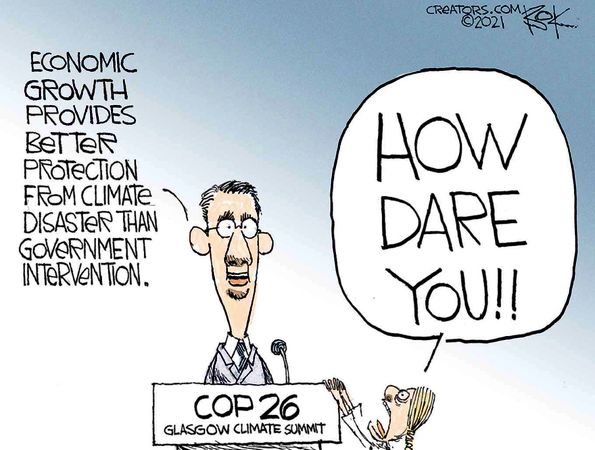
On the economic front, the Biden administration, seeking to counteract the steep rise in gasoline prices, orders the Energy Department to release 50 million barrels of oil from the Strategic Petroleum Reserve. Within minutes a dozen towns in east Texas are flattened by an oil wave estimated to be 200 feet high. “Apparently,” states a red-faced department spokesperson, “you’re supposed to release the oil into a pipeline.”

Meanwhile, in response to a global shortage of maple syrup, the Quebec Maple Syrup Producers announce that they are releasing 50 million pounds of syrup from their strategic reserve. You probably think we are making this item up, but we are not.

As the month draws to a close, anxiety mounts worldwide over yet another coronavirus variant, called “omicron,” which we are pretty sure is also the name of one of the lesser villains in “Avengers: Endgame.” Everyone — government officials, medical authorities and the news media — assures the public that while the new variant is a cause for concern, there is no reason to panic because OHMIGOD THEY’RE BANNING TRAVEL FROM AFRICA THE STOCK MARKET IS CRASHING THE VACCINES MIGHT NOT WORK WE ARE ALL GOING TO DIE POSSIBLY AS SOON AS THE MONTH OF …

December 2021

… which begins with the nations of the world united in a heartwarming humanitarian effort to make sure that omicron stays in the other nations of the world. The U.S. government considers tough new restrictions on international travelers, including requiring their planes to circle the airport for seven days before landing, but eventually settles on a compromise under which the planes will be allowed to land, but the passengers must remain in the airport eating prepackaged kiosk sandwiches until, in the words of a CDC spokesperson, “all of their germs are dead.”

President Biden, in a reassuring address to the nation on his strategy for dealing with a potential winter coronavirus surge, urges Americans to “do what it says on the teleprompter.”

In a historic video summit, President Biden and President Putin discuss the issue of how the “mute” button works. Adam Schultz AP

Meanwhile the news media, performing their vital, constitutionally protected function of terrifying the public, run story after story documenting the relentless advance of omicron, with headlines like “First Omicron Case Reported in Japan,” “Omicron Now Reported In California,” “Omicron Heading Your Way,” “OMICRON IS IN YOUR ATTIC RIGHT NOW,” etc.
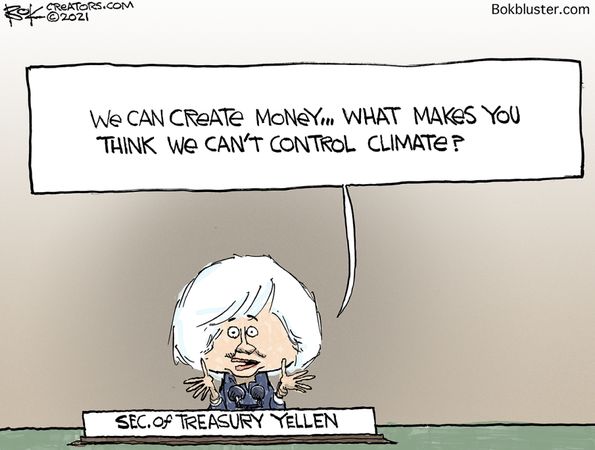
The big economic story continues to be inflation, which is the worst it has been for decades, with the hardest-hit victims being low-income consumers and major college-football programs, which are being forced to pay tens of millions of dollars to obtain the services of even mediocre head coaches. In another disturbing economic development, the Federal Reserve Board issues a formal statement admitting that it has no earthly idea what a “bitcoin” is, and it’s pretty sure nobody else does either.

Elsewhere abroad, the state-run Saudi Press Agency reports that a prestigious Saudi beauty pageant for camels, with $66 million in prize money, disqualified over 40 contestants because they received Botox injections, facelifts and other artificial touch-ups. We are not making this item up.

In sports, Major League Baseball’s collective bargaining agreement expires, raising the possibility of a work stoppage next season, not that anyone would notice, inasmuch as the average professional baseball game this season lasted as long as the gestation period of a yak, but with less action.

In holiday-season news, travel in the Midwest is snarled when the U.S. Department of Agriculture, seeking to alleviate a shortage of Christmas hams, releases 17 million head of pig from the Strategic Pork Reserve, blocking every major road into and out of Iowa and causing the region to smell, in the words of Iowa Gov. Kim Reynolds, “even worse than usual.”

Finally, mercifully, the troubled year nears its conclusion. As the nation prepares to celebrate New Year’s Eve, the mood is subdued and thoughtful. People are still getting drunk and throwing up, but they’re doing this in a subdued and thoughtful manner. Because nobody knows what 2022 will bring. Will it suck as much as this year? Will it suck more? Or will it suck a LOT more? These appear to be our choices.

OK, so that’s not very hopeful. But don’t let it stop you from ringing in 2022 on a festive note. For one night, forget about the bad things. Be festive, party hard, and, in the words of Dr. Anthony Fauci, “lower your mask before you throw up.”
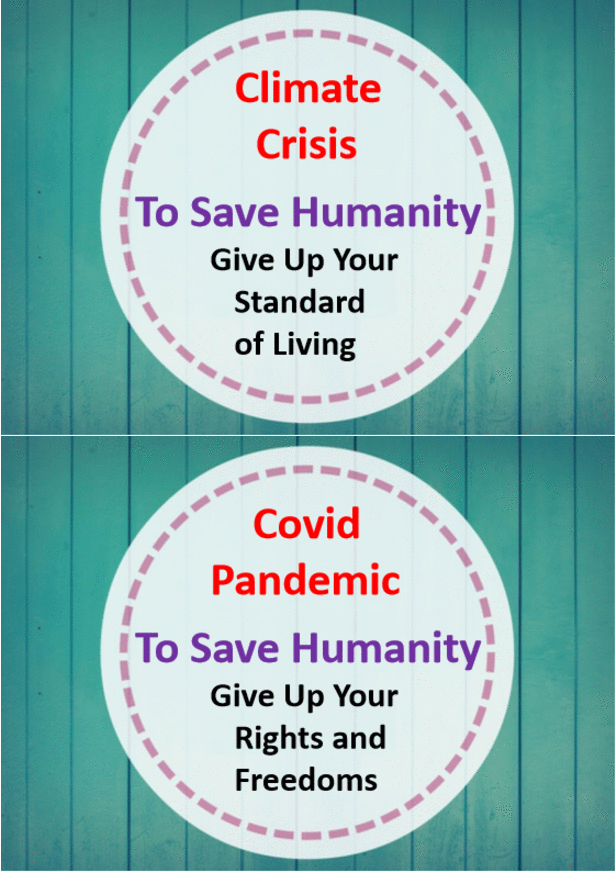
Two sides of the same coin.