The Forces that Flatten Us

Alana Newhouse writes insightfully about the state of American society in her Tablet article Everything Is Broken  And how to fix it.  Excerpts in italics with my bolds and images.

For seven decades, the country’s intellectual and cultural life was produced and protected by a set of institutions—universities, newspapers, magazines, record companies, professional associations, cultural venues, publishing houses, Hollywood studios, think tanks, etc. Collectively, these institutions reflected a diversity of experiences and then stamped them all as “American”—conjuring coherence out of the chaos of a big and unwieldy country. This wasn’t a set of factories pumping out identical widgets, but rather a broad and messy jazz band of disparate elements that together produced something legible, clear, and at times even beautiful when each did their part.

But, beginning in the 1970s, the economic ground underneath this landscape began to come apart. Michael Lind explains this better than anyone else:

The strategy of American business, encouraged by neoliberal Democrats and libertarian conservative Republicans alike, has been to lower labor costs in the United States, not by substituting labor-saving technology for workers, but by schemes of labor arbitrage: Offshoring jobs when possible to poorly paid workers in other countries and substituting unskilled immigrants willing to work for low wages in some sectors, like meatpacking and construction and farm labor. American business has also driven down wages by smashing unions in the private sector, which now have fewer members—a little more than 6% of the private sector workforce—than they did under Herbert Hoover.

This was the tinder. The tech revolution was the match—one-upping the ’70s economy by demanding more efficiency and more speed and more boundarylessness, and demanding it everywhere. They introduced not only a host of inhuman wage-suppressing tactics, like replacing full-time employees with benefits with gig workers with lower wages and no benefits, but also a whole new aesthetic that has come to dominate every aspect of our lives—

a set of principles that collectively might be thought of as flatness.

Flatness is the reason the three jobs with the most projected growth in your country all earn less than $27,000 a year, and it is also the reason that all the secondary institutions that once gave structure and meaning to hundreds of millions of American lives—jobs and unions but also local newspapers, churches, Rotary Clubs, main streets—have been decimated. And flatness is the mechanism by which, over the past decade and with increasing velocity over the last three years, a single ideologically driven cohort captured the entire interlocking infrastructure of American cultural and intellectual life. It is how the Long March went from a punchline to reality, as one institution after another fell and then entire sectors, like journalism, succumbed to control by narrow bands of sneering elitists who arrogated to themselves the license to judge and control the lives of their perceived inferiors.

Flatness broke everything.

Today’s revolution has been defined by a set of very specific values:

  • boundarylessness; speed; universal accessibility;
  • an allergy to hierarchy, so much so that the weighting or preferring of some voices or products over others is seen as illegitimate;
  • seeing one’s own words and face reflected back as part of a larger current;
  • a commitment to gratification at the push of a button;
  • equality of access to commodified experiences as the right of every human being on Earth;
  • the idea that all choices can and should be made instantaneously, and that,
  • the choices made by the majority in a given moment, on a given platform represent a larger democratic choice, which is therefore both true and good—until the next moment, on the next platform.

Here’s a description of the aesthetics of Silicon Valley (emphasis added):

It’s the realm of coffee shops, bars, startup offices, and co-live/work spaces that share the same hallmarks everywhere you go: a profusion of symbols of comfort and quality, at least to a certain connoisseurial mindset. Minimalist furniture. Craft beer and avocado toast. Reclaimed wood. Industrial lighting. Cortados. Fast internet. The homogeneity of these spaces means that traveling between them is frictionless, a value that Silicon Valley prizes and cultural influencers take advantage of. Changing places can be as painless as reloading a website. You might not even realize you’re not where you started.

“You might not even realize you’re not where you started.” The machines trained us to accept, even chase, this high. Once we accepted it, we turned from willful individuals into parts of a mass that could move, or be moved, anywhere. Once people accepted the idea of an app, you could get them to pay for dozens of them—if not more. You could get people to send thousands of dollars to strangers in other countries to stay in homes they’d never seen in cities they’d never visited. You could train them to order in food—most of their food, even all of their food—from restaurants that they’d never been to, based on recommendations from people they’d never met. You could get them to understand their social world not as consisting of people whose families and faces one knew, which was literally the definition of social life for hundreds of thousands of years, but rather as composed of people who belonged to categories—“also followed by,” “friends in common,” “BIPOC”—that didn’t even exist 15 years ago. You could create a culture in which it was normal to have sex with someone whose two-dimensional picture you saw on a phone, once.

You could, seemingly overnight, transform people’s views about anything—even everything.

The Obama administration could swiftly overturn the decision-making space in which Capitol Hill staff and newspaper reporters functioned so that Iran, a country that had killed thousands of Americans and consistently announces itself to be America’s greatest enemy, is now to be seen as inherently as trustworthy and desirable an ally as France or Germany. Flatness, frictionlessness.

The biological difference between the sexes, which had been a foundational assumption of medicine as well as of the feminist movement, was almost instantaneously replaced not only by the idea that there are numerous genders but that reference in medicine, law or popular culture to the existence of a gender binary is actually bigoted and abusive. Flatness.

Facebook’s longtime motto was, famously, “Move fast and break shit,” which is exactly what Silicon Valley enabled others to do.

The internet tycoons used the ideology of flatness to hoover up the value from local businesses, national retailers, the whole newspaper industry, etc.—and no one seemed to care. This heist—by which a small group of people, using the wiring of flatness, could transfer to themselves enormous assets without any political, legal or social pushback—enabled progressive activists and their oligarchic funders to pull off a heist of their own, using the same wiring. They seized on the fact that the entire world was already adapting to a life of practical flatness in order to push their ideology of political flatness

what they call social justice, but which has historically meant the transfer of enormous amounts of power and wealth to a select few.
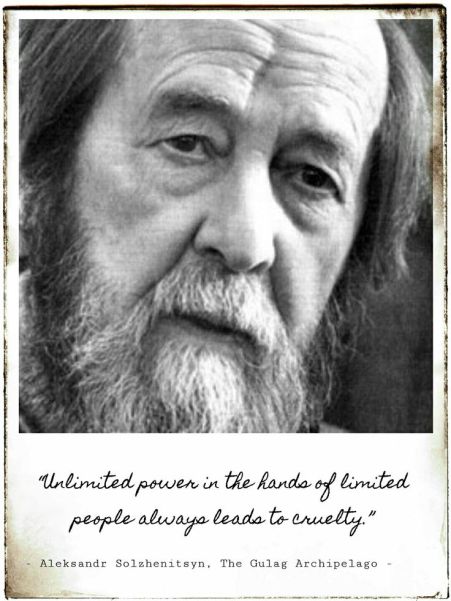
9d5962361f0cdc9f6ecbf27c31107c16-admiration-the-hand

Because this cohort insists on sameness and purity, they have turned the once-independent parts of the American cultural complex into a mutually validating pipeline for conformists with approved viewpoints—who then credential, promote and marry each other. A young Ivy League student gets A’s by parroting intersectional gospel, which in turn means that he is recommended by his professors for an entry-level job at a Washington think tank or publication that is also devoted to these ideas. His ability to widely promote those viewpoints on social media is likely to attract the approval of his next possible boss or the reader of his graduate school application or future mates. His success in clearing those bars will in turn open future opportunities for love and employment. Doing the opposite has an inverse effect, which is nearly impossible to avoid given how tightly this system is now woven. A person who is determined to forgo such worldly enticements—because they are especially smart, or rich, or stubborn—will see only examples of even more talented and accomplished people who have seen their careers crushed and reputations destroyed for daring to stick a toe over the ever multiplying maze of red lines.

So, instead of reflecting the diversity of a large country, these institutions have now been repurposed as instruments to instill and enforce the narrow and rigid agenda of one cohort of people, forbidding exploration or deviation—a regime that has ironically left homeless many, if not most, of the country’s best thinkers and creators. Anyone actually concerned with solving deep-rooted social and economic problems, or God forbid with creating something unique or beautiful—a process that is inevitably messy and often involves exploring heresies and making mistakes—will hit a wall. If they are young and remotely ambitious they will simply snuff out that part of themselves early on, strangling the voice that they know will get them in trouble before they’ve ever had the chance to really hear it sing.

He Zhi Hua, Protestor Crushed To Death By Steamroller In Chinese Government Relocation Drive

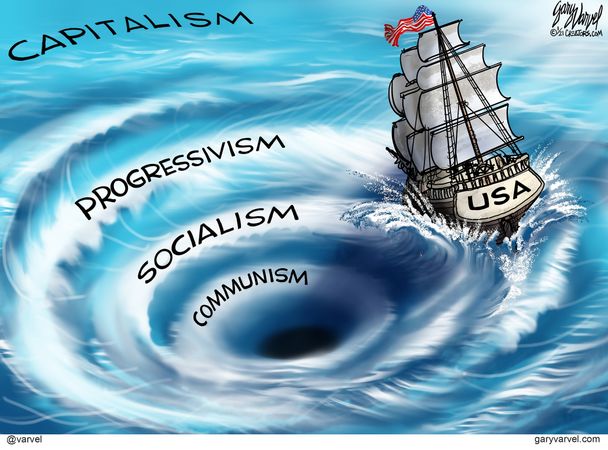
As with Communists and modernism, there was nothing inevitable about the match. Most consumers don’t know that by using internet-based (or -generated) platforms—by buying from Amazon, by staying in an Airbnb, by ordering on Grubhub, by friending people on Facebook—that they are subscribing to a life of flatness, one that can lead directly into certain politics. But they are. Seduced by convenience, we end up paying for the flattening of our own lives. It is not an accident that progressive ideas spread faster on the internet.

The internet is a car that runs on flatness; progressive politics—unlike either conservatism or liberalism—are flatness.

I’m not looking to rewind the clock back to a time before we all had email and cellphones. What I want is to be inspired by the last generation that made a new life-world—the postwar American abstract expressionist painters, jazz musicians, and writers and poets who created an alternate American modernism that directly challenged the ascendant Communist modernism: a blend of forms and techniques with an emphasis not on the facelessness of mass production, but on individual creativity and excellence.

Like them, our aim should be to take the central, unavoidable and potentially beneficent parts of the Flatness Aesthetic (including speed, accessibility; portability) while discarding the poisonous parts (frictionlessness; surveilled conformism; the allergy to excellence). We should seek out friction and thorniness, hunt for complexity and delight in unpredictability. Our lives should be marked not by “comps” and metrics and filters and proofs of concept and virality but by tight circles and improvisation and adventure and lots and lots of creative waste.

And not just to save ourselves, but to save each other. The vast majority of Americans are not ideologues. They are people who wish to live in a free country and get along with their neighbors while engaging in profitable work, getting married, raising families, being entertained, and fulfilling their American right to adventure and self-invention. They are also the consumer base for movies, TV, books, and other cultural products. Every time Americans are given the option to ratify progressive dictates through their consumer choices, they vote in the opposite direction. When HBO removed Gone with the Wind from its on-demand library last year, it became the #1 bestselling movie on Amazon. Meanwhile, endless numbers of Hollywood right-think movies and supposed literary masterworks about oppression are dismal failures for studios and publishing houses that would rather sink into debt than face a social-justice firing squad on Twitter.

This disconnect between culturally mandated politics and the actual demonstrated preferences of most Americans has created an enormous reserve of unmet needs—and a generational opportunity.  Build new things! Create great art! Understand and accept that sensory information is the brain’s food, and that Silicon Valley is systematically starving us of it. Avoid going entirely tree-blind. Make a friend and don’t talk politics with them. Do things that generate love and attention from three people you actually know instead of hundreds you don’t. Abandon the blighted Ivy League, please, I beg of you. Start a publishing house that puts out books that anger, surprise and delight people and which make them want to read. Be brave enough to make film and TV that appeals to actual audiences and not 14 people on Twitter. Establish a newspaper, one people can see themselves in and hold in their hands. Go back to a house of worship—every week. Give up on our current institutions; they already gave up on us.

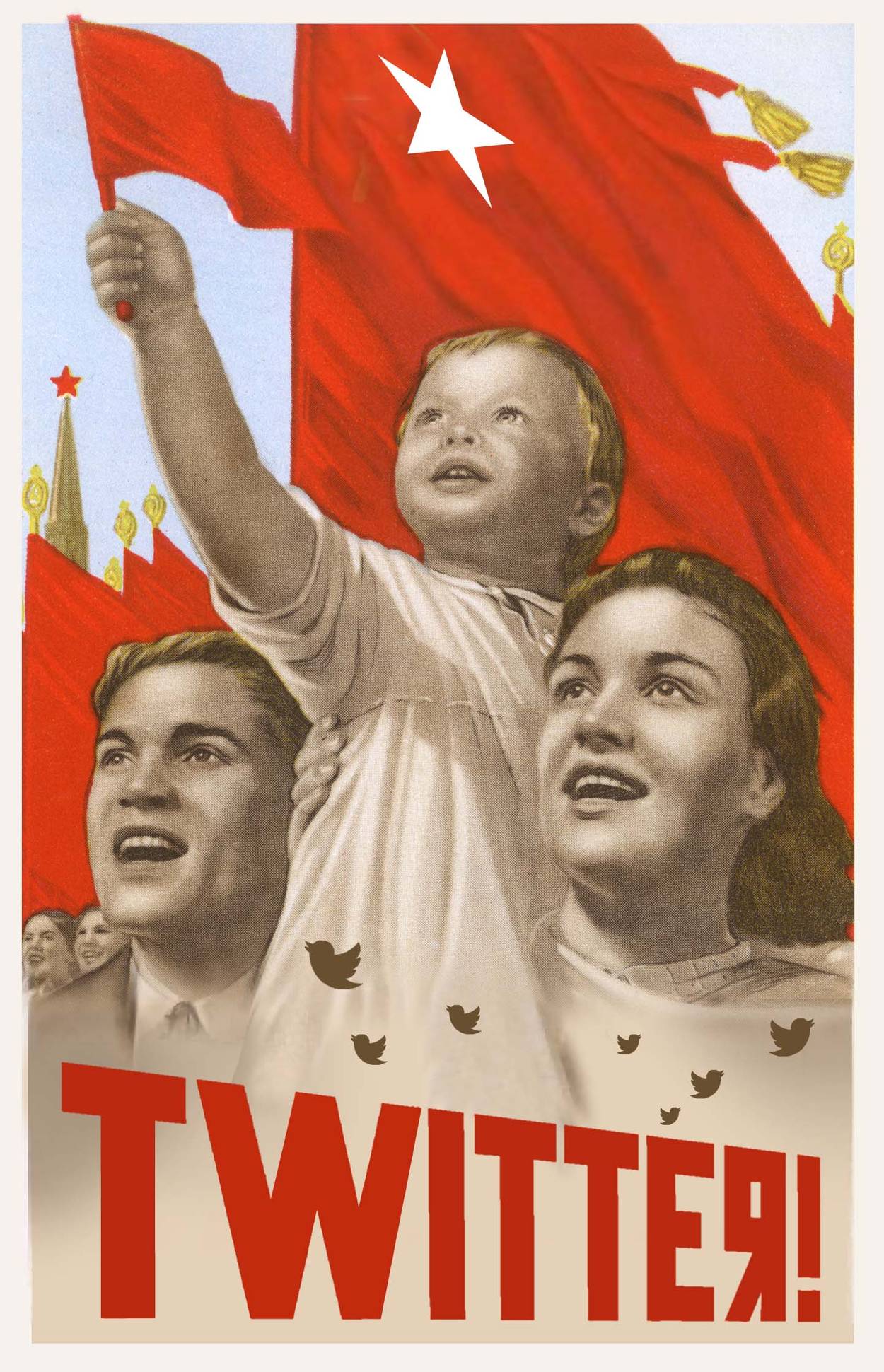
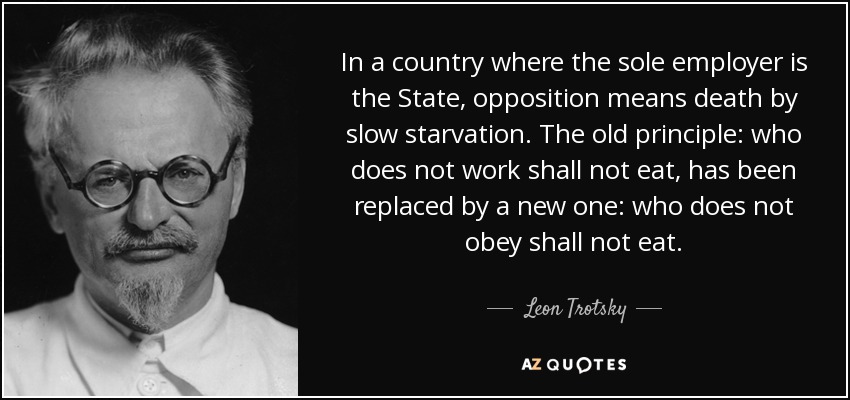
Soviet Jokes About Living Under Oppression

The Soviet people lived under a regime where private life, ideas and opinions were banished from public expression by state media.  Now the USA has state media rivaling the USSR, only difference is ambiguity whether the media runs the state or vice-versa as in Soviet days.  In any case, Russians and others under that regime voiced their resistance by sharing jokes at the expense of the autocrats.  Wikipedia provides some instructive examples for Americans in the days ahead.

A judge walks out of his chambers laughing his head off. A colleague approaches him and asks why he is laughing. “I just heard the funniest joke in the world!”
“Well, go ahead, tell me!” says the other judge.
“I can’t – I just gave someone ten years for it!”

Q: “Who built the White Sea Canal?”
A: “The left bank was built by those who told the jokes, and the right bank by those who listened.”

Q: Will there be KGB in communism?
A: As you know, under communism, the state will be abolished, together with its means of suppression. People will know how to self-arrest themselves.

Q: How do you deal with mice in the Kremlin?
A: Put up a sign saying “collective farm”. Then half the mice will starve, and the rest will run away.

“Lubyanka (KGB headquarters) is the tallest building in Moscow. You can see Siberia from its basement.”

A new arrival to Gulag is asked: “What were you given 10 years for?”
– “For nothing!”
– “Don’t lie to us here, now! Everybody knows ‘for nothing’ is 3 years.”

Q: What’s the difference between a capitalist fairy tale and a Marxist fairy tale?
A: A capitalist fairy tale begins, “Once upon a time, there was….”. A Marxist fairy tale begins, “Some day, there will be….”

A Soviet history professor addressed his university students: “Regarding the final exam, I have good news and bad news.  The good news: All the questions are the same as last year.  The bad news:  Some of the answers are different.”

Q: What is the difference between the Constitutions of the US and USSR? Both of them guarantee freedom of speech.
A: Yes, but the Constitution of the USA also guarantees freedom after the speech.

Q: Is it true that the Soviet Union is the most progressive country in the world?
A: Of course! Life was already better yesterday than it’s going to be tomorrow!

Khrushchev visited a pig farm and was photographed there. In the newspaper office, a discussion is underway about how to caption the picture. “Comrade Khrushchev among pigs,” “Comrade Khrushchev and pigs,” and “Pigs surround comrade Khrushchev” are all rejected as politically offensive. Finally, the editor announces his decision: “Third from left – comrade Khrushchev.”

Q: “What is the main difference between succession under the tsarist regime and under socialism?”
A: “Under the tsarist regime, power was transferred from father to son, and under socialism – from grandfather to grandfather.”

Q: What are the new requirements for joining the Politburo?
A: You must now be able to walk six steps without the assistance of a cane, and say three words without the assistance of paper.

Our Soviet industry system is simple and works very well.  Our bosses pretend to pay and we pretend to work.

An old woman asks her granddaughter: “Granddaughter, please explain Communism to me. How will people live under it? They probably teach you all about it in school.”
“Of course they do, Granny. When we reach Communism, the shops will be full–there’ll be butter, and meat, and sausage. You’ll be able to go and buy anything you want…”
“Ah!” exclaimed the old woman joyfully. “Just like it was under the Tsar!”

A man walks into a shop and asks, “You wouldn’t happen to have any fish, would you?”. The shop assistant replies, “You’ve got it wrong – ours is a butcher’s shop. We don’t have any meat. You’re looking for the fish shop across the road. There they don’t have any fish!”

Q: “What happens if Soviet socialism comes to Saudi Arabia?
A: First five years, nothing; then a shortage of oil.”

Stalin appears to Putin in a dream and says: “I have two bits of advice for you: kill off all your opponents and paint the Kremlin blue.” Putin asks, “Why blue?” Stalin: “I knew you would not object to the first one.”


Wither the GOP?

Daniel Gelernter has some interesting ideas about where things may be headed in this turbulent time in US politics.  His article is Why Is the GOP Glad Trump Lost?  Excerpts in italics with my bolds and images.

Establishment Republicans will learn the hard way how very much they have lost in helping Joe Biden win the way he did.

A little after 2 p.m. Eastern time on Wednesday, protesters crashed into the U.S. Capitol and forced a halt in the certification of the electoral vote. As the Senate reconvened that night, Senate Majority Leader Mitch McConnell (R-Ky.), speaking as though he had just survived 9/11, condemned the “thugs” waving flags who had forced them to run away for a few hours. Man of the People Mitt Romney, who probably will not repeat his mistake of flying commercial, called the Capitol storm “an insurrection, incited by the president of the United States.”

If you wonder where these big politicians were last year when people were having their businesses closed down by government mandates or watching their cars torched by Antifa with Molotov cocktails, the answer is they were most likely in incredibly comfortable homes, enjoying taxpayer-guaranteed salaries and genuinely insane expense accounts, secure in the knowledge that, whatever happens—whether they return to Capitol Hill for the rest of their lives or are forced one day into semi-retirement on K Street—they will never again have to live like “normal people.”

And when they blame President Trump for the Capitol protest, they are doubly foolish and doubly deceived.

First, they implicitly deny that these protestors had any reason to be upset. Even the CHAZ protestors who demolished central Seattle were granted the presumption that they might have had reasons, however misguided.  But the Capitol Hill protestors had already been told, repeatedly, by the news media, social media, and their political leaders, to shut up and go home. And yet they didn’t—so it must be Trump’s fault.

The idea that a large part of America genuinely could be infuriated by the behavior of our elected officials has not dawned on them. When they get yelled at on planes, they think, “Why don’t my constituents believe me? Why don’t they trust me? It’s Trump’s fault!”

But they never ask themselves if they might have given their constituents legitimate reasons not to trust them. Did they ever, for example, vote to send a $10 million check to Pakistan and a $600 check to some Americans? Would that upset anyone?

Today, these politicians are breathing a sigh of relief—their second mistake: “My constituents trusted me before Trump came,” they think. “Now that he’s on the way out the door, they will trust me again!” They believe that Trump not being president means that they can go back to vacuuming up money and power just as before. They think Trump is finished.

In reality, they are finished.

Trump could have announced the formation of a new political party. A majority of Republican voters probably would have followed him. Eventually, after a few election cycles of mutual destruction, the rest of the GOP reluctantly would acquiesce in a new party which would likely have many of the same ills as the old. Instead, Trump has made clear his intention of primarying every Republican who opposed airing election fraud claims in court.

Career GOP politicians will spend the next several years watching “their” party rapidly remade in what they mistakenly believe to be Trump’s image. But it is actually the image of a large part of America that feels totally ignored.

The principals that Trump represents do not start and end with Trump. Limited regulation, limited government, low taxes, fair trade, stricter immigration laws, belief in God and in the earnest goodness of the average American, a weariness of foreign wars and entanglements: You might call it George Washington conservatism. These ideas have been absent from politics for at least 30 years, as voters had a choice between the party of big government and the party that claims to prefer limited government but also embraces big government.

These are the ideas Trump has expressed and on which he governed.. America First: You mind your business and we’ll mind ours.

If a politician rolls his eyes at that suggestion, he’ll never understand why the people don’t want him. He’ll never understand why those angry Americans were at the Capitol the other day. He’ll never understand why he lost his seat and had to become a highly paid consultant instead of a highly paid public servant.

When Trump tells his supporters that the journey is only beginning, the leftist media and conservative elite bite their collective nails—Does this mean Trump will come back? Not necessarily. It means that the movement Trump has started will go on no matter what—it means that America will come back.

We’ve been terribly governed for large parts of the last century, and before. How would you feel if one day the government told you you weren’t allowed to buy or drink alcohol, and that if you owned a distillery you’d just lost your livelihood? Of course that happened in 1920, and most Americans responded by quietly disobeying the law. Most politicians also disobeyed the law, but in much greater comfort and with the tacit approval of their friends in law enforcement. The arrival of organized crime in America was an unintended consequence.

How would you feel if the government declared that employers couldn’t raise wages? That happened in 1942. Employers skirted the law by creating the concept of “health benefits,” which did not count as wages. That had the unintended consequence of spawning a monster health insurance industry that destroyed private medical care in America.

One day in the future Americans might be told that their guns are illegal and must be turned in—and the government would probably discover that Americans somehow own vastly fewer guns than was thought. And that might have the unintended consequence of all those missing guns showing up one day in the hands of a well-regulated and very displeased militia.

Americans will not submit themselves to laws that they, on a large scale, think unjust. Nor will they submit themselves to be governed by leaders whom they, on a large scale, do not believe are elected. In 1960, Nixon decided it would be best to hush up his having been cheated out of the presidency. He was well-intentioned, but he was wrong. Trump knows that stealing an election isn’t a personal affront—it’s an attack on every American who casts a ballot. Precisely the opposite of the media’s demented obsession, Trump is one of the very few people in politics who understand that it isn’t just about him.

By pretending that it is all about him, our big-shot politicians have an excuse to ignore the Americans whom Trump has represented.

But the George Washington conservatives are awake now, and they will find other voices, and more voices. Trump will be with them, but they will find new leaders as well. They don’t want much—put in a single phrase their demands boil down to “Leave us alone!” A Biden Administration, unelected though it may be, can survive if it listens to that very basic demand. But the GOP will learn the hard way how very much they have lost in helping Biden win the way he did.

See also posts by David Gelernter (Daniel’s father?):

The Real Reason They Hate Trump

How Science Is Losing Its Humanity


Trump Takeaways

It was always fashionable to trash talk Trump, but to my surprise it has only grown in political correctness post election this year.  For those who wonder why they are so consumed with the need to disparage him, Conrad Black explains in his article today: Establishment’s Threat of Impeachment a Confession of Failure.  An excerpt below is in italics with my bolds and images.
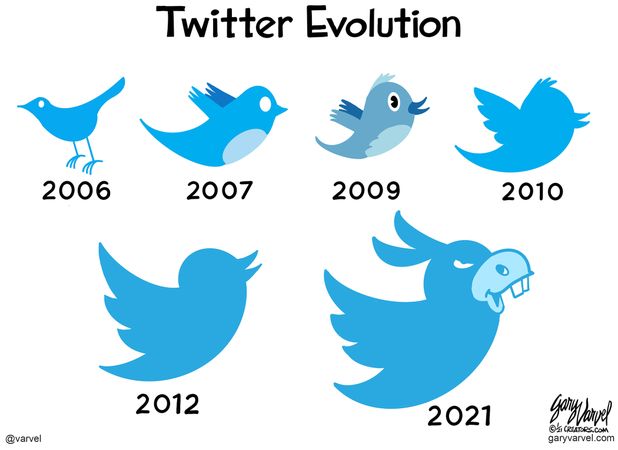
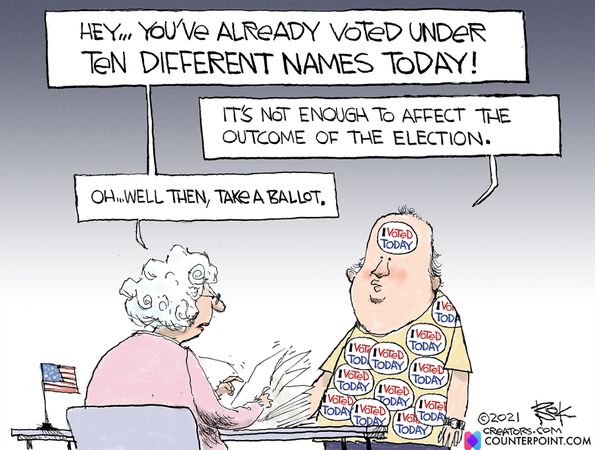
It all begs the question of why Trump’s enemies are still so fanatical in their efforts to separate him from his huge following and destroy him politically, in Stalinist fashion. In part, the Democrats seem now to be addicted to the practice of distracting the public from the political unacceptability of their own program and record by a febrile defamation of the president.

He is not and never in his adult life was a racist or sexist. He has a number of annoying mannerisms. They can be seen by everyone and voters decide for themselves whether they outweigh the president’s better qualities and achievements.

The obsessive desire to destroy Trump even as he leaves the presidency cannot be based on anything but fear of a man who has successfully defied the political establishment, exposed it as substantially a failure, and exploited the fact that the pre-Trump status quo was despised by a majority of Americans.

The logical and creditable response to the collapse in the prestige of the country’s orthodox leaders is to raise their game, put up better candidates in both the parties (not the dismal selection of senatorial candidates available to Georgia’s voters last week), and produce some original policies. Instead, they have just tried to stone to death the person who did produce original policies.

Serving the Country Well

The political establishment has tragically missed the point: if it had been serving the country well Trump would not have been elected four years ago.  If he had not been a capable president most of his policies would not have been effectively endorsed in the congressional and state elections across the country. Those whom he displaced would not have had to resort to such extremes to evict him from the White House.

Polls indicate uniformly that barely 10 percent of Americans respect the legislators in the Congress and no more than 15 percent of Americans believe their media. Even the questionable election revealed that 48 percent of Americans preferred Trump to the candidate of Wall Street, Silicon Valley, Hollywood, academia and the media and social media, despite the Democrats’ huge financial advantage and wall-to-wall media defamation of the incumbent.

The pre-Trump decades brought endless, fruitless war in the Middle East, with an accompanying humanitarian disaster; the greatest economic crisis in the world in 80 years; more than ten million unskilled illegal migrants flooding across the southern border; immense trade deficits; alarming advances by China at America’s expense; and Trump’s predecessors were swindled by North Korea and Iran.

Trump addressed these problems; the dire predictions of his dangerous incompetence came to nothing, his vote total grew by 20 percent between elections, and his party did well in congressional and state elections.

Yet his opponents didn’t respond with better candidates or policies, they exhumed the defeated candidates Joe Biden and Kamala Harris and set them atop a Sanders-Warren far-left program, ignored the worst rioting in the country for over fifty years, apart from defunding police and engineering huge spikes in violent crime, and exploited the COVID crisis to adopt election laws that incite the inference that the election has been stolen.

And they got a free pass when the Supreme Court declined to hear the complaint from Texas supported by eighteen other states that four states had failed to assure a fair presidential election. Trump’s 74 million supporters were left with nothing to do except protest.

Only Alternative

In falsely accusing Trump of inciting insurrection, they have again ignored the public desire for better government and have effectively confirmed Donald Trump as the only alternative to the present familiar source of poor government. Joe Biden’s response to the outrages at the Capitol were that Trump had deliberately incited it, that the motives of the rioters were racist, that the Capitol Police were racists, that Trump was reminiscent of Nazi propaganda minister Josef Goebbels, and then Biden called for national unity.

Trump made a serious mistake in imagining and publicly asking that Vice President Pence reject the determination by the Senate of the Electoral College vote. Pence had no authority to do anything of the kind. But Pence’s election was as much violated as Trump’s and if he attends the inauguration now, Pence will be choosing the Democratic antics over this own party and needlessly compromise his political future.

Impeachment is nonsense, Trump won’t resign and an inept government won’t be able to use defamation and dirty tricks as a substitute for public service for long.

If Trump is the only person who can defend the people against incompetent administration, cowardly legislators and jurists, and a system that has become largely rotten and doesn’t run honest elections or even fair trials, (98 percent conviction rate and a quarter of the world’s prison population), while a totalitarian woke media and dictatorial censors of social media silence dissent, his influence will rise and not be dissipated.


How Washington Was Lost, What to Do Now

John Solomon writes with perspective about what happened along with advice for the future of the republic in his article How the GOP lost control of Washington, and what comes next.  Excerpts in italics with my bolds.

News Analysis: Democrats owned the narrative and rules of the 2020 election. Will Republicans learn from it?

The November election (and Tuesday’s Georgia curtain call) wasn’t won and lost by the tactics, spending, individual players and messaging in the weeks before Nov. 3, according to interviews conducted with more than three dozen frontline players.

Rather, its outcome was cemented long before Labor Day 2020 by a Democratic machinery of former Barack Obama proteges, like David Plouffe, John Podesta, David Axelrod and Stacey Abrams, who worried far less about the tactics of ads, travel (Joe Biden hardly did!) and fundraising and far more about the strategy of how to control the narrative and the rules that would shape the outcome.

They even told the Republicans and the public what they planned to do. Just read Plouffe’s book, “A Citizen’s Guide to Beating Donald Trump.” They even boastfully predicted days before how the vote count would roll out on election night and for several days later. Trump would lead early, and Biden would surpass late, they said.  They were right. Why?

Change the Rules in Your Favor

First and foremost, they usurped the powers of GOP-controlled state legislatures in the five battleground states and rewrote the rules of how votes would be cast and counted, using the pandemic as an excuse.

Mail ballots could be sent to everyone, even if they didn’t ask for one, and wide swaths of Americans could vote by mail. Voter ID requirements could be suspended for those who felt homebound by COVID’s wrath. Mobile ballot boxes could be deployed. Spoiled ballots that legally were supposed to be discarded could be “cured” by election clerks. Legally required voter roll purges could be skipped. And a single billionaire could donate $350 million directly to the election clerks, judges and vote counters in the states, requiring them in some cases to register voters, and create more poll locations in Democratic strongholds.

And Republicans — who controlled the legislatures in Wisconsin, Michigan, Pennsylvania, Georgia and Arizona and the constitutional right to set the rules — hardly put up a fight. Instead, they urged their voters not to take advantage of the loosened rules and to vote the old-fashioned way. They, in the words of the Trump-loving Georgia Democrat Vernon Jones, simply unilaterally disarmed.

Democrats understood that in a pandemic and in an America with millions of new millennial, urban and minority voters, the easier you make casting a ballot the more likely a low-propensity voter is to vote. Send it to them, help them register, make easy drop-off locations or the mailbox the final destination, and voters will vote a lot more willingly.

In other words, the liberal brain trust engaged in cutting-edge warfare, while Republicans tossed their comfortable set of horseshoes from the 1980s, hoping the good old recipe of evangelical GOTV, direct mail, talk radio and Fox News would deliver yet another election win as it had done for decades.

It didn’t.

To be fair, Donald Trump mustered — by a mile — the largest national vote ever assembled by a Republican at 75 million-plus voters and barnstormed the country, risking COVID and criticism without fear. Kevin McCarthy picked an all-star slate of candidates and picked up seats. Mitch McConnell raised a ton of money, and Ronna McDaniel put together one of the most impressive get-out-the-vote efforts ever assembled.

But all that could not overcome the advantage of a rewired electoral system in the five battlegrounds, as the Georgia runoffs showed Tuesday, said Tom Price, a former congressman and Trump Cabinet secretary.

Democrats “leap-frogged Republicans’ process, strategy, technology and tactics, and that is to the credit of folks on the Democratic side,” Price told Just the News. “They have perfected harvesting, I believe it is harvesting, of absentee ballots, and I think the numbers will show in these runoff races, the same as they did in November, that Republicans who lost by close margins won the vote on Election Day, won on early voting in person and lost heavily in absentee ballots.”

Control the Narrative by Means of Media Allies

Secondly, liberals spent two decades building an alliance with the mainstream media, the social giants and the search giants and the permanent government bureaucracy until they could control the narrative, even when it wasn’t true. They had it perfected by the time Donald Trump took office.

Those who objected were canceled and shamed. Intelligence and law enforcement and private investigators were misused to create false realities. True facts and legally protected speech were outright censored long enough to create the narrative needed to win.

Trump colluded with Russia, and bribed Ukraine to investigate his political opponents … though he didn’t. The Hunter Biden corruption story was Russian-fed conspiracy theory …. though it is really true, and he was under criminal investigation the last two years … American towns could be burned to the ground and police defunded because a Kenosha, Wisc., officer shot an unarmed man … who turned out to be wanted by police and armed with a knife.

Owning the information superhighway of the 21st century, like the rules of the election, was far more powerful than choosing where to run ads, campaign in person or spend money.

Liberal Donors Contracted Returns on Their Investments

Finally, the liberal oligarchs club — George Soros, Mark Zuckerberg, Mike Bloomberg et al — spent more than ever to win. But they also transformed the way political donations were spent by imposing corporate governance and specific returns on investment.

Every recipient had to deliver very specific outcomes to keep getting money, governed by lengthy contract-like documents. And the outcomes and deliverables were mapped to the two larger goals of controlling the narrative and the rules of the election.

Advice:  Act Now to Change the Rules and Own the Narrative

That’s what interviews with three dozen experts revealed. So what do those same experts advise Republicans do to change their fortunes?  Exactly what the Democrats did. Don’t point fingers, change the rules, and own the narrative, they said.

Reset Rules for Fair Elections

Phill Kline, the former Kansas attorney general, led the Amistad Project’s efforts to challenge some of the Democrats rule changes. He said the the GOP legislatures in the key battlegrounds must reassert their constitutional right to set the rules of election.

Universal mail ballots can be ended, limited only to those who absolutely need it. Voter IDs can be mandated. Exemptions and legal settlements could, by law, be required to be approved by the legislature. Setting the rules of the election are easy if there is a will, Kline added.

“I think the discipline of the party should be all about de-powering Washington and empowering the states, especially the state legislatures,” Kline told Just the News.

Secondly, conservatives need to build their own information ecosystem that rivals what liberals have: a vibrant press that covers conservatives honestly, and powerful delivery channels that can rival YouTube, Twitter and Facebook.

New services like Rumble, Parler, Real America’s Voice, Citizen Free Press and CloutHub are incubating and attracting millions. They need to be grown and spread to tens of millions along with trusted news sources so conservatives have as big a bullhorn to the next generation of GenZ, millennials and cable-cutters as they have had to Boomers, talk radio and Fox News fans, the experts said.

“We are just playing to a draw,” Price explained. “We are not reaching a lot of folks. And we have to be creative about how we reach them, and I think we’ve got to be able to control a lot of that messaging, and right now we just don’t.”

Finally, conservative donors need to have a new approach, stolen from the ROI model of the Soros and Bloomberg NGOs, so their millions don’t just enrich consultants but have measurable outcomes in setting the rules and narratives that win the next elections. Everything from civic education and empowerment for state legislators to media-platform building needs to be funded, the experts said.

“Funding on the left seems much more strategic than funding on the right, which is predominantly tactical,” explained Steve Hantler, who advises several high-net-worth conservative donors. “Liberal elites have for decades controlled the levers of power in education, media and entertainment and have used that power to indoctrinate generations of Americans against America’s founding values.

“Now is not the time for for hand-wringing and finger-pointing. Now is the time for honest, critical self-evaluation.”

California: World Leading Climate Hypocrite Updated Dec. 23, 2020

Update following below Dec. 23, 2020 Has Progressive Californication Peaked?

California’s Climate Extremism
Joel Kotkin reports from the Golden State. Excerpts in italics with my bolds.

The pursuit of environmental purity in the Golden State does nothing to reverse global warming—but it’s costing the poor and middle class dearly.

Environmental extremism increasingly dominates California. The state is making a concerted attack on energy companies in the courts; a bill is pending in the legislature to fine waiters $1,000—or jail them—if they offer people plastic straws; and UCLA issued a report describing pets as a climate threat. The state has taken upon itself the mission of limiting the flatulence of cows and other farm animals. As the self-described capital of the anti-Trump resistance, California presents itself as the herald of a green, more socially and racially just society. That view has been utterly devastated by a new report from Chapman University, in which coauthors David Friedman and Jennifer Hernandez demonstrate that California’s draconian anti-climate-change regime has exacerbated economic, geographic, and racial inequality. And to make things worse, California’s efforts to save the planet have actually done little more than divert greenhouse-gas emissions (GHG) to other states and countries.

Jerry Brown’s return to Sacramento in 2011 brought back to power one of the first American politicians to embrace the “limits of growth.” Brown has long worried about resource depletion (including such debunked notions as “peak oil”), taken a Malthusian approach to population growth, and opposed middle-class suburban development. Like many climate-change activists, he has limitless confidence in the possibility for engineering a green socially just society through “the coercive power of the state,” but little faith that humans can find ways to address the challenge of climate change. If Brown’s “era of limits” message in the 1970s failed to catch on with the state’s voters, who promptly elected two Republican governors in his wake, he has found in climate change a more effective rallying cry, albeit one that often teeters at the edge of hysteria. Few politicians can outdo Brown for alarmism; recently, he predicted that climate change will cause 3 to 4 billion deaths, leading eventually to human extinction. To save the planet, he openly endorses a campaign to brainwash the masses.

The result: relentless ratcheting-up of climate-change policies. In 2016, the state committed to reduce greenhouse-gas (GHG) emissions 40 percent below 1990 levels by 2030. In response, the California Air Resource Board (CARB), tasked with making the rules required to achieve the state’s legislated goals, took the opportunity to set policies for an (unlegislated) target of an 80 percent reduction below 1990 levels by 2050.

Brown and his supporters often tout their policies as in line with the 2015 Paris Agreement, note Friedman and Hernandez, but California’s reductions under the agreement require it to make cutbacks double those pledged by Germany and other stalwart climate-committed countries, many of which have actually increased their emissions in recent years, despite their Paris pledges.

Governor Brown has preened in Paris, at the Vatican, in China, in newspapers, and on national television. But few have considered how his policies have worked out in practice. California is unlikely to achieve even its modest 2020 goals; nor is it cutting emissions faster than other states lacking such dramatic legislative mandates. Since 2007, when the Golden State’s “landmark” global-warming legislation was passed, California has accounted for barely 5 percent of the nation’s GHG reductions. The combined total reductions achieved over the past decade by Ohio, Georgia, Pennsylvania, and Indiana are about 5 times greater than California’s. Even Texas, that bogeyman of fossil-fuel excess, has been reducing its per-capita emissions more rapidly.

In fact, virtually nothing that California does will have an impact on global climate. California per-capita emissions have always been relatively low, due to the mild climate along the coast, which reduces the need for much energy consumption on heating and cooling. In 2010, the state accounted for less than 1 percent of global GHG emissions; the disproportionately large reductions sought by state activists and bureaucrats would have no discernible effect on global emissions under the Paris Agreement. “If California ceased to exist in 2030,” Friedman and Hernandez note, “global GHG emissions would be still be 99.54 percent of the Paris Agreement total.”

Many of California’s “green” policies may make matters worse. California, for example, does not encourage biomass energy use, though the state’s vast forested areas—some 33 million acres— could provide renewable energy and reduce the excessive emissions from wildfires caused by years of forest mismanagement. Similarly, California greens have been adamant in shutting down nuclear power plants, which continue to reduce emissions in France, and they refuse to count hydro-electricity as renewable energy. As a result, California now imports roughly one-third of its electricity from other states, the highest percentage of any state, up from 25 percent in 2010. This is part of what Hernandez and Friedman show to be California’s increasing propensity to export energy production and GHG emissions, while maintaining the fiction that the state has reduced its total carbon output.

Overall, California tends to send its “dirty work”—whether for making goods or in the form of fossil fuels—elsewhere. Unwanted middle- and working-class people, driven out by the high cost of California’s green policies, leave, taking their carbon footprints to other places, many of which have much higher per-capita emission rates. Net migration to other, less temperate states and countries has been large enough to offset the annual emissions cuts within the state. Similarly, the state’s regulatory policies make it difficult for industrial firms to expand or even to remain in California. Green-signaling firms like Apple produce most of their tangible products abroad, mainly in high-GHG emitting China, while other companies, like Facebook and Google, tend to place energy-intensive data centers in other, higher GHG emission states. The study estimates that GHG emissions just from California’s international imports in 2015, and not even counting imports from the rest of the U.S., amounted to about 35 percent of the state’s total emissions.

California’s green regulators predict that the implementation of ever-stricter rules related to climate will have a “small” impact on the economy. They point to strong economic and job growth in recent years as evidence that strict regulations are no barrier to prosperity. Though the state’s economic growth is slowing, and now approaches the national average, a superficial look at aggregate performance makes a seemingly plausible case for even the most draconian legislation. California, as the headquarters for three of the nation’s five largest companies by market capitalization—Alphabet, Apple, and Facebook— has enjoyed healthy GDP growth since 2010. But in past recoveries, the state’s job and income growth was widely distributed by region and economic class; since 2007, growth has been uniquely concentrated in one region—the San Francisco Bay Area, where employment has grown by nearly 17 percent, almost three times that of the rest of the state, with growth rates tumbling compared with past decades.

Some of these inequities are tied directly to policies associated with climate change. High electricity prices, and the war on carbon emissions generally, have undermined the state’s blue-collar sectors, traditionally concentrated in Los Angeles and the interior counties. These sectors have all lost jobs since 2007. Manufacturing employment, highly sensitive to energy-related and other regulations, has declined by 160,000 jobs since 2007. California has benefited far less from the national industrial resurgence, particularly this past year. Manufacturing jobs—along with those in construction and logistics, also hurt by high energy prices—have long been key to upward mobility for non-college-educated Californians.

As climate-change policies have become more stringent, California has witnessed an unprecedented level of bifurcation between a growing cadre of high-income earners and a vast, rapidly expanding poor population. Meantime, the state’s percentage of middle-income earners— people making between $75,000 and $125,000—has fallen well below the national average. This decline of the middle class even occurs in the Bay Area, notes a recent report from the California Budget and Policy Center, where in 1989 the middle class accounted for 56 percent of all households in Silicon Valley, but by 2013, only 45.7 percent. Lower-income residents accounted for 30.3 percent of Silicon Valley’s households in 1989, and that number grew to 34.8 percent in 2013.

Perhaps the most egregious impact on middle and working-class residents can be seen in housing, where environmental regulations, often tied directly to climate policies, have discouraged construction, particularly in the suburbs and exurbs. The state’s determination to undo the primarily suburban, single-family development model in order to “save the planet” has succeeded both in raising prices well beyond national norms and creating a shortfall of some 3 million homes.

As shown in a recent UC Berkeley study, even if fully realized, the state’s proposals to force denser housing would only reach about 1 percent of its 2030 emissions goals. Brown and his acolytes ignore the often-unpredictable consequences of their actions, insisting that density will reduce carbon emissions while improving affordability and boosting transit use. Yet, as Los Angeles has densified under its last two mayors, transit ridership has continued to drop, in part, notes a another UC Berkeley report, because incentives for real-estate speculation have driven the area’s predominantly poor transit riders further from trains and buses, forcing many to purchase cars.

Undaunted, California plans to impose even stricter regulations, including the mandatory installation of solar panels on new houses, which could raise prices by roughly $20,000 per home. This is only the latest in a series of actions that undermines the aspirations of people who still seek “the California dream;” since 2007, California homeownership rates have dropped far more than the national average. By 2016, the overall homeownership rate in the state was just under 54 percent, compared with 64 percent in the rest of the country.

The groups most affected by these policies, ironically, are those on whom the ruling progressives rely for electoral majorities. Millennials have seen a more rapid decline in homeownership rates compared with their cohort elsewhere. But the biggest declines have been among historically disadvantaged minorities—Latinos and African-Americans. Latino homeownership rates in California are well below the national average. In 2016, only 31 percent of African-Americans in the Bay Area owned homes, well below the already low rate of 41 percent black homeownership in the rest of nation. Worse yet, the state takes no account of the impact of these policies on poorer Californians. Overall poverty rates in California declined in the decade before 2007, but the state’s poverty numbers have risen during the current boom. Today, 8 million Californians live in poverty, including 2 million children, by far the most of any state. The state’s largest city, Los Angeles, is also now by some measurements America’s poorest big city.

To allay concerns about housing affordability, the state has allocated about $300 million from its cap-and-trade funds for housing, a meager amount given that the cost of building affordable housing in urban areas can exceed $700,000 per unit. These benefits are dwarfed by those that wealthy Californians enjoy for the purchase of electric cars and home solar: Tesla car buyers with average incomes of $320,000 per year got more than $300 million in federal and state subsidies by early 2015 alone. By contrast, in early 2018, state electricity prices were 58 percent higher, and gasoline over 90 cents per gallon higher, than the national average, disproportionately hurting ethnic minorities, the working class, and the poor. Based on cost-of-living estimation tools from the Census Bureau, 28 percent of African-Americans in the state live in poverty, compared with 22 percent nationally. Fully one-third of Latinos, now the state’s largest ethnic group, live in poverty, compared with 21 percent outside the state.

In a normal political environment, such disparities would spark debate, not only among conservatives, but also traditional Democrats. Some, like failed independent candidate and longtime environmentalist Michael Shellenberger, have expressed the view that California’s policies have made it not “the most progressive state” but “the most racist one.” Recently, some 200 veteran civil rights leaders sued CARB, on the basis that state policies are skewed against the poor and minorities. So far, their voices have been largely ignored. The state’s prospective next governor, Gavin Newsom, seems eager to embrace and expand Brown’s policies, and few in the legislature seem likely to challenge them. The Republicans, for now, look incapable of mounting a challenge.

This leaves California on a perilous path toward greater class and racial divides, increasing poverty, and ever-more strenuous regulation. Other ways to reduce greenhouse gases—such as planting trees, more efficient transportation, and making suburbs more sustainable—should be on the table. The Hernandez-Friedman report could be a first step toward addressing these issues, but however it happens, a return to rationality is needed in the Golden State.

Joel Kotkin serves as Presidential Fellow in Urban Futures at Chapman University and executive director of the Center for Opportunity Urbanism (COU).

Update Dec. 23, 2020 Has Progressive Californication Peaked?

Joel Kotkin has updated the California story as 2020 ends in his article Peak Progressive? at the American Mind. Excerpts in italics with my bolds.

With adjustment for cost of living, California now has the highest overall poverty rate in the United States according to the Census Bureau. Los Angeles, by far the state’s largest metropolitan area, has among the highest poverty rates for the largest U.S. metros. In parts of Los Angeles, the growing homeless encampments have spawned medieval diseases such as typhus. There are even indications of a comeback for bubonic plague, the signature scourge of the Middle Ages.

Hispanics and African Americans, who constitute 45% of the state’s population, do far worse here than elsewhere. Based on cost-of-living estimation tools from the Census Bureau, 28% of African Americans in the state live in poverty, compared with 22% nationally. Fully one third of Hispanics, the state’s largest ethnic group, are below the poverty line, compared with 21% outside the state. Over two thirds of noncitizen Latinos, including the undocumented, live at or below the poverty line.

The pandemic has widened this divide. The state’s unemployment rates now surpass the national average, making them worse even than in New York, the epicenter of the coronavirus outbreak. L.A. County has lost over 1 million jobs to the pandemic and suffers an unemployment rate higher than any of the major California urban counties. Today in Los Angeles, violent crime is spiking, and less than half of residents now hold jobs. Since the pandemic, the state’s largest metro, Los Angeles–Orange County, has suffered the second most job losses in the U.S. Two others, the Bay Area and the Inland Empire, rank in the top ten.

Now the state seems poised to lose much of its tech economy, which has been the one force keeping it afloat.

Yet it is ever more clear to ever more Californians that our state is becoming exactly the vast gated community Newsom warns about. As Ali Modarres showed in “The Demographic Transformation of California” (2003), the “shared prosperity” of the Pat Brown years were based on a broad-based economy spanning the gamut from agriculture and oil to aerospace and finance, software, and basic manufacturing. In contrast, the Newsom progressive model is built largely around one industry—high tech—which provides increasingly little opportunity for most Californians, and now shows disturbing signs of moving elsewhere.

Current progressive policies are chasing key companies out of the state—including, just within the last week, tech giants Tesla, Hewlett Packard Enterprises, and Oracle, all of which are heading to Texas. But the real problem lies in the state’s fading appeal to outsiders. It is losing domestic migrants and, increasingly, losing appeal to immigrants as well. California retains many of its great assets—a huge concentration of technical talent, a robust grassroots economy, unmatched physical beauty, and a remarkably pleasant climate—but these are being increasingly squandered. The question now is whether Californians will challenge the status quo.

More Evidence of California Climate Fumbles:

How Climatism Destroyed California

Climate activists versus affordable housing

California Cop Out

California’s Year: Veering Left from Left Lane


Dominion Election Fraud Redacted

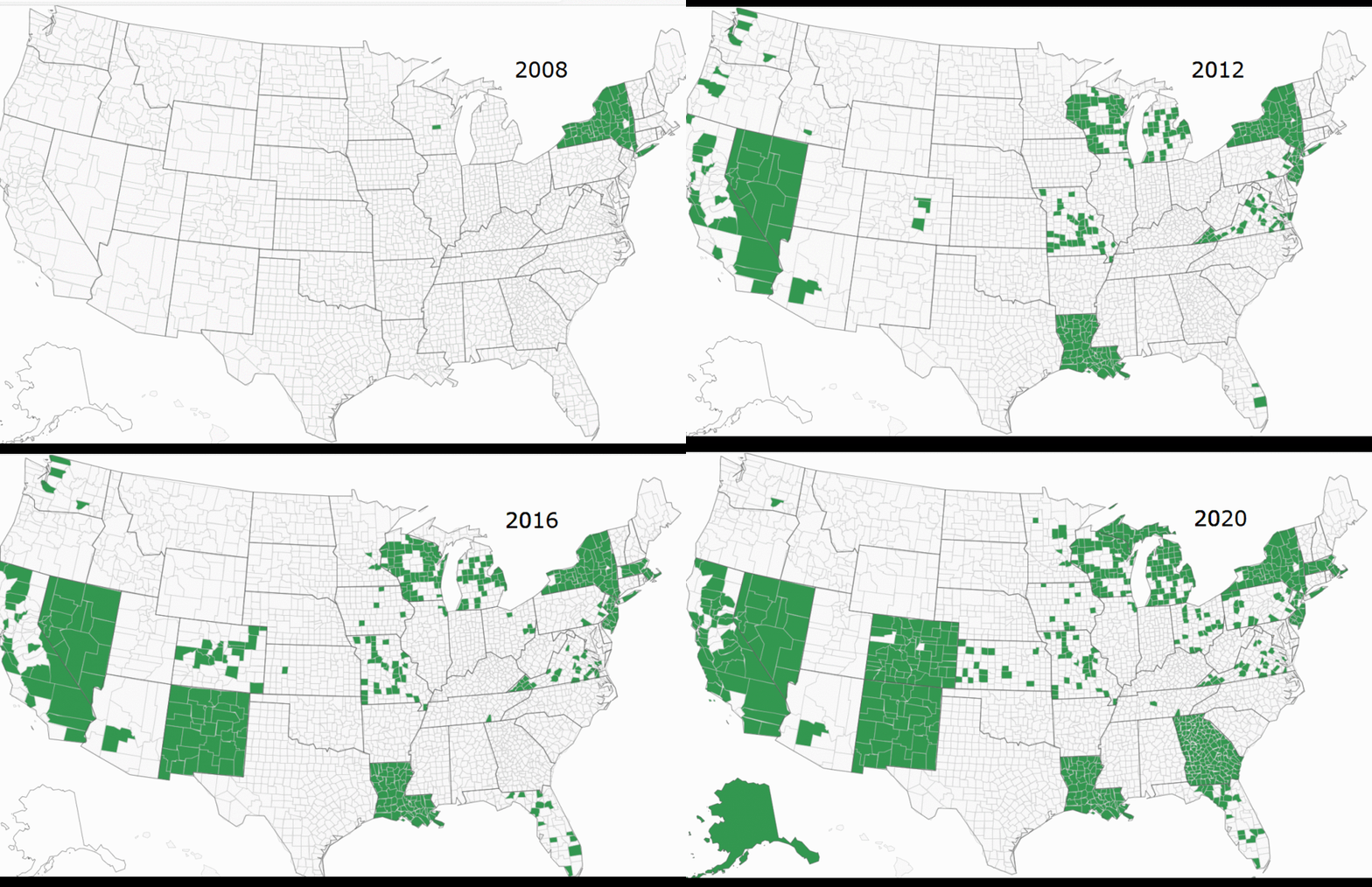
In 2008, although Dominion was in many counties in New York and had an insignificant presence in Wisconsin, it had no presence in the rest of the USA. Dominion built up its presence in 2012, increased it in 2016, and increased it further in 2020.

Update Dec. 19, 2020:  Redacted Information in Dominion Audit Report Shows Races Were Flipped: Analyst

Article at Epoch Times Excerpts in italics with my bolds:

The analyst who led the forensic audit of Dominion Voting Systems in Michigan said on Friday the information state officials pushed to redact shows that the outcomes of races were changed.

“The original report had log evidence that we published in the report to show exactly what we did and exactly the findings. Now, those did ultimately get redacted. And so now, the complaint is ‘well, but there’s no real proof and Dominion says ‘no, these things can’t be done,’” Russell Ramsland Jr. said during a virtual appearance on Newsmax’s “Greg Kelly Reports.”

“But at that point, Dominion’s argument is no longer with us. Dominion’s argument is with their own user’s manual and their own logs, because the logs—had they been able to be published—show very clearly that the RCV [ranked-choice voting] algorithm was enacted. It shows very clearly that the error messages were massive. It was very clearly [sic] that races were flipped,” he added.

Ramsland on Newsmax predicted the emergence of more explosive information soon.

“I think that there’s going to be some information [to] come forth in the next few days, that is going to drastically change the playing field,” he said.

“And the real question is, will people report on it? We’ll see.”

Biden’s Great Leaps Upward
Wisconsin

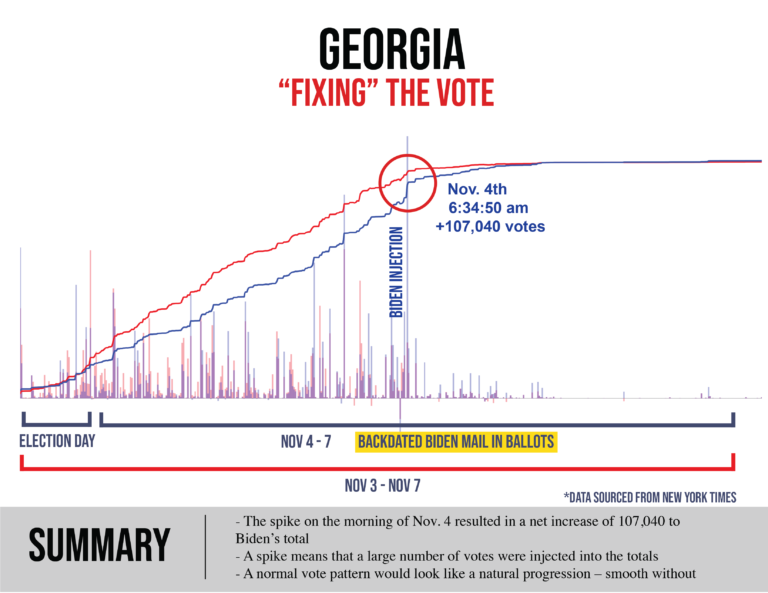
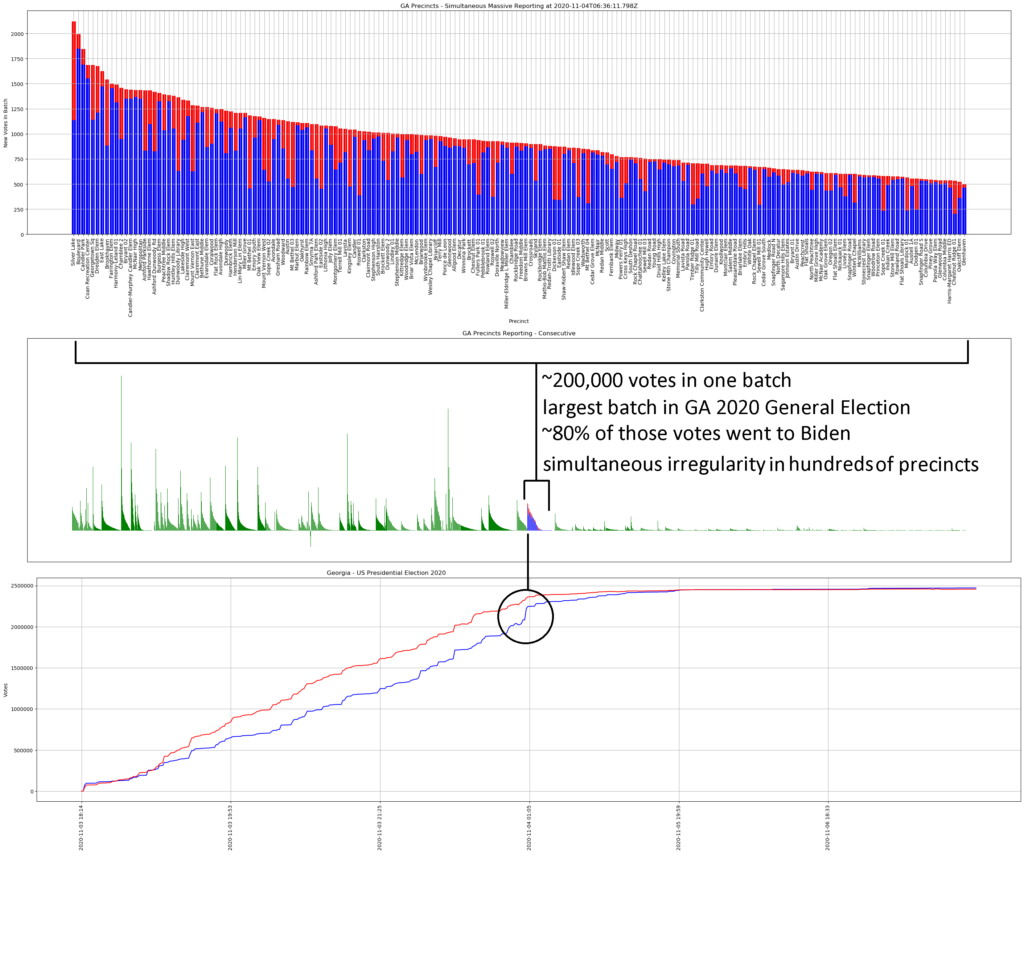
The Georgia Leap in detail:

Background from previous post Rise of Dominion Effect

Context from Shocking History of Dominion Voting  Excerpts in italics with my bolds.

Dominion Voting Systems Corp. is the Canadian company behind the ballot switching software.

Dominion was founded in 2003, with a mission to provide electronic voting systems friendly for progressives. Because of such partisanship, it languished with almost no customers for the next 5-6 years, until the Obama administration came to power. In 2010, the Obama administration confiscated electronic voting systems assets (software, intellectual property, manufacturing tools, customer base, etc.) from two established American companies, and gave them to Dominion. At the same time, Dominion got some employees and assets from a foreign EVS company, tied to Hugo Chavez.

Its software has been used by some 40% of the voters in this election, mostly by Democrat-controlled states and election commissions. Apparently, no protections were put in place against ballot switching, deletion, or creation. According to Dominion’s own website, it software was used in “battleground” states and the largest Democrat states, including MI, GA, AZ, NV, NM, CO, AK, UT, NJ, CA, NY.

The Dominion Effect on Vote Counting

From Fraudspotters Statistical Evidence of Dominion Election Fraud? Time to Audit the Machines. Excerpts in italics with my bolds.

Overview

Statistical analysis of past presidential races supports the view that in 2020, in counties where Dominion Machines were deployed, the voting outcomes were on average (nationwide) approximately 1.5% higher for Joe Biden and 1.5% lower for Donald Trump after adjusting for other demographic and past voting preferences. Upon running hundreds of models, I would say the national average effect appears to be somewhere between 1.0% and 1.6%.

For Dominion to have switched the election from Trump to Biden, it would have had to have increased Biden outcomes (with a corresponding reduction in Trump outcomes) by 0.3% in Georgia, 0.6% in Arizona, 2.1% in Wisconsin, and 2.5% in Nevada. The apparent average “Dominion Effect” is greater than the margin in Arizona and Georgia, and close to the margin for Wisconsin and Nevada. It is not hard to picture a scenario where the actual effect in Wisconsin and Nevada was greater than the national average and would have changed the current reported outcome in those two states.

Assuming the “Dominion Effect” is real, it is possible that an audit of these machines would overturn the election.

These results are scientifically valid and typically have a p-value of less than 1%, meaning the chances of this math occurring randomly are less than 1 in 100. This article, and its FAQ, shows many ways to model the “Dominion Effect.”

The best way to restore faith in the system is to audit the Dominion voting machines in Arizona, Georgia, Nevada, and Wisconsin.

Discussion

To do this study, we will link results from 2008 to 2020 by each county, parish, or in some cases city. Since this is usually based on county, we will refer to it as county in this article.

By comparing the county to itself, we are constructing the test similar to how a drug company would test the effects of its proposed therapy. In this case, we have 3,050 counties that do not have Dominion in 2008. In 2020, 657 of the counties have Dominion while 2,388 do not. If we assume that the same societal forces are acting upon all of these counties equally, then in comparing the average change from 2008 to 2020 for Dominion counties versus non Dominion counties, we should have a similar change in voter share. In this regard, it is as if Dominion is the proposed treatment, and non-Dominion is the placebo.

When doing this analysis, we do NOT see a change that is constant across counties. In fact, below are the results comparing 2008 to 2020. A verbal description is “the average US county’s percentage of vote for the Democrat presidential candidate was 8.4 percentage points less Democrat in 2020 (Biden vs. Trump) than in 2008. (Obama vs. McCain). However, despite this 8.4%-point decrease, Dominion counties only decreased 6.4% points, while the non-Dominion counties decreased 9.0% points.”

Unlike a drug company’s test of a new treatment, our counties were not randomly selected to be “treated” by Dominion. These counties chose to install Dominion. Was there selection bias? We should control for other factors to see if the presence of Dominion still significantly affects results.

We can obtain demographic data on a county level basis from the U.S. department of agriculture. By attaching this data on a county basis to our already existing dataset, and running multiple linear regression, we obtain the following results. You’ll notice that Dominion’s p-value became more significant as we controlled for other variables. In some cases Dominion is more significant than the control variables.

To provide a basic interpretation, look at the sign of the coefficient. It is telling you whether the demographic factor increased or decreased Democratic presidential voter percentage. So, from 2008 to 2020:

  • The more rural, the less the Democratic share
  • The more manufacturing dependent, the less the Democratic share
  • The more a county is considered a “high natural amenity,” the more the Democratic share if we consider counties equally weighted but not if we give larger counties more weight. Note this variable has a less significant p-value than some of the others.
  • The more a county is considered “high creative class,” the more the Democratic share
  • The more a county is considered “low education,” the more the Democratic share
  • The more the population increased, the more the Democratic share
  • The more international immigration, the more the Democratic share, although one measure had this value with a questionable p-value.
  • And most importantly, if Dominion was installed, there was approximately a 1.5%-point increase in Democratic share which also corresponds to a 1.5%-point Republican decrease, so a total swing of 3% points.

If the “Dominion Effect” is real, would it have affected the election?

This article showed a range of estimates for the “Dominion Effect,” the more persuasive being from the multiple linear regression analysis:

Multiple Linear Regress: Ordinary Least Squares: 1.65%
Multiple Linear Regress: Weighted Least Squares: 1.55%

I find the weighted least square model the most persuasive and refer to it often in the FAQ.

If there is a Dominion Effect, it adds that percentage to Democrat presidential vote and subtracts from Republican. If the Dominion Effect is real, it may have affected this close election. For Dominion to have switched the election from Trump to Biden, it would have had to increase Democratic presidential outcomes by 0.3% and reduced Republican outcomes by 0.3% in Georgia. The factors for the other states are 0.6% in Arizona, 2.1% in Wisconsin, and 2.5% in Nevada. Click here to see the math.

If you believe the Dominion Effect is real, it is not hard to believe that this effect would be greater in swing states and could have swung these four states into Biden’s column, putting the electoral college in his favor.

Are there really enough machines in Wisconsin to have changed the outcome there?

If you go to verifiedvoting.org, and selection Dominion, 2020, Wisconsin, and download the data, you’ll see that they are saying 527 precincts, 640,215 registered voters are on Dominion machines. The state only has a 20k vote difference among Biden and Trump. And, in my paper, the Dominion effect was calculated on a county basis, not precinct basis. To the extent counties are split on which machine they used, then my paper is underestimating the Dominion effect: the effect is likely bigger on a precinct by precinct basis; I don’t have the data to go to that detail.

But to answer the question: yes, based on published, public information, there are enough machines to change the election in Wisconsin.

Have you really accounted for very large and very small counties?

In our model, we are already using these adjustments:

  • weighting by county size
  • a field called “RuralUrbanContinuumCode2013”

These should adjust for county size, but in effort to address concerns of readers, I ran the model with two new flags:

  • 657 counties with highest number of voters in 2008
  • 657 counties with lowest number of voters in 2008

The Dominion Effect is still 1.55% and the p-values are 0.00% (traditional) 0.09% (robust). These p-values are suggesting less than 1 in 1000 chance of randomly occurring.

To further address this, I ran an additional model which also includes a field for the population per square mile. This model produces identical results of Dominion Effect of 1.55% and a p-value of 0.00% and 0.09%.

Rise of the Dominion Effect

In 2008, although Dominion was in many counties in New York and had an insignificant presence in Wisconsin, it had no presence in the rest of the USA. Dominion built up its presence in 2012, increased it in 2016, and increased it further in 2020.

Background from Shocking History of Dominion Voting  Excerpts in italics with my bolds.

Dominion Voting Systems Corp. is the Canadian company behind the ballot switching software.

Dominion was founded in 2003, with a mission to provide electronic voting systems friendly for progressives. Because of such partisanship, it languished with almost no customers for the next 5-6 years, until the Obama administration came to power. In 2010, the Obama administration confiscated electronic voting systems assets (software, intellectual property, manufacturing tools, customer base, etc.) from two established American companies, and gave them to Dominion. At the same time, Dominion got some employees and assets from a foreign EVS company, tied to Hugo Chavez.

Its software has been used by some 40% of the voters in this election, mostly by Democrat-controlled states and election commissions. Apparently, no protections were put in place against ballot switching, deletion, or creation. According to Dominion’s own website, it software was used in “battleground” states and the largest Democrat states, including MI, GA, AZ, NV, NM, CO, AK, UT, NJ, CA, NY.

The Dominion Effect on Vote Counting

From Fraudspotters Statistical Evidence of Dominion Election Fraud? Time to Audit the Machines. Excerpts in italics with my bolds.

Overview

Statistical analysis of past presidential races supports the view that in 2020, in counties where Dominion Machines were deployed, the voting outcomes were on average (nationwide) approximately 1.5% higher for Joe Biden and 1.5% lower for Donald Trump after adjusting for other demographic and past voting preferences. Upon running hundreds of models, I would say the national average effect appears to be somewhere between 1.0% and 1.6%.

For Dominion to have switched the election from Trump to Biden, it would have had to have increased Biden outcomes (with a corresponding reduction in Trump outcomes) by 0.3% in Georgia, 0.6% in Arizona, 2.1% in Wisconsin, and 2.5% in Nevada. The apparent average “Dominion Effect” is greater than the margin in Arizona and Georgia, and close to the margin for Wisconsin and Nevada. It is not hard to picture a scenario where the actual effect in Wisconsin and Nevada was greater than the national average and would have changed the current reported outcome in those two states.

Assuming the “Dominion Effect” is real, it is possible that an audit of these machines would overturn the election.

These results are scientifically valid and typically have a p-value of less than 1%, meaning the chances of this math occurring randomly are less than 1 in 100. This article, and its FAQ, shows many ways to model the “Dominion Effect.”

The best way to restore faith in the system is to audit the Dominion voting machines in Arizona, Georgia, Nevada, and Wisconsin.

Discussion

To do this study, we will link results from 2008 to 2020 by each county, parish, or in some cases city. Since this is usually based on county, we will refer to it as county in this article.

By comparing the county to itself, we are constructing the test similar to how a drug company would test the effects of its proposed therapy. In this case, we have 3,050 counties that do not have Dominion in 2008. In 2020, 657 of the counties have Dominion while 2,388 do not. If we assume that the same societal forces are acting upon all of these counties equally, then in comparing the average change from 2008 to 2020 for Dominion counties versus non Dominion counties, we should have a similar change in voter share. In this regard, it is as if Dominion is the proposed treatment, and non-Dominion is the placebo.

When doing this analysis, we do NOT see a change that is constant across counties. In fact, below are the results comparing 2008 to 2020. A verbal description is “the average US county’s percentage of vote for the Democrat presidential candidate was 8.4 percentage points less Democrat in 2020 (Biden vs. Trump) than in 2008. (Obama vs. McCain). However, despite this 8.4%-point decrease, Dominion counties only decreased 6.4% points, while the non-Dominion counties decreased 9.0% points.”

Unlike a drug company’s test of a new treatment, our counties were not randomly selected to be “treated” by Dominion. These counties chose to install Dominion. Was there selection bias? We should control for other factors to see if the presence of Dominion still significantly affects results.

We can obtain demographic data on a county level basis from the U.S. department of agriculture. By attaching this data on a county basis to our already existing dataset, and running multiple linear regression, we obtain the following results. You’ll notice that Dominion’s p-value became more significant as we controlled for other variables. In some cases Dominion is more significant than the control variables.

To provide a basic interpretation, look at the sign of the coefficient. It is telling you whether the demographic factor increased or decreased Democratic presidential voter percentage. So, from 2008 to 2020:

  • The more rural, the less the Democratic share
  • The more manufacturing dependent, the less the Democratic share
  • The more a county is considered a “high natural amenity,” the more the Democratic share if we consider counties equally weighted but not if we give larger counties more weight. Note this variable has a less significant p-value than some of the others.
  • The more a county is considered “high creative class,” the more the Democratic share
  • The more a county is considered “low education,” the more the Democratic share
  • The more the population increased, the more the Democratic share
  • The more international immigration, the more the Democratic share, although one measure had this value with a questionable p-value.
  • And most importantly, if Dominion was installed, there was approximately a 1.5%-point increase in Democratic share which also corresponds to a 1.5%-point Republican decrease, so a total swing of 3% points.

If the “Dominion Effect” is real, would it have affected the election?

This article showed a range of estimates for the “Dominion Effect,” the more persuasive being from the multiple linear regression analysis:

Multiple Linear Regress: Ordinary Least Squares: 1.65%
Multiple Linear Regress: Weighted Least Squares: 1.55%

I find the weighted least square model the most persuasive and refer to it often in the FAQ.

If there is a Dominion Effect, it adds that percentage to Democrat presidential vote and subtracts from Republican. If the Dominion Effect is real, it may have affected this close election. For Dominion to have switched the election from Trump to Biden, it would have had to increase Democratic presidential outcomes by 0.3% and reduced Republican outcomes by 0.3% in Georgia. The factors for the other states are 0.6% in Arizona, 2.1% in Wisconsin, and 2.5% in Nevada. Click here to see the math.

If you believe the Dominion Effect is real, it is not hard to believe that this effect would be greater in swing states and could have swung these four states into Biden’s column, putting the electoral college in his favor.

Are there really enough machines in Wisconsin to have changed the outcome there?

If you go to verifiedvoting.org, and selection Dominion, 2020, Wisconsin, and download the data, you’ll see that they are saying 527 precincts, 640,215 registered voters are on Dominion machines. The state only has a 20k vote difference among Biden and Trump. And, in my paper, the Dominion effect was calculated on a county basis, not precinct basis. To the extent counties are split on which machine they used, then my paper is underestimating the Dominion effect: the effect is likely bigger on a precinct by precinct basis; I don’t have the data to go to that detail.

But to answer the question: yes, based on published, public information, there are enough machines to change the election in Wisconsin.

Have you really accounted for very large and very small counties?

In our model, we are already using these adjustments:

  • weighting by county size
  • a field called “RuralUrbanContinuumCode2013”

These should adjust for county size, but in effort to address concerns of readers, I ran the model with two new flags:

  • 657 counties with highest number of voters in 2008
  • 657 counties with lowest number of voters in 2008

The Dominion Effect is still 1.55% and the p-values are 0.00% (traditional) 0.09% (robust). These p-values are suggesting less than 1 in 1000 chance of randomly occurring.

To further address this, I ran an additional model which also includes a field for the population per square mile. This model produces identical results of Dominion Effect of 1.55% and a p-value of 0.00% and 0.09%.

How to Pierce the Silicon Curtain

Today’s veil of secrecy and control is made of silicon, not iron.

Bret Swanson explains at Real Clear Politics in his article The Technology Solution to Hysterical Mythmaking. Excerpts in italics with my bolds.

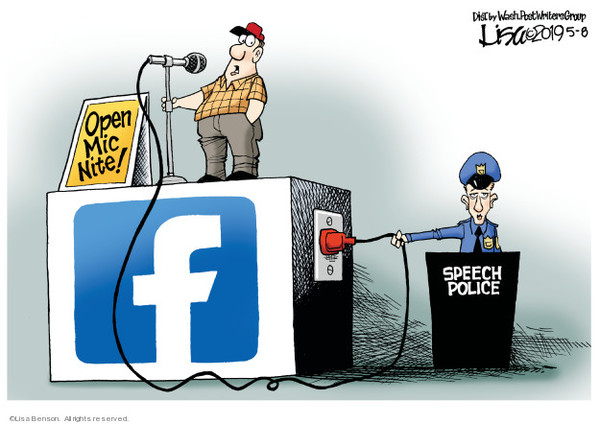
In an MSNBC interview last Monday, Steve Coll, dean of the Columbia University Graduate School of Journalism, was contemplating a staggering dilemma. He noted that Facebook had performed a bit better in 2020 than in 2016 at suppressing inconvenient election content, but it still is not adequately policing the ideas of its 3 billion users. CEO Mark Zuckerberg “profoundly believes in free speech,” Coll lamented. “And,” Coll continued,

“those of us in journalism have to come to terms with the fact that free speech, a principle that we hold sacred, is being weaponized against the principles of journalism. And what do we do about that? As reporters, we march into this war with our facts nobly shouldered, as if they were going to win the day. And what we’re seeing is that because of the scale of this alternate reality … our facts, our principles, our scientific method, it isn’t enough. So what do we do?

Coll is puzzled that citizens aren’t more impressed by the mainstream media’s noble marshaling of facts and science (science!). Could it be that Americans are tired of actors playing roles in elaborately scripted illusions? That they instead prefer actual news and insight? An exploding new array of amateurs, subject matter experts, local reporters, and independent journalists, all leveraging the internet, are often delivering facts far more reliably than the old outlets. When the prestige media pumps and dumps fake conspiracy theories, moralizes over a complex pandemic, blacks out real scandals, collaborates with those it is supposed to cover, and forgets to report on an entire presidential campaign, people will look elsewhere for their information. Today, it’s often former portfolio managers, suburban mothers, lawyers, engineers, curious teenagers, and doctors who are telling us what’s actually happening.

The powerful but cheap tools of the new citizen journalists are tweets, video streams, and podcasts.

So, naturally, Coll and his colleagues of the Fourth Estate have been harassing technology and social media companies to erect a Silicon Curtain (as James Freeman of The Wall Street Journal dubbed it) between the American people and any content not slickly produced in Washington or New York. They’d prefer a social media that is just as incurious, herd-oriented, and partisan as they are. Differentiation is the enemy.

Silicon Valley has been far too willing to oblige. Thus, disfavored people and content get shadow-banned, suspended, demonetized, and, most recently, scolded about the ironclad reliability of signature-less, address-less, mass-marketed, late-arriving mail-in ballots. “Learn how voting by mail is safe and secure,” Twitter insisted a million times over. Twitter even suspended Richard Baris, the pollster who most successfully predicted the 2020 state-by-state election results. And last week, YouTube announced that going forward it will disallow all content questioning the validity of the 2020 election results. Will it let users discuss the multitude of lawsuits, forensic audits, and law enforcement investigations still taking place? Perhaps Rudy Giuliani is crazy, or merely wrong.

Censorship, however, is the refuge not of the confident but the deeply insecure.

In 2005, former President Jimmy Carter and James Baker III issued an authoritative report on election integrity. They found that mail-in ballots are a chief source of fraud. International election monitors have long insisted that top indicators of fraud are stopping counts in mid-stream and prohibiting observation of ballot handling and counting. Yet suddenly the Silicon Valley tech firms became experts in election law, insisting greater information about elections is more dangerous than well-known risky behavior. The soothing new admonition might as well be: “Lamborghinis and whiskey are in fact a safe combination.”

The Silicon Curtain is frustrating, but it has backfired more than Big Media and Silicon Valley know.

Not only have they lost hundreds of millions of readers, viewers, and users, they’ve also locked themselves in a Faraday cage of ignorance. One of the things they are most uninformed about is the hundreds of new tech channels and media outlets already challenging them, and maybe soon looking at them in the rearview mirror.

As technologist and investor Balaji Srinivasan says, “exit > voice.” Meaning, the hope to be treated fairly by CNN, The New York Times, or Twitter is futile. Don’t fight on their battlefield, at least not exclusively. The far more fruitful solution is to exit and create new channels — with crypto communities, Substack newsletters, online magazines, the Brave browser, and video streaming alternatives such as Rumble and NewTube. (The outlet that regularly publishes my articles without question refused to run this one. Which is funny because it proves the point – exactly.)

This path is also more promising than a Washington solution. A clarification and upgrade of Section 230 of the Communications Decency Act to reflect unforeseen dynamics, for example, is warranted. Social media has perverted and exploited it. But throwing it out wholesale and reinstituting a “fairness doctrine” would be unwise. As I wrote last year,

Just as social media offers a Fifth Estate to correct and replace the corrupt and crumbling Fourth Estate, an open society can create a Sixth Estate to hold Big Tech’s feet to the fire. 

No companies, news outlets, political parties, scientific organizations, or government agencies will ever be perfect. That’s why we need continual openness to an Nth Estate, which can help correct our inevitable commercial and cultural mistakes. A new Washington-based regime that seeks to regulate social media in particular and speech in general would do more harm than good. By cementing today’s regime, it would block the pathways to the Nth Estate.

One of our great remaining newsmen, Holman Jenkins of The Wall Street Journal, correctly laments that “the increasing substitution of hysterical mythmaking for news is a malignancy of our time.”

An Nth Estate of American openness, innovation, exit, and free speech is the solution. It is the regenerative vaccine.

In Denial of Election Fraud

Meaning of In Denial:  Refusing to look at information to avoid considering an undesirable reality.  Antonym: Facing Facts

The judiciary has now signaled from the very top Supreme Justices along with state and district judges that they will avert their eyes from any cases questioning the 2020 election.  The media as well attaches the adjective “baseless” to all claims of election irregularities.  The results are “valid” they say, without any effort to confront all the evidence of “invalid” activity before, during, and after November 3.  The undesirable reality is that a pre-meditated, nationally organized criminal enterprise stole the US election, meaning that one of the US major political parties should now be called the Undemocrats.  The infographic below presents the extensive legal case against this election process and results, summarized from numerous hearings attended by officials who actually want to know the truth.

Previous Post;  The Phishy Election

The age of distributed computers and internet connectivity results in everyone from time to time receiving phishing emails.  Just opening the link can get malware installed on your notebook, and can even generate a ransom demand from those who kidnapped your device.  The same kind of criminals working 24/7 to steal from you are suspected of using their methods to steal the Office of the President of the US.

As we know from TV shows and reading crime novels, any criminal investigation seeks to prove the perpetrators possessed three factors:  Motive, Opportunity, and Means.  No one doubts the Democrats had plenty of Motive, as evidenced by a four-year slow-moving coup against Trump from the moment the 2016 results were confirmed.  As we now see, the Opportunity came in Democratic control over big city strongholds in the large battleground states.  And as the legal affidavits confirm, the Means consisted of both Old School ballot stuffing fraud (ballot harvesting and overwriting) and New School counting fraud (using computer algorithms to warp the results). The allegations summarized in the exhibit above show how perpetrators added votes in big cities and suppressed votes in the countryside.

There is a short timetable for exposing these illegal tactics, and the media is looking to play out the clock, after having already declared Biden the winner.  An example is the recent Washington Post article Swing-state counties that used Dominion voting machines mostly voted for Trump.  At least they are finally admitting that the election results are questionable.  But like all the MSM, they are resolutely averting their eyes from anything that could sour the Biden victory they so covet. Excerpts in italics with my bolds.

A review of 10 key states (Arizona, Colorado, Florida, Georgia, Michigan, Minnesota, Nevada, North Carolina, Pennsylvania and Wisconsin) finds that Dominion systems were used in 351 of 731 counties. Trump won 283 of those counties, 81 percent of the total. He won 79 percent of the counties that didn’t use Dominion systems.

The idea that Trump only lost, say, Pennsylvania, because of Dominion voting systems has to reconcile with the fact that Trump actually won more votes in counties that used Dominion systems (beating Biden by about 74,000 votes in those counties) but lost the state because he was beaten by 154,000 votes in non-Dominion counties. That same pattern holds in Wisconsin as well.

In other words, there’s nothing to suggest that counties using Dominion systems looked significantly different from counties that didn’t. The idea that Biden is president-elect because of some nefarious calculations simply doesn’t match the reality of the county-level vote results.

The WP conclusion ignores the analyses showing how the algorithms distort the results.  In order to shift votes from Trump to Biden, the perpetrators needed to identify large pools of Trump-only votes (ballots cast only for the President race) that could be switched to Biden-only votes.  By skimming in this way, Trump wins those counties as expected, but by enough fewer votes to lose the state. As well, it appears that forensic testing of seized ballot machines confirms that vote tabulations are converted from whole numbers to decimals so that weighting can be applied.  In one example, Biden votes were weighted 1.2 while Trump votes weighted at 0.8.  Thus the race results effectively shift votes from Trump to Biden.  Meanwhile in the big city precincts, large Biden margins were already organized through production of mail-in ballots stuffed into the machines.

See: Inside the Election Black Box

The forensics report for Antrim County makes for an interesting read.

A forensic audit of Dominion Voting Systems machines and software in Michigan showed that they were designed to create fraud and influence election results, a data firm said Monday (Dec. 14)

“We conclude that the Dominion Voting System is intentionally and purposefully designed with inherent errors to create systemic fraud and influence election results,” Russell Ramsland Jr., co-founder of Allied Security Operations Group, said in a preliminary report.

“The system intentionally generates an enormously high number of ballot errors. The electronic ballots are then transferred for adjudication. The intentional errors lead to bulk adjudication of ballots with no oversight, no transparency, and no audit trail. This leads to voter or election fraud. Based on our study, we conclude that The Dominion Voting System should not be used in Michigan. We further conclude that the results of Antrim County should not have been certified,” he added.

Footnote:

Today, in the midst of an uproar over election violations, Covid restrictions,  and also illicit relations with Chinese Communists, this song came up on my playlist.

Lyrics:

Everybody knows that the dice are loaded
Everybody rolls with their fingers crossed
Everybody knows that the war is over
Everybody knows the good guys lost
Everybody knows the fight was fixed
The poor stay poor, the rich get rich
Thats how it goes
Everybody knows

Everybody knows that the boat is leaking
Everybody knows that the captain lied
Everybody got this broken feeling
Like their father or their dog just died
Everybody talking to their pockets
Everybody wants a box of chocolates
And a long stem rose
Everybody knows

Everybody knows that you love me baby
Everybody knows that you really do
Everybody knows that you’ve been faithful
Ah give or take a night or two
Everybody knows you’ve been discreet
But there were so many people you just had to meet
Without your clothes
And everybody knows

Everybody knows, everybody knows
Thats how it goes
Everybody knows

And everybody knows that its now or never
Everybody knows that its me or you
And everybody knows that you live forever
Ah when you’ve done a line or two
Everybody knows the deal is rotten
Old black joe’s still pickin’ cotton
For your ribbons and bows
And everybody knows

And everybody knows that the plague is coming
Everybody knows that its moving fast
Everybody knows that the naked man and woman
Are just a shining artifact of the past
Everybody knows the scene is dead
But there’s gonna be a meter on your bed
That will disclose
What everybody knows

And everybody knows that you’re in trouble
Everybody knows what you’ve been through
From the bloody cross on top of calvary
To the beach of Malibu
Everybody knows its coming apart
Take one last look at this sacred heart
Before it blows
And everybody knows

Everybody knows, everybody knows
Thats how it goes
Everybody knows

Footnote:

I doubt Leonard Cohen had politics or climate change in mind when he wrote this masterpiece.  But he did have a pertinent poetic insight; namely, that social proof is an unreliable guide to the truth.