Iceland Embraces Covid Freedom

Jelena Ćirić writes at  Iceland Review Iceland to Lift All COVID Restrictions on Friday.  Excerpts in italics with my bolds and images

There will be no more COVID-19 restrictions in Iceland or at its borders as of Friday, February 25, 2022,  Iceland’s Health Minister has just announced. Iceland’s remaining restrictions, including a 200-person gathering limit, will be lifted on Thursday night at midnight. Health Minister Willum Þór Þórsson stated that those who are sick are still encouraged to stay at home.

Photo: Golli. Iceland’s Chief Epidemiologist Þórólfur Guðnason.

Willum announced the restrictions in an informal press conference just after 1:00 PM, following a cabinet meeting, where he says the decision was unanimous among ministers. Prime Minister Katrín Jakobsdóttir stated in the press conference that the lifting of restrictions is in line with recommendations from the Chief Epidemiologist.

The current border regulation has been in effect since October 1, 2021 and will expire at midnight Thursday. Travellers will no longer be required to register prior to arrival or to present vaccination certificates. Unvaccinated travellers will no longer be required to be tested and quarantine for five days.

Katrín pointed out that around 110,000 residents of Iceland, of the total population of some 370,000, have already had COVID-19, according to official numbers. However, research suggests the true number is significantly higher. “The virus is still with us, and we know that many people will still get infected,” Katrín stated, adding that workplaces and communities will be affected, “but we believe we can live with the virus.”

“Widespread societal resistance to COVID-19 is the main route out of the epidemic,” the ministry said in a statement, citing infectious disease authorities.

“To achieve this, as many people as possible need to be infected with the virus as the vaccines are not enough, even though they provide good protection against serious illness,” it added.

All border restrictions would also be lifted, it said.

Both Willum and Katrín emphasised that people are still encouraged to test and isolate if they are sick, though access to PCR tests has now been limited. Asked about strain on the healthcare system, Willum stated: “The going will be tough for some weeks moving forward,” due to covid infections among both patients and staff disrupting services.

Asked whether COVID-19 measures could be reimposed in the future, Katrín stated: “We are always ready for the possibility that a new variant could emerge,” and added that authorities would continue to monitor the state of the pandemic domestically and globally.


Dr. Malone’s Wisdom in His Words

Recently Dr. Robert Malone was interviewed at length by Joe Rogan and the full transcript is Joe Rogan Experience #1757 – Dr. Robert Malone, MD Full Transcript

Below are excerpts in italics with my bolds, lightly edited and rearranged to serve as a synopsis. Read the full transcript for more details and technical points.

For about the last 20 years I’ve been focused on actually doing stuff: regulatory affairs, clinical development, getting necessary training, etc. I also completed a fellowship at Harvard University medical school as a global clinical scholar to round out my cv. And I’ve run over 100 clinical trials, mostly in the vaccine space, but also in drug repurposing. I’ve been involved in every major outbreak since AIDS. This is kind of what I do. I’ve won literally billions of dollars in federal grants and contracts. I’m often brought in by NIH to serve as a study section chair for awarding 80 to 120 million dollar contracts in vaccines and biodefense.

So, my position all the way through this comes off of the platform of bioethics and the importance of informed consent. People should have the freedom of choice particularly for their children; and in order to appropriately choose to participate in a medical experiment, they have to be fully informed of the risks as well as the benefits. And so I’ve tried really hard to make sure that people have access to the information about those risks and potential benefits, the true unfiltered academic papers and raw data etc. However, the policy that’s being implemented is one in which no discussion of the risks are allowed because by definition they will elicit vaccine hesitance. So it can’t be discussed, and yet that’s the backbone of informed consent. So not only is informed consent not happening, it’s being actively blocked, which makes no sense.

Michael Callahan is a CIA agent that I’ve co-published with in the past. He was in Wuhan in the fourth quarter of 2019 and he called me from Wuhan on January 4th, 2020.  was currently managing a team focusing on drug discovery for organophosphate poisoning, ergo nerve agents for DTRA, defense threat reduction agency. It involved high-end stuff like high-performing computing and biorobot screening. And he told me, Robert you need to get your team spun up because we got a problem with this new virus. I worked with him through prior outbreaks, and so it was then that I turned my attention to this. We started modeling a key protein, a protease inhibitor of this virus when the sequence was released on January 11th as the Wuhan seafood market virus. And I’ve been pretty much going non-stop ever since to address that outbreak with drug repurposing.

I’ve got some good news to announce. Today we should have the first patient enrolled in our clinical trials of the combination of monitoring and celecoxib for treating SARS-CoV-2. These trials are being run by the company Leidos, which is one of my clients. I’ve helped them design a plan based on my discoveries and funded by a defense threat reduction agency. I haven’t pushed this drug combination feeling it was inappropriate until we got the trials running. But they’re now open and we’ve passed through the FDA screening process. We had data showing that adding Ivermectin would further improve the combination, but the FDA created such enormous roadblocks to us doing an Ivermectin arm that we had to drop it. And by we I mean the DOD decided the juice wasn’t worth the squeeze, and they just dropped that arm due to FDA creating so much grief.

There are good modeling studies that probably half a million excess deaths have happened in the United States through the intentional blockade of early treatment by the U.S. government. it’s the pushback against both Hydroxychloroquine and Ivermectin now. When you ask me why, you’re asking me to get into somebody’s head. What I can say as a scientist is what I observed: the behaviors, the actions, the correspondence, these bizarre things that have happened.

For example, it is well documented they conspired to cook up a strategy using emergency use authorization to make it so that Hydroxychloroquine could only be administered in the hospital, which is too late for when hydroxy should be used. The government had documents on hydroxy’s safety and effectiveness yet they asserted that there was no data on Hydroxychloroquine at the time this decision was made. Just patently false. So, what is the motivation when none of this makes sense? The only thing you know is this is a journalist problem, and you know the classic guidance is follow the money.

And it is bizarre that Merck would come out with these explicit statements about the safety of Ivermectin. Both Ivermectin and hydroxy are on the WHO list of essential medicines. They have been administered for millions and millions of doses; they’re among the safest known medicines when administered within this acceptable pharmaceutical window. Ivermectin is even safer than hydroxy, so Merck coming out of the blue and saying Ivermectin isn’t safe is really inexplicable.

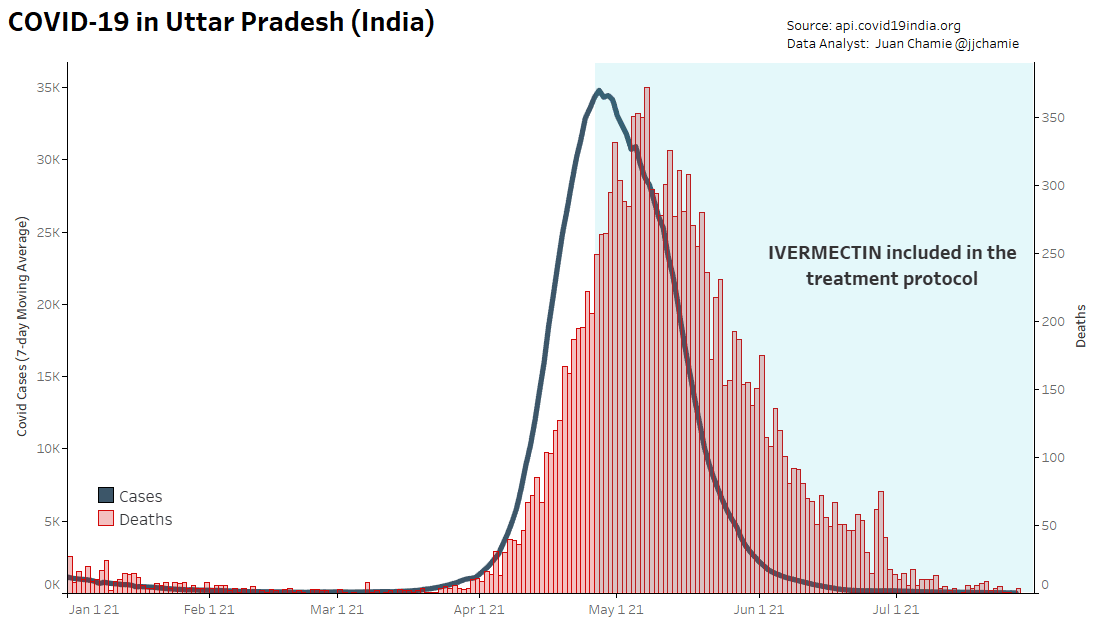
In India, Uttar Pradesh has almost the same population as the United States; it’s huge, dense, urban and poor, all the characteristics of the Indian countryside. And the virus was just ripping through there, causing all kinds of death and disease. Out of desperation it was decided to deploy widely throughout the province early treatments as packages including a number of agents. The composition has not been formally disclosed but it was rumored to include Ivermectin. There was a specific visit of Biden to Modi, and thereafter a decision was made in the Indian government not to disclose the contents of those packages that were being deployed in Uttar Pradesh. The treatments are still in use there, and in Uttar Pradesh deaths have flatlined. The rest of the world is yelling about Omicron and about hospitalizations–well South Africa isn’t–and Uttar Pradesh is still flatlined in terms of deaths.
The observation that I can make if we follow the money is that hospitals are incentivized to to treat COVID patients. The thing that ties all this together, including the suppression through the government of early treatment, is hospitals are incentivized financially to treat COVID patients. For example, in the Imperial Valley of California, COVID patients are being treated outside of the hospital and prevented from going to the hospital. Brian Tyson and George Fareed have saved thousands and thousands of lives of indigenous Latinos that are coming across the border and working the fields. I mean they’re they’re breaking their backs to save the poor, an amazing story there with early treatments. I guess they’re left alone because they’re in the imperial valley nobody cares, they’re all poor, but in these urban environments there’s all these incentives for hospitals to treat COVID patients and if people are giving treatments that are keeping those people out of the hospitals then they’re not getting that revenue. Hospitals have financial incentives including death incentives to discourage early treatment. The other data point is those that are doing the attacking are almost universally hospital administrators and hospitalists, I.e. hospital-based physicians

I’m maybe the only one that has been involved deeply in the development of this tech that doesn’t have a financial stake in it, so for me the reason is that what’s happening is not right. It’s destroying my profession; it’s destroying the practice of medicine worldwide; it’s destroying public health in medicine. I’m a vaccinologist, I’ve spent 30 years developing vaccine, a stupid amount of education learning how to do it and what the rules are. And I’m personally offended by watching my discipline get destroyed for no good reason at all except apparently financial incentives, and perhaps political ass covering.

We have Covid mRNA genetic vaccines, and we have DNA virus administered genetic vaccines (that’s the J&J here in the United States). And they all have these symptoms of clotting, brain fog and other things. As you know this is basically: Does it walk like a duck and quack like a duck? What is the common variable between those three very different systems: natural viral infection, mRNA genetic vaccines, and DNA genetic vaccines? We don’t see these problems by the way with adenoviral vectored vaccines in development for my entire life. 30 years they’re licensed, adenoviral vector vaccines they don’t have these problems, so it’s something that’s not intrinsic to the platform. The common variable is spike protein just to cut to the chase.

Then then there is this fundamental logic flaw. In clinical development and non-clinical development and safety and pharmacology, I like to say the French judicial system applies. That is, you’re guilty until proven innocent. It’s the job of the pharmaceutical companies to prove that their engineered spike is safe. They never did that. And so all of this pressure that comes back you know from folks like me saying hey this isn’t right okay–and it looks like a duck and it walks like a duck and it quacks like a duc–it’s probably toxic. Because it’s the common variable. I get criticized by people saying you have to prove that it’s not safe. Sorry, that’s not the way it works. It’s pharma’s job to prove that it is safe, not my job to prove that it’s not safe. I’m observing the safety signal is there. It is associated with vectors that express spike whether it’s the vaccine the virus or the adenovirus, that is the MRNA, the virus itself or the adenoviral vectored spike. Those toxicities are there and the common variable is the spike protein. We can argue about the meaning of toxin just like so much of the rest of our language has been perverted during this. But the simple explanation, the simple definition is: Does it cause toxicity in people, and the answer is pretty clear now it does. The question that we’re all arguing about is how often and how bad.

Then we have the laboratory data that we’re seeing abnormalities in the key signaling molecules that b and t cells use to talk to each other–toll-like receptors that are associated particularly with the MRNA vaccines. So something is happening that is causing release of t cell suppression, reactivation of latent DNA viruses, maybe some signals relating to oncology, that is some changes in t cell signaling behavior. And then there’s this this increasing awareness that there’s some window of time, unsure how long after vaccination, when you’re actually more susceptible to infection. And this may be that not only is the vaccine efficacy waning, but the multiple jab strategy is actually creating more and more windows where people have this period of t-cell suppression. So there’s a whole lot in this box of immunology and what are the jabs doing to our immune system and how long does it last. Let’s gently say: That is a little worrisome to some of us that have a background in these things.

In this case there’s multiple reasons not to do the multiple jabs. The simplest one for everybody to understand is when your son develops seasonal allergies to ragweed pollen or whatever and it’s so bad that he can’t go to school his eyes are running he can’t play in sports whatever. So you say we have to do something about this: I’m going to take him to a rheumatologist an allergist and see what they can do. Well they do a bunch of tests and they say oh your son is allergic to ragweed pollen or whatever the thing is. Then what do is to give him shots- what are those shots? They’re high doses of antigen that are administered repeatedly to your child, and what it does is induce something we immunologists call high zone tolerance. High zone tolerance basically amounts to an ability by giving multiple injections at high levels of antigen to shut down t cells against a specific antigen. The other thing with the multiple jabs is that these are multiple jabs that are mismatched. Okay they don’t fit.

So there’s there’s those three things. The short term issue is we don’t know how long it lasts. There’s the high zone tolerance issue, and then there is the multiple jabs that are mismatched for the current circulating virus. That’s akin to repeatedly taking a flu vaccine from two seasons ago and hoping it’s going to protect against this flu.

So what we’re doing is with with administering a mismatched vaccine is we’re driving the effector and memory cells, b and t, towards a population that is focused on a virus that no longer exists. So what is my hypothesis for the poor durability of the vaccines? My answer is it looks to me like original antigenic sin. Let’s unpack what that terminology means–original antigenic sin. I think what could be happening with these data is that we’re driving the immune response towards responding to an antigen receptor binding domain a spike that no longer exists with Omicron. Now it it has become clear (after being initially denied) that all of us have a background immune response against Beta coronaviruses. These are naturally circulating cold coronaviruses that have significant immunologic crossreactivity with SARS-CoV-2. And the problem with that in original antigenic sin is that those existing memory cells will dominate the immune response when you get infected and when you get vaccinated. Let me unpack that in a way that kind of makes sense for the common person. We all know the adage that we’re always best prepared for the last war. That is, in your life the sum of your prior life experiences biases how you respond. In your martial arts you must know this deeply; what you’ve experienced in the past in prior fights is gonna bias how you respond to a new opponent. Same thing happens with your immune system.

Okay so we’ve got a new pathogen, but it’s got a series of of overlaps with the old ones that we’ve seen before, and our immune system is biased to respond as if it’s the old one. Now to make matters worse, we’re taking the spike protein only one of the proteins–the immunologically dominant protei–and we’re jabbing everybody multiple times. Thereby driving memory cells and effector cells to a virus that is not the one we’re encountering. So it could very well be that as you’re taking more jabs you’re further skewing your immune response in a way that’s dysfunctional for infection to Omicron. Whereas, somebody that is immunologically naive presumably either they haven’t had the virus before but they’ve had Beta coronaviruses and those that have had prior infection and are naturally immune.

When you get infected or I get infected it’s typically nasal or oral pharynx. It’s coming in through the mucosal membranes of your head. One of the good things about Omicron is that the prior strains infect mostly deep lung, and there’s really fascinating data from Hong Kong suggesting that Omicron is more infecting the upper airway. That is a characteristic of less pathogenic influenza viruses and hopefully even though Omicron is more infectious and replicates the higher levels it’s less pathogenic.

it is absolutely looking like Omicron is a mild variant. It is absolutely able to escape the control of prior vaccination typically with mismatched vaccine. It seems also able to infect a subset of people that are naturally immune probably less than the subset that get infected with vaccination. But this is a key message to your audience- the reproductive coefficient (more fancy language)–the reproductive coefficient known as the R naught. The R naught of the original Wuhan strain was about two to three, meaning that if I’m infected on average without any other interventions I’ll infect two to three other people. For Delta the R naught was more in the range of five to six. In the case of Omicron the R naught the base reproduction coefficient is the range of seven to ten, wickedly high. That is measles territory. Tto translate that into simple language: We are all going to get infected with Omicron. Whether you use masks or not, use social distancing or not, you’re going to get infected. So this gets to the key point: Find a doc that’ll administer early treatments.

So you know Joe Lapado surgeon general in the State of Florida has put out public statements also on twitter, among other things, decrying what the Federal government has done pulling back all of the regular monoclonals. Meanwhile I’m hearing from frontline docs is those older regeneron monoclonals etc. are still very effective in their hospitalized population presumably because it’s still predominantly Delta. And yet they’re no longer able to get it. So the government has literally stopped the distribution of medicine, effective medicine, for a disease that exists currently. When has that ever happened before? Hydroxychloroquine and ivermectin. Those were off-label uses, while this is something that has emergency use authorization. This is wild.

When you see this kind of decoupling of public policy from logic, it causes thinking people to wonder what the hell’s going on here. And then we go down the rabbit hole: Is it this that or the other thing? One of the things in that spectrum of what’s going on is that the emergency use authorizations are predicated on policy determinations that were in a state of emergency. Those are now two years old. They’re expiring. I’m not saying this is what’s going on in their head but there is another perverse incentive here to amplify the fear porn. If you buy into the hypothesis that for some reason there are incentives for the government to maintain the state of emergency, one explanation could be that those declarations are expiring and will have to be re-implemented. Because if they’re not then all of this emergency use authorization vanishes like dust.

We have these reports from hospitalists and nurses–often it’s the nurses that are able to speak for some reason. The nurses are disclosing things that they’re seeing in their hospitals and the physicians are all shutting up. Is it because they have financial incentives or because they’re all owned because they have such debt burdens, I don’t know. But the nurses are speaking out and they’re saying hey we’re seeing strokes and heart attacks and these other types of problems that are known to be associated with the jabs. Well it’s hard to say because we got the virus in the vaccines overlapping; is it chicken or egg but we know that they’re happening. We know that the deaths are happening; that’s the excuses that are made about the sudden deaths in high-performing athletes that are being observed all over the world particularly in footballers. Where they’re just suddenly dropping is it because they’ve been infected or they because they’ve been jabbed? And I think it’s a mixture of both. But the thing about the vaccines is we have this principle to do no harm. And if a virus naturally infects you and you have a damage from it, I haven’t caused that damage as a physician. If I’m recommending that you take a drug or an intervention you didn’t need to have and it causes damage, well I have to own that as a physician as a representative of the medical industrial complex. And so for whatever reason there’s a under reporting bias clearly in the adult population and I think that people being be a little more sensitive to adverse events and deaths in their children.

I don’t want to get too off your topic, but our government is out of control on this and they are lawless. They completely disregard bioethics. They completely disregard the Federal common rule. They have broken all the rules that I know of that I’ve been trained on for years and years and years. These mandates of an experimental vaccine are explicitly illegal. They are explicitly inconsistent with the Nuremberg Code. They’re explicitly inconsistent with the Belmont Report. They are flat out illegal and they don’t care. And the only thing standing between us and it’s too late for many of our colleagues including my you know the unfortunate colleagues in the DoD um hopefully we’re going to be able to stop them before they take our kids.

For example: the lab leak. And for me- the disclosure of emails that um Cliff Lane, Tony Fauci, and Francis Collins actively conspired to destroy any discussion of the appropriateness of lockdown strategies and the mainstream press hardly covers it and there are no consequences. The document trail having to do with the gain of function research and the implication of NIH and by the way DTRA in that, having absolutely no consequences for anybody. We’re in an environment in which truth and consequences are fungible. This is modern media management and warfare. The truth is what those that are managing the Trusted News Initiative say it is.

And they’re taking our licenses and license to practice medicine because we are speaking about these matters. You can label me however you want, I don’t care. I’ve done what I’ve done in my career. I’m at a stage at 62 years old; I’ve got a farm it’s almost paid off, I raise horses, I love my wife, been married a long time, my kids are both married, I have grandkids, you know I don’t need this. There’s this claim I’m doing all this because I seek attention- trust me this is not a fun thing to be doing at this stage. Physicians at FLCCC in senior positions highly, like Peter Mccullough, people at the at the culmination of exceptional careers. Paul Merrick an exceptional physician by any standards- run out of his hospital demeaned destroyed, actively attacked trying to take his license. This medicine is being destroyed globally. People are losing faith in the whole system. They’re losing faith in the scientific enterprise. They’re losing faith in our government. They’re losing faith in the vaccine enterprise. What is going to be the long-term consequences of public health when you have a large fraction of the population who previously wasn’t anti-vaxxer (that pejorative), but now they’re saying oh my god if this is how these people make decisions I don’t want anything to do with it. I certainly don’t want to jabbed into my kid.

Pfizer is one of the most criminal pharmaceutical organizations in the world based on their past legal history and fines. What do those fines include? Bribing physicians okay, it is a cost benefit analysis in the pharmaceutical industry about misbehavior. They are not grounded in the ethical principles that you and I as average people believe in. They don’t live in that world. As you appropriately point out they are about profit- return on investment. And furthermore the overlords that own them BlackRock, Vanguard, State Street etc. these large massive funds that are completely decoupled from nation states, have no moral core–they have no moral purpose. Their only purpose is return on investment. And that is the core problem here. That and the fact that we as a society have become grossly fragmented through social media, electronic appliances, the stress of what we’ve experienced, and this leads into this whole issue of mass formation psychosis that Matthias DeSmet at the university of Ghent has described, as a psychologist and statistician. That is how a third of the population basically is being hypnotized and totally wrapped up in whatever Tony Fauci in the mainstream media feeds them whatever CNN tells them is true.

Now there’s ways to get out of it. Matthias’s recommendation is you have to get people to realize we’ve got a situation of global totalitarianism. In his experience in Europe making people realize there’s a bigger threat than the virus can cause a separation psychologically in this fusion. This hypnosis that has happened the problem is then you’re just substituting a bigger boogeyman for the current one and somebody else can come in and manipulate that. The real problem and it gets back to your core point- we’re sick as a society and we have to heal ourselves and one of the things we have to do is come together we have to recreate our social bonds, we have to buy into integrity, the importance of human dignity, and the importance of community. That’s how we get out of this and I think that this insight of Matthias Desmond is really central to kind of making sense of all of this crazy. We got a world in which the press is incentivized to push a storyline because they’re all controlled by the same large funds that Pfizer is and so is tech. I don’t know how we’re going to get out of it but it’s got to start with us all of us finding common ground.




Climate Law 2021 Losing Streak

William Allison provided the 2021 Climate Law roundup in his Energy In Depth article 2021 Revealed Why Climate Litigation Will Continue To Fail. Excerpts in italics with my bolds.

The past year has not been a great one for supporters of the climate litigation campaign.  There were several devastating blows dealt to climate lawsuits, both on the process and the merits, and as Law360 summed up:

“The U.S. Supreme Court expanded the ability for fossil fuel companies to fight climate nuisance lawsuits lodged by state and local governments, and the Second Circuit rejected one such suit outright.”

In response, the plaintiffs’ attorneys have had to call in the reinforcements and place academics on their payroll to help explain why, against all the evidence, these lawsuits aren’t failing. Meanwhile, major activist organizations are holding personal meetings with top government officials in order to recruit them to their side.

We’ve taken the liberty of compiling the climate litigation campaign’s year in review:

Major Defeats

SCOTUS Ruling

One of the most devastating defeats of the nearly decade-long climate litigation campaign came in May when the U.S. Supreme Court overwhelmingly sided with the energy companies on a key procedural question that will help decide if these lawsuits are heard in federal or state court.

From Scotus Blog: 

The Supreme Court on Monday gave a major boost to a group of oil and gas companies that are seeking to stay out of state court and defend a lawsuit against them in federal court instead. The Supreme Court did not weigh in on the merits of the city’s case. Instead, the fight before the court was over procedure.  By a vote of 7-1 (with Justice Samuel Alito not participating), the justices agreed with the companies – which include BP, Chevron and Exxon Mobil – that a federal appeals court had the power to review an entire order sending the case back to state court, rather than only one of the grounds on which the companies relied to move the case to federal court.

The case, BP PLC v. Mayor and City of Council of Baltimore, originated three years ago as a lawsuit by the city of Baltimore seeking to hold the companies responsible for their role in climate change. The city contends that the companies knew that the use of fossil fuels would lead to global warming but continued to produce and sell fossil fuel products anyway.

In a 7-1 decision, the court ruled that the U.S. Fourth Circuit Court of Appeals should have considered all grounds for removal before affirming a lower court’s decision that sent the City of Baltimore’s case back to state court. The decision had significant ramifications for the climate litigation campaign, and cases from California, Colorado and Rhode Island also landed back in the circuit courts for further consideration.

The magnitude of the ruling wasn’t lost on the media. Bloomberg Law observed that the industry now has the “the upper hand” in these cases, while Reuters reported the lopsided decision meant a difficult path now lies ahead for the plaintiffs.

New York City Defeat

On the merits of climate litigation, New York continues to be the poster child for these flailing lawsuits. The New York attorney general’s case against ExxonMobil was decisively defeated in 2019, and in April of this year, the 2nd Circuit affirmed a lower court’s dismissal of New York City’s public nuisance lawsuit, ending the case for good. The court ruled that lawsuits aren’t the proper tool for addressing climate change:

“To permit this suit to proceed under state law would further risk upsetting the careful balance that has been struck between the prevention of global warming, a project that necessarily requires national standards and global participation, on the one hand, and energy production, economic growth, foreign policy, and national security, on the other.” (emphasis added)

The defeat is a sharp rebuke to outgoing Mayor Bill de Blasio who blatantly admitted the goal of the suit was to put the oil and natural gas industry out of business, saying in 2018, “Let’s help bring the death knell to this industry.”

Despite the loss, less than a month later, de Blasio filed yet another climate lawsuit despite politicians in New York having an 0-3 record, this time focused on consumer deception claims.

King County Withdraws

In the spring of 2018, King County, Washington (home of Seattle) was among the first municipalities to file a climate lawsuit. Just over three years later, it threw in the towel on the case.

In September, the county gave “notice of its voluntary dismissal of this action,” making it the first plaintiff to give up on a lawsuit. The move also represents a blow to plaintiffs’ attorney Matt Pawa, who was a key player at the infamous La Jolla conference in 2012 where the playbook for the entire climate litigation campaign was mapped out and who was at the helm for San Francisco and Oakland’s loss as well as the New York City defeat.

Attribution Proponents Criticize Their Own Science

The use of climate lawsuits has spawned the development of so-called “attribution research” – or the flawed attempt to assign a certain amount of carbon emissions to specific companies.

In June, a group of academics – who are outspoken supporters of the climate litigation campaign – released a report that admits that the climate attribution science currently being deployed by plaintiffs’ attorneys has serious flaws:

“We find that the evidence submitted and referenced in these cases lags considerably behind the state-of-the-art in climate science, impeding causation claims.”

Hey, that’s their words – and it’s very clear why they’re speaking out, and it has nothing to do with the pursuit of greater knowledge through scientific understanding. Instead, it’s all about the litigation. As Friederike Otto, one of the authors of the report, told E&E News just a couple months earlier:

“Unlike every other branch of climate science or science in general, event attribution was actually originally suggested with the courts in mind.”

Admitting your made-up science is really about lawsuits + saying the science stinks = a big defeat for climate litigation.

Maryland Mess

When Annapolis and then Anne Arundel County each filed climate lawsuits in quick succession earlier this year, it quickly became clear that both municipalities were recruited to introduce these cases by activist groups Chesapeake Climate Action Network and the Center for Climate Integrity.

In a press conference announcing the lawsuit, Annapolis Deputy Manager for Resilience and Sustainability Jackie Guild said:

“I also received information from my contacts, the Chesapeake Climate Action Network, who is busy with pushing towards energy efficiency and clean fuels. They asked me if I knew about these lawsuits and how they were progressing and I had some knowledge, and they thankfully provided me with some additional knowledge.

I asked them about different lawsuits they were aware of and I started exploring some of the information they provided, and the law firm Sher Edling appeared again and again with the lawsuits that have been brought by the twenty-four other states and cities and counties in the U.S. that are suing the fossil fuel industry, and they by far have the most experience.”

In Anne Arundel, documents uncovered through public records requests reveal further coordination, with one CCAN employing writing to the county:

“CCAN, in collaboration with the Center for Climate Integrity is very interested in facilitating lawsuits for cities in Maryland against fossil fuel companies for the ongoing damages brought on by climate change.”

Active recruitment of potential plaintiffs has become a signature for CCI, which successfully pitched Minnesota Attorney General Keith Ellison in 2019, while the Institute for Governance and Sustainable Development, CCI’s sponsor, is fronting the legal costs for Hoboken, N.J.’s lawsuit.

Summary

So, after several years of waging war in the courtroom without racking up even a single victory, and with a Congress and White House that have expressed a sincere desire to do the things that could actually tackle climate change, why are the proponents of litigation continuing to waste taxpayer resources in this vain effort so a few trial lawyers can hopefully become very rich while accomplishing precisely nothing on climate change?


Why You Need Mucosal Immunity


Paul Hunter, Professor of Medicine, University of East Anglia explains at The Conversation COVID-19 vaccines are probably less effective at preventing transmission than symptoms – here’s why.  Excerpts in italics with my bolds.

Countries where COVID-19 vaccines have rolled out quickly, such as Israel and the UK, are starting to give an indication of how well they work. Their early results suggest the vaccines are highly effective at preventing people from being hospitalised or dying from the disease.

However, it’s less clear how good the vaccines are at stopping people from spreading the virus. But given what we know about how they work, we shouldn’t be surprised if they are less effective at stopping people transmit the virus than preventing them becoming ill. This is because the type of immunity they generate is likely to be better at fighting off severe rather than mild infections.

How immunity is created

There are a number of distinct phases in the course of a coronavirus infection. Usually the virus starts with what’s known as a “mucosal infection” because it infects the lining of the nose and throat, the nasopharyngeal mucosa.

This is the asymptomatic or pre-symptomatic phase. Mild symptoms such as cough or altered taste or smell may then develop. However, in a proportion of people, the infection then spreads down the respiratory tract to the lungs, causing more serious problems. Some may develop very severe illness, leading to respiratory and other organ failure. At this point, with the virus moving around the body and causing problems in multiple areas, the infection is “systemic”.

People are most infectious during the early stages of infection, when the virus is largely restricted to the nasopharyngeal mucosa. Indeed, it’s possible for people to be highly infectious without the virus spreading to other parts of the body or causing severe illness.

Importantly, the immune system responds differently to mucosal and systemic infections.

A systemic immune response, which works across large swathes of the body, is associated with creating one type of antibody, IgG. Immunity generated in the mucosa (also called secretory immunity) is associated with creating another, IgA. As a result, immunisations that focus on generating systemic immunity – which is what injected vaccines do – rarely induce mucosal immunity. This likely applies to all the COVID-19 vaccines currently available.

And yet, the nasopharyngeal mucosa is ground zero for most coronavirus infections. So while COVID-19 vaccines may generate a response that’s highly protective against systemic disease in the lungs and other organs, the vaccines are less likely to generate strong mucosal immunity that’s effective against the mild but infectious early stage of infection in the nose and throat. We should therefore expect some difference in the vaccines’ effects on preventing severe disease and blocking infection and transmission.

We don’t yet know if there’s a difference in the development of systemic and mucosal immunity for COVID-19. Emerging evidence suggests there might be, but it isn’t conclusive, and much of this research still needs to be fully reviewed.

Finally, it’s worth remembering that even if these vaccines don’t end up blocking infections to a high degree, that doesn’t mean they won’t make a major contribution to suppressing viral spread. Even if people still get infected, COVID-19 vaccines are likely to reduce the amount of virus generated during an infection, lowering what can be passed on.

Practical Implications of Mucosal Immunity

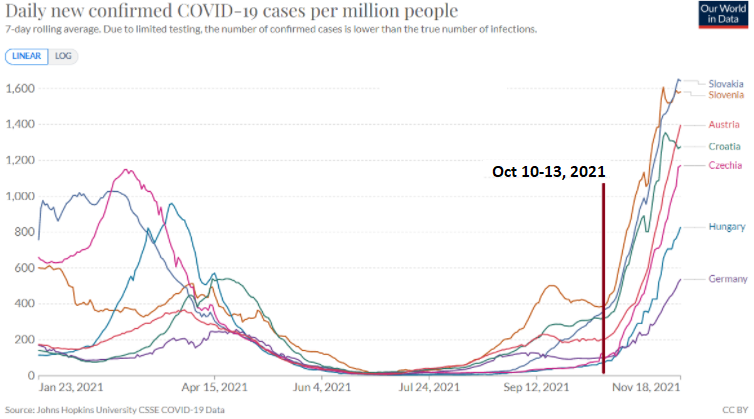
What happened in Central Europe on Oct 10-13 so that many people started to become ill?

Nothing significant happened on Oct 10-13. But the nights turned cool and heating was needed everywhere overnight from Oct 9.  Along with the temperature drop, absolute humidity of the air also dropped. It dropped almost by half within a couple of days, it dropped to the level where it had not been since the spring.

The air arriving to the lungs should contain 35 g/kg of water. In summer, the air contained about 10 g/kg and the epithelium had to add 25 g/kg. From October 9 on, 20% more water was needed from the epithelium overnight

20% increase in any burden is tough even for a short period. Replace a 75 g racquet by a 90 g one and ask a good badminton player to play his standard play. He will need a rest very soon or be broken. Epithelium would also need a rest but it can’t. Mucus covering the upper respiratory epithelium is responsible for moisturizing the inhaled air, acting as a barrier between the environment and the epithelial cells. The mucosal microbiome also turns the inhaled viral particles harmless.

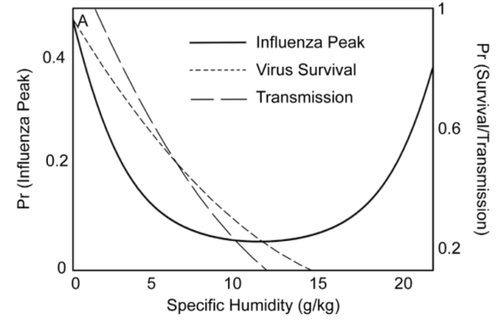
When absolute humidity drops, the water supply to the epithelium should be increased but do we know how fast such change can take place? And is there a limit to the water supply? How many have no idea of the importance of mucosal hydration of the air at all? In the winter 2020/21, Estonia had two major drops of absolute humidity. From average 8 g/kg to average 5 g/kg on Oct 14-20, triggering the rapid increase in infection. Average humidity then gradually decreased to average 4 g/kg by December, population acclimatized…

The waves of COVID-19 have broken when the absolute humidity has increased and not dropped back below customization level for a while. It happened so in the spring 2020, in the spring 2021, and also in the autumn 2021 in all Baltic countries simultaneously.

People in moderate climate have been suffering from infectious diseases from every autumn till spring and the epidemiological pattern is very similar each year. Diseases start with the beginning of the school and peaks in the second half of each winter. Since the emergence of centralized heating, the problem of indoor humidity has only become worse. Modern HVAC systems are aimed at supplying fresh air at low energy cost but these systems are still failing to address indoor humidity and maintain its healthy level.

It has been long known that the incidence of viral diseases is higher in very dry and very wet air, i.e. in nordic winter with and in tropical heat, both causing body to dehydrate. (Fig from Tamerius, Shaman et al. 2013)

My Comment:

1. The superiority of natural immunity to vaccine-induced immunity is not mentioned.  Dr. Robert Clancy explains: 

Another issue is the recognition that genetic vaccines have limited value. While doctors support the current vaccine roll-out, reported “danger signals” must be clarified. Both the DNA-vector vaccine (AstraZeneca) and mRNA vaccines (Pfizer and Moderna) behave as predicted by biology relevant to airways’ protection (something not understood by the vast majority of “experts”): short duration of protection limited to control of systemic inflammation, with little impact on infection of the airways.

Israel was used as a laboratory for the Pfizer vaccine. Six months after vaccination, there was essentially no protection against infection or mild disease, although protection against severe disease remained at 85-to-90 per cent. Thereafter came a rapid and progressive loss of protection against more severe disease. Infected vaccinated and unvaccinated subjects have similar viral loads and transmission capacity.

Immunity following natural infection is better and more durable than that induced by vaccination, so there is no sense in immunising those who have had COVID infection in the preceding six months.

2.  Ivermectin Effectively Blocks viral entry at ACE-2 receptors in the nasal and oral cavity. 

Article is High expression of ACE2 receptor of 2019-nCoV on the epithelial cells of oral mucosa

It has been reported that ACE2 is the main host cell receptor of 2019-nCoV and plays a crucial role in the entry of virus into the cell to cause the final infection. To investigate the potential route of 2019-nCov infection on the mucosa of oral cavity, bulk RNA-seq profiles from two public databases including The Cancer Genome Atlas (TCGA) and Functional Annotation of The Mammalian Genome Cap Analysis of Gene Expression (FANTOM5 CAGE) dataset were collected. RNA-seq profiling data of 13 organ types with para-carcinoma normal tissues from TCGA and 14 organ types with normal tissues from FANTOM5 CAGE were analyzed in order to explore and validate the expression of ACE2 on the mucosa of oral cavity. Further, single-cell transcriptomes from an independent data generated in-house were used to identify and confirm the ACE2-expressing cell composition and proportion in oral cavity. The results demonstrated that the ACE2 expressed on the mucosa of oral cavity. Interestingly, this receptor was highly enriched in epithelial cells of tongue. Preliminarily, those findings have explained the basic mechanism that the oral cavity is a potentially high risk for 2019-nCoV infectious susceptibility and provided a piece of evidence for the future prevention strategy in dental clinical practice as well as daily life.

Fig. 1 A schematic of the key cellular and biomolecular interactions between Ivermectin, host cell, and SARS-CoV-2 in COVID19 pathogenesis and prevention of complications.

Ivermectin; IVM (red block) inhibits and disrupts binding of the SARS-CoV-2 S protein at the ACE-2 receptors (green). The green dotted lines depict activation pathways and the red dotted lines depict the inhibition pathways.

Ivermectin also had the highest binding affinity for TMPRSS2. By binding so well to all three — the spike, the ACE2 receptor and the TMPRSS2 secateurs that prune or prime the spike, ivermectin makes it much harder for the virus to get inside a cell.

See How Much Does Ivermectin Fight Covid19? The Count is 20 ways.


mRNA Covid Vax Highly Effective . . .For Aborting

Science, Public Health Policy, and the Law paper Spontaneous Abortions and Policies on COVID-19 mRNA Vaccine Use During Pregnancy Excerpts in italics with my bolds.

The use of mRNA vaccines in pregnancy is now generally considered safe for protection against COVID-19 in countries such as New Zealand, USA, and Australia. However, the influential CDC- sponsored article by Shimabukuro et al. (2021) used to support this idea, on closer inspection, provides little assurance, particularly for those exposed in early pregnancy. The study presents falsely reassuring statistics related to the risk of spontaneous abortion in early pregnancy, since the majority of women in the calculation were exposed to the mRNA product after the outcome period was defined (20 weeks’ gestation).

In this article, we draw attention to these errors and recalculate the risk of this outcome based on the cohort that was exposed to the vaccine before 20 weeks’ gestation. Our re-analysis indicates a cumulative incidence of spontaneous abortion 7 to 8 times higher than the original authors’ results (p < 0.001) and the typical average for pregnancy loss during this time period. In light of these findings, key policy decisions have been made using unreliable and questionable data. We conclude that the claims made using these data on the safety of exposure of women in early pregnancy to mRNA-based vaccines to prevent COVID-19 are unwarranted and recommend that those policy decisions be revisited.

The study indicates that at least 81.9% (≥ 104/127) experienced spontaneous abortion following mRNA exposure before 20 weeks, and 92.3% (96/104) of spontaneous abortions occurred before 13 weeks’ gestation

We question the conclusions of the Shimabukuro et al.[4] study to support the use of the mRNA vaccine in early pregnancy, which has now been hastily incorporated into many international guidelines for vaccine use, including in New Zealand.[1] The assumption that exposure in the third trimester cohort is representative of the effect of exposure throughout pregnancy is questionable and ignores past experience with drugs such as thalidomide.[38] Evidence of safety of the product when used in the first and second trimesters cannot be established until these cohorts have been followed to at least the perinatal period or long-term safety determined for any of the babies born to mothers inoculated during pregnancy.

Additionally, the product’s manufacturer, Pfizer, contradicts these assurances, stating: “available data on Comirnaty administered to pregnant women are insufficient to inform vaccine- associated risks in pregnancy”, and “it is not known whether Comirnaty is excreted in human milk” as “data are not available to assess the effects of Comirnaty on the breastfed infant” (page 14).[39]

Pfizer, it was noted, says on its vaccine’s label that the available data on the vaccine “administered to pregnant women are insufficient to inform vaccine-associated risks in pregnancy.”

Comment: 

It would be great if there was a central source for factual information that isn’t tainted by political opinions and government agencies or elected leaders, including those who benefit from financial contributions made to them by big pharma that stands to make billions on the production and sale of their COVID vaccines. No wonder Americans no longer trust our government or the DNC’s corporate media.

JIT: US Gas Pipelines Expanded

Some good news from EIA (US Energy Information Administration) that natural gas supplies will be enhanced Just In Time for the winter heating season.  The article is New natural gas pipeline capacity expands access to export and Northeast markets.  Excerpts in italics with my bolds.

In our recently updated Natural Gas Pipeline Projects Tracker, we estimate over 4 billion cubic feet per day (Bcf/d) of new natural gas pipeline capacity entered service in the third quarter of 2021, primarily supplying Gulf Coast and Northeast demand markets.

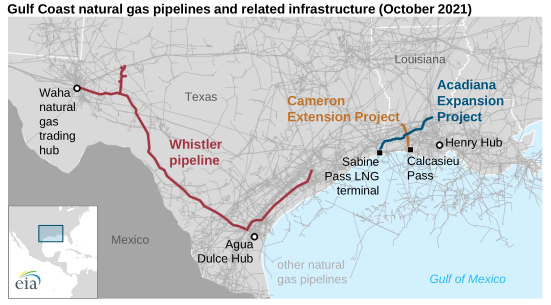
In the Gulf Coast, three projects either entered service in the third quarter or were partially completed, totaling 3.6 Bcf/d of additional pipeline capacity. These projects connect U.S. natural gas production to growing U.S. export markets. They include:

♦ The Whistler pipeline, completed on July 1, 2021. The new 2.0 Bcf/d pipeline, constructed by NextEra, connects Permian Basin production at the Waha Hub in West Texas to the Agua Dulce Hub in Southeast Texas. The Agua Dulce Hub serves as the supply point for several pipelines that cross the border to supply demand markets in Mexico.

♦ The Acadiana Expansion Project, partly completed as of August 6, 2021. This 894 million cubic feet per day (MMcf/d) expansion on the Kinder Morgan Louisiana intrastate pipeline increases takeaway capacity out of the Haynesville Basin, connecting it to the Sabine Pass LNG terminal. The project is expected to be completed in early 2022.

♦ The Cameron Extension Project, partly completed as of August 12, 2021. This 750 MMcf/d expansion on the Texas Eastern Transmission (TETCO) interstate pipeline delivers feedgas to the Calcasieu Pass LNG terminal, which is currently preparing to start commissioning activities. The project is expected to be completed by the end of this year.

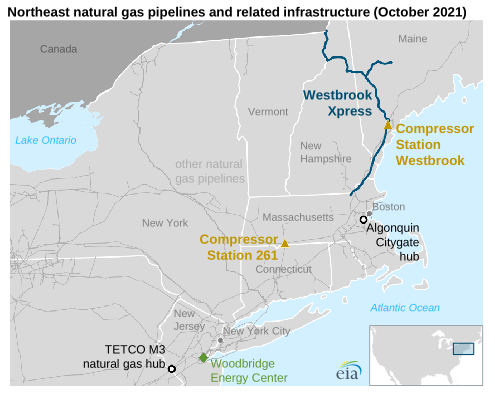
Several other projects have also entered service, increasing supplies to constrained demand markets in the Northeast. In New England, two projects will improve the region’s access to winter supplies of natural gas by over 100 MMcf/d:

♦ The 261 Upgrade Projects completed its second and final phase, entering service on October 6, 2021. With the new, upgraded compressor at Station 261, an estimated 20 MMcf/d of additional natural gas supply can be delivered by the Tennessee Gas Pipeline (TGP) into New England.

♦ Portland Natural Gas Transmission System’s (PNGTS) Westbrook Xpress Project, Phases 2 and 3, entered service on October 21, 2021, increasing natural gas pipeline import capacity from Canada at Pittsburg, New Hampshire, by 81 MMcf/d. The new Westbrook compressor station in Westbrook, Maine, will increase capacity on the co-operated Maritimes Northeast pipeline by 50 MMcf/d.

In addition, the Middlesex Expansion Project entered service in New Jersey on September 28, 2021. This 264 MMcf/d TETCO expansion delivers natural gas—via interconnections with other interstate pipelines—to the 724 megawatt (MW) Woodbridge Energy Center combined-cycle power plant in Woodbridge Township, New Jersey.

Some Bad News

The pipeline project tracker update also includes the cancellation of the 1.3 Bcf/d PennEast Pipeline, which was announced in late September. This 1.3 billion dollar project was designed to bring natural gas supplies from the Appalachia Basin into constrained demand markets in New Jersey and southeastern Pennsylvania.

In total, the Natural Gas Pipeline Projects Tracker includes updates to 25 interstate and intrastate natural gas pipeline projects, including announcements of new projects and estimated dates of completion. We update this resource quarterly; the next update is scheduled for late January 2022.

Footnote:

Background on PennEast cancelation at PA advocates laud cancelation of PennEast pipeline

The PennEast decision was a victory for the opponents that have waged a seven-year campaign against the project. “The announcement that the PennEast pipeline is effectively dead is a huge relief for PennFuture and the impacted communities across the Delaware River watershed who have been tirelessly working to defeat this terrible pipeline,” said Abigail M. Jones, vice president of legal and policy at the environmental advocacy group PennFuture.

Not everyone was pleased with the PennEast decision.

“We are disappointed, although not surprised, to hear that PennEast has decided to cancel the development of this important pipeline project in New Jersey,” Mark Longo, director of the Engineers Labor-Employer Cooperative, said in a statement. “The benefits of the project were clear: It would have provided New Jersey and the entire region with the clean, affordable energy needed to grow our economy. However, many policy makers and special interest groups shamefully fought hard to stop the project and ultimately succeeded, putting the future of our energy infrastructure at risk.”

The Pennsylvania Chamber of Business and Industry lamented the economic impact of the cancelation.

“Activists are cheering upon the recent news that the sponsors of the PennEast project, a more than $1 billion investment that would have delivered Pennsylvania-produced natural gas into markets in New Jersey, have cancelled the project. Let’s be clear: this is no victory — not for ratepayers, who are now lacking a reliable source of gas and electricity; not for the economy, which is now out several thousand well-paying construction jobs at a time when the economy continues to struggle; and not for the environment, as this obstruction results in the mid-Atlantic being more reliant on imported fuels from foreign nations that do not have our strict environmental standards,” said Chamber President and CEO Gene Barr.


European Clash Between Green Energy Realists and Purists

A previous series of posts here provided the case made by David Stockman against the IPCC hurryup agenda (David Stockman: Resist the GreenMageddon).  It is a dangerous delusion that you can convert in a decade an energy platform that evolved over 200 years.  And particularly wrongheaded to start by stopping energy supplies without anything replacing them. As put recently by Bill Blain (excerpts in italics with my bolds):
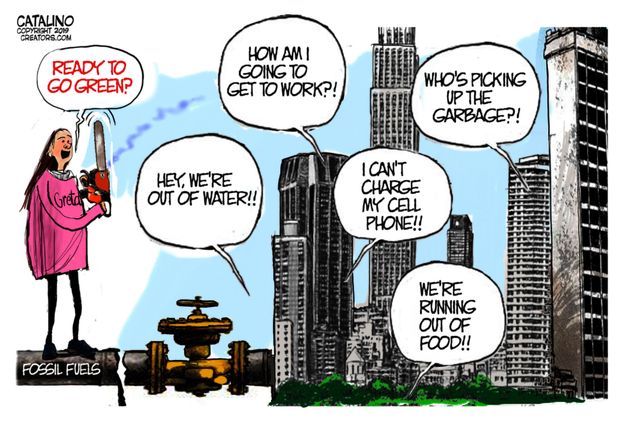
What COP26 protests highlights is how polarised Green politics are on collision course with the economy and growth. It’s going to take years to wean the economy off fossil fuels, but protestors will demand it happens now! Governments have politically committed themselves to a Green future, but are only just waking up to the reality of the need to transit from fossil fuels to renewables – which isn’t feasible without a long-term plan.

Much as I admire the passion of green campaigners, the current volatility of energy pricing demonstrates a massive underlying transition problem and political naivety.

We can’t fundamentally change energy provision overnight. Climate protesters furious this generation have “stolen” their futures will be even less happy if they succeed in reversing economic growth. The result will be to ensure billions of children as yet unborn don’t just face rising temperatures and sea-levels, but also chronic poverty, unemployment, starvation, migration and rising conflict over the environment – water being the primary threat.

While “democratic” western nations may embrace Degrowth populism – nations like China will not.

It doesn’t need to be a frying pan vs fire choice, but that’s not the way popular politics work.

In this context, a battle has been joined in Europe over the paradigm of the ‘Green Energy Transition.”  An article in Euractiv is LEAKED: Paper on gas and nuclear’s inclusion in EU green finance rules.  Excerpts in italics with my bolds.

A proposal to bring both nuclear power and natural gas into the bloc’s green finance taxonomy is circulating in Brussels. The paper has been branded as a “scientific disgrace” by campaigners who warned it would damage the EU’s credibility on green finance.

The so-called “non-paper”, obtained by EURACTIV, lays out detailed technical criteria for gas to qualify as a transitional activity under the EU’s sustainable finance rules.

To qualify as a “sustainable” investment, gas power plants or cogeneration facilities must not emit more than 100 grams of CO2 equivalent per kilowatt-hour, according to the draft paper.

It comes in the wake of declarations by European Commission President Ursula von der Leyen, who said the EU executive would soon table proposals on gas and nuclear as part of the bloc’s green finance rulebook.

“We need more renewables. They are cheaper, carbon-free and homegrown,” von der Leyen wrote on Twitter after an EU summit meeting two weeks ago where leaders debated the bloc’s response to rising energy prices.

“We also need a stable source, nuclear, and during the transition, gas. This is why we will come forward with our taxonomy proposal,” she added.

Gas as a ‘transitional activity’

The 100gCO2 emissions criteria is the same as earlier proposals circulated last year, which were rejected as too stringent by a group of 10 pro-gas EU countries who threatened to veto the proposal.

To assuage critics concerns, the paper lays out additional criteria for gas plants to qualify as a “transitional activity”, accompanied by a sunset clause (until 31 December 2030) for the commissioning of new plants.

For gas power plants, these are the criteria to qualify as a “transitional activity”:

  • Direct emissions are lower than 340gCO2/kWh, and
  • Yearly emissions are lower than 700 kgCO2/kW.

For cogeneration plants, these are the criteria to qualify as a “transitional activity”:

  • Life-cycle emissions are lower than [250-270] gCO2e per kWh, and
  • Primary energy savings of 10% compared with the separate production of heat and electricity.

Campaigners denounced those criteria as “radically weaker” than previous plans drafted by the European Commission.

“This proposal is a scientific disgrace that would deal a fatal blow to the taxonomy,” said Henry Eviston, spokesman on sustainable finance at WWF European Policy Office.

Campaigners were unsure about the origin of the non-paper. But diplomats who spoke to EURACTIV at an EU summit two weeks ago said France has been working behind the scenes to forge a compromise on the taxonomy that would satisfy supporters of gas and nuclear power.

At the initiative of Paris, representatives from like-minded EU countries held a meeting on 18 October to debate nuclear and natural gas in the context of the taxonomy, the EU diplomat said. The meeting was attended by Bulgaria, Cyprus, Czechia, Finland, France, Greece, Hungary, Malta, Poland, Romania, Slovakia, and Slovenia.

According to the same diplomatic source, participants discussed compromise proposals for technical criteria to assess the sustainability of gas and nuclear power plants.

Nuclear

On nuclear, the “non-paper” builds on the EU’s Joint Research Centre (JRC) recommendations, which concluded in a July report that nuclear power was safe and therefore eligible for a green label under the taxonomy.

The paper does not propose detailed sustainability criteria at this stage and merely divides nuclear power production activities into four categories:

  • Nuclear plant operation: Production of electricity, including the construction, commissioning, operation and decommissioning of nuclear power plants.
  • Storage or disposal of radioactive waste or spent nuclear fuel (enabling activity).
  • Mining and processing of uranium (enabling activity).
  • Reprocessing of spent nuclear fuel (enabling activity).

The “non-paper” comes in the wake of a meeting of EU energy ministers last week where twelve EU countries spoke in favour of nuclear’s inclusion in the taxonomy.

Footnote On Energy Transitions

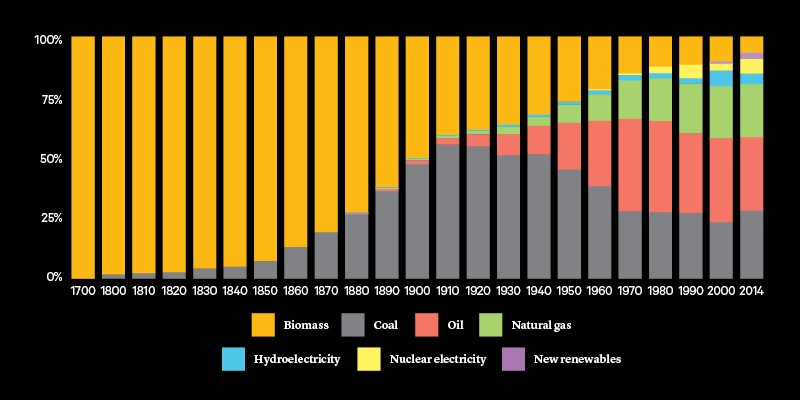
Thanks to Bill Gates we have this helpful graph showing the progress of human civilization resulting from shifts in the mix of energy sources.

Before the 19th century, it is all biomass, especially wood. Some historians think that the Roman Empire collapsed partly because the cost of importing firewood from the far territories exceeded the benefits. More recently, the 1800’s saw the rise of coal and the industrial revolution and a remarkable social transformation, along of course with issues of mining and urban pollution. The 20th century is marked first by the discovery and use of oil and later by natural gas. Since the chart is proportional, it shows how oil and gas took greater importance, but in fact the total amount of energy produced and consumed in the modern world has grown exponentially. So energy from all sources, even biomass has increased in absolute terms.

Decarbonists in Denial of History

Against this backdrop of imperatives against fossil fuels, we have Lessons from technology development for energy and sustainability by Cambridge Professor Michael J. Kelly (H/T Friends of Science). Excerpts in italics with my bolds.

Abstract: There are lessons from recent history of technology introductions which should not be forgotten when considering alternative energy technologies for carbon dioxide emission reductions. (Synopsis is at the Footnote red link)


The Creed for Pawns

Jeremy Carl lays out the catechism of beliefs required to be a US citizen, indeed a world citizen these days, in his American Mind article I Believe.   See how many boxes you can check to see if your citizenship passes muster. Excerpts in italics.

An affirmation of the national creed.

I believe Joe Biden, the Democrats, and the media. I have always believed them.

□  I believe them when they said they fortified the election, and I believe them when they said anyone wanting to look at whether they fortified the election was a racist and a conspiracy theorist. I believe that mass ballot harvesting and ballot curing are signs of the great health of American democracy. I believe that it is impossible for poor people to get voter IDs, and it is a mystery to me how India has had voter IDs for every voter since 1993.

□  I believe that, although just 44,000 votes in three states had to have switched in order for Trump to have won the election, there is zero chance that fraud could have provided Biden with his margin of victory.

□  I believe them when they say that it is totally normal for a Presidential candidate to conduct the latter stages of a general election campaign from his basement, and that it is ordinary for the media not to question that decision.

□  I believed them when they said that vaccinated people cannot get and spread COVID. And I believed them when they said vaccinated people can get and spread COVID. I believe that it was only because of the science, and not because of the interventions of the teachers unions, that tens of millions of kids were out of school for all of last year. I have no doubt that Randi Weingarten is primarily motivated by her desire to do right by my kids…strike that: our kids.

□  I believe them when they say our response to COVID was guided solely by the science. I believe that the public health establishment is non-political and interested only in tending to our common weal. They did not fund gain-of-function research in a lab in Wuhan.

□  I believe the science is settled.

□  I believe that natural immunity is a fraud and distraction. It is normal to attempt to mandate vaccination of children for a disease that mostly kills very old and very sick people.

□  I believe, along with more than 1,300 physicians and public health officials who agree, that racism is such an important crisis that Black Lives Matter protesters can gather for protests and riots with official sanction during the peak of a pandemic, but that someone attending their grandfather’s funeral or staying at a loved one’s bedside is an imminent danger to public health.

□  Like Joe Biden, I believe that white supremacist terrorism is the greatest threat to the U.S. security today. I believe that Michael Brown said “Hands up, don’t shoot” and that Jacob Blake is a good dad who was shot for no reason.

□  I believe millions of people of African and Asian descent have immigrated to America over the last 60 years despite knowing that America is systemically racist, and I believe they are owed something for their struggle.

□  I believe that there is no such thing as illegal immigration because no human being is illegal. I believe that migration to the country has nothing to do with President Biden’s open borders regime and their repeal of Trump-era border policies. I believe that stopping construction on the border wall, repealing “Remain in Mexico,” and expanding “catch and release” have nothing to do with increased entry to the United States.

□  I believe that Ilhan Omar absolutely did not commit marriage fraud and immigration fraud while marrying her brother.

□  I believe the “great replacement” is a racist conspiracy theory and that the white population of America will become marginalized through a natural process that should be celebrated.

□  I believe we didn’t leave one American citizen behind in Afghanistan and that there was no more strategic way to withdraw without leaving our enemies tens of billions of dollars of our military equipment.

□ I believe in the importance of our sacred norms and institutions, which is why I support Democrat plans to pack the Supreme Court, make DC and Puerto Rico states, and eliminate the electoral college. I believe the Senate is unjust and must be abolished.

□  I believe that billionaires are a threat to democracy unless they are billionaires who opposed Trump in which case they are heroes.

□  I believe that Joe Biden is mentally acute and that his persistent refusal to take cognitive tests or spontaneous questions from the media is only a sign of his supreme confidence in his abilities.

□  I believe that every January 6 defendant was intent on committing insurrection and none were prompted in any way by federal agents. And I believe it is totally normal in America for judges to demand political recantations before releasing people from pre-trial detention.

□  I believe that Donald Trump said that Nazis were “very fine people” and that he encouraged people to inject themselves with bleach.

□  I believe George Floyd is an American hero. American heroes often have eight criminal convictions and held a gun to the stomach of a pregnant woman during a home invasion. I believe the decision to memorialize him with statues in our major cities is the sign of a healthy body politic.

□  I believe that everyone in America always celebrated Juneteenth, frequently in secret and in fear, and that a majority of Americans were lying when they said they knew little or nothing about it.

□  I believe that it’s totally beneath comment that, in a country founded and governed overwhelmingly by white Protestants for its first 200 years, that the President has a 25-person cabinet without a single white person of Protestant origin.

□  I believe that Twitter is the free speech wing of the free speech party and that there is nothing at all dangerous to our democracy about banning the sitting President of the United States from using his preferred method of communicating with voters.

□  I am aware it is totally normal for social media and other influential outlets to suppress a potentially major story about the corruption of the son of a Presidential candidate, along with that candidate’s possible involvement in that corruption, in the days before a Presidential election.

□  I believe that Bill Kristol, Jennifer Rubin, Liz Cheney, the Lincoln Project, and other never-Trumpers opposed Trump solely because of their dedication to patriotism and integrity,

Especially the Lincoln Project.


Swiss Put Brakes on CO2 Emissions Policy

Hans Rentsch writes at Real Clear Energy Farewell to climate policy illusions after the successful referendum against the revised CO2 law. H/T zerohedge Excerpts in italics with my bolds.

On June 13th, the revised CO2 law failed at the Swiss ballot box. Judging from the rather confused debate following the rejection of the bill, one can hardly say that the shock in the politically competent circles had a beneficial effect in favor of more realism. Many commentators were surprised that the electorate put the brakes on climate policy, and many seemed puzzled about how to interpret the will of the people as expressed in the vote. In the referendum of May 2017, the revised Energy Act had been approved by a clear majority, but four years later a tight “no” to the revised CO2 Law followed.

The crucial point sounds almost trivial: The electorate that approved the Energy Act in May 2017 was not the same electorate that voted against the CO2 Act four years later – even disregarding the demographic shifts. The main difference lies in the much higher voter turnout for the CO2 Act – almost 60 percent, versus just 43 percent for the Energy Act. . . This high mobilization, well above the average of 46 percent, was due to the four other proposals that were voted on the same day, above all the two popular initiatives aiming at a reorientation of the agricultural policy.

The urban-rural divide only depicts the different political positions: urban Switzerland ticks left, rural Switzerland non-left. Instead of superficially complaining about a divide between town and country, it is worth looking at other ditches. It goes without saying that the differences between left and right are particularly great when it comes to issues that are as ideologically and morally charged as energy and climate policies. Supporters of the Green Party voted in favor of the Energy Act with a yes share of 94 percent, while only 16 percent of SVP party supporters voted in favor. Almost the same gap appeared in the referendum on the CO2 law: 93 percent versus 17 percent.

An orientation based on certain morally rewarding values is widespread among the materially privileged educated elite. Such attitudes are often used for personal image cultivation, but such behavior is associated with costs. Just think of the high prices for “ethical consumption.” In an article in the leading Swiss daily newspaper Neue Zürcher Zeitung, the cultural scientist Wolfgang Ullrich wrote that to orient one’s life towards higher values is the bliss only of elites. Their privileged social position enables the “new moral nobility” to implement a value-conscious lifestyle and thus to rise above other people. The fact that the support for the Energy and the CO2 bills was so strong in the university educated and the cultural milieus can primarily be explained with this value orientation and not with a superior technical or economic insight into the effects of the new legislation. The prominent American moral psychologist Jonathan Haidt said in a speech, only slightly exaggerating, that highly educated people are not, as they themselves would think, better informed than others, they are just more adept at justifying their prejudices.

The rough categorization “highly educated” also blurs an important fact. In terms of numbers, the predominant university degrees stem from “soft” subjects generally referred to as humanities (typically with female over-representation) such as languages, psychology, journalism, media, law, political science, sociology, history, geography, ethnology and medical-social subjects. In contrast to the political-ideological spectrum of the entire electorate, there is a pronounced left-green “value bias” among university graduates in the above-mentioned fields of study. Such orientation towards self-defined values also reflects a tendency towards illusory social goals and a massive overestimation of political will and ability in the sense of: all we want is also feasible.

In times of rising alarmist voices, nothing would be more useful than to engage in a sober analysis of the situation without prejudice and to part from all the illusions that shape current energy and climate policy. This applies in particular to the Fukushima-fueled Swiss Energiewende.

The 1.5 degree target from the Paris 2015 conference and agreement and the connected grandiose “zero carbon” oaths are the great basic illusions.

Unattainable goals are bound to make climate policy a constant failure. Why should the world state of 1850 at the end of the Little Ice Age with a CO2 concentration of 280 ppm represent a natural climate optimum for the environment, health, and nutrition? Furthermore, since the average global temperature has already increased by 1.1 degrees since then, and since the temperature reacts with a delay to today’s CO2 concentration of 415 ppm, the 1.5 degrees would probably also be exceeded, even if the human world were to stand still tomorrow.

The approval of the Energy Act in 2017 was primarily a vote in favor of phasing out nuclear energy. In the VOTO follow-up survey, four out of five respondents expressed a wish for a nuclear-free Switzerland. The images of the reactor explosion in Fukushima were still firmly imprinted on people’s minds. “Hard cases make bad law” is an old political adage that pops up here. We could have learned a lot from the Fukushima hard or even worst case, if we had analyzed the consequences more calmly, instead of announcing an “energy transition” two months after the disaster with the phasing out of nuclear energy. Winston Churchill is credited with observing that security lies in the multitude of variables that are available as options for action. If, based on costless wishes and on vague hopes, a county’s voting population restricts options for action, it must also be prepared to deal with a reality that might behave differently than hoped for.

A counter-experience to Fukushima that could stir up people’s mindset in a similar way favoring a more realistic energy policy, would be an electricity blackout provoking the failure of important systems. Such an event is not unrealistic under the pressures and constraints of the announced energy transition. Relevant warnings can be found in official risk scenarios for Switzerland. With the ongoing and increasing uncoupling from the European electricity network due to Switzerland’s rejection of an institutionally binding general agreement with the EU, these risks are rising. But as long as the perception and the media communication of accidents in the energy sector – not least thanks to the specters “Fukushima” and “Chernobyl” – are so distorted at the expense of nuclear energy, the prevailing opinions in the population should not be overestimated.

Perhaps in a few years we shall see a climate youth on strike who – in contrast to today’s ideologically blind Fridays for Future activists – is calling for an exit from the “nuclear exit.” All to the benefit of ambitious climate targets.

Footnote: Schiller Institute reaction to results:

The big surprise with the No vote over the new Swiss CO2 law was the fact that the majority of young people voted against it. According to the website 20 Minuten website, 54% of those over 65 — that is to say the Boomers — voted in favor of the new law, while 58% of those under 34 voted against it, according to a 20 Minuten and Tamedia survey of 16,249 participants. See report here.

The leading Swiss weekly Weltwoche wrote that the result signaled a “turning point in international climate policy,” a “popular uprising” in which the Swiss electorate rebelled “against the dictates of the elites…. The Swiss are going on a climate strike, just differently than what those in power intended. They want less government action against climate change instead of more.”

The claim that was circulating, that many people voted against the new law because it was not “strong enough” also seems to have not been decisive, according to the survey, since only 2% of the no voters claimed they cast their ballot against it for that reason. According to the survey, fear of higher costs was the main argument against the CO2 law, including among young people.


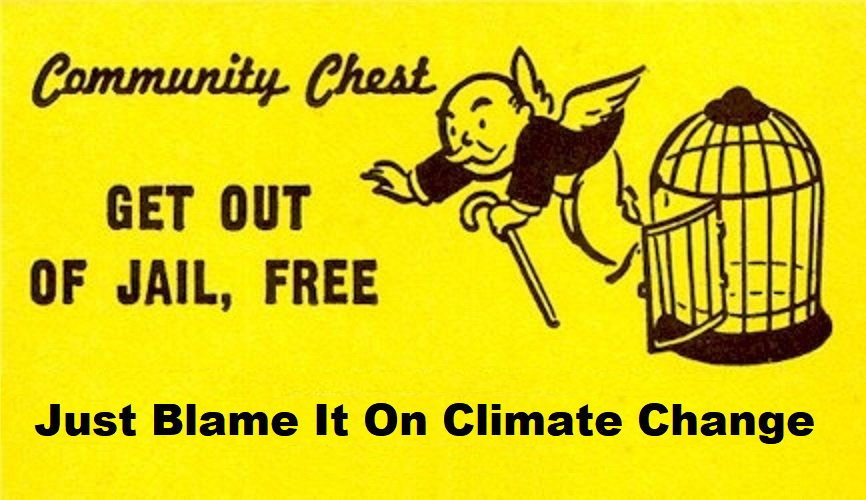
Climate Change is a Political Cop Out


Jonathan Lesser writes at Real Clear Energy Climate Change Ate My Homework: Politicians Blame Climate Change for Bureaucratic Failures.  Excerpts in italics with my bolds and added images.

Never let a crisis go to waste, said Rahm Emanuel. True to form, politicians, including New York City Mayor DeBlasio, are conveniently claiming that last week’s flooding caused by the remnants of Hurricane Ida is clear evidence of climate change. “Unfortunately,” said the Mayor, “extreme weather events are becoming the norm.”

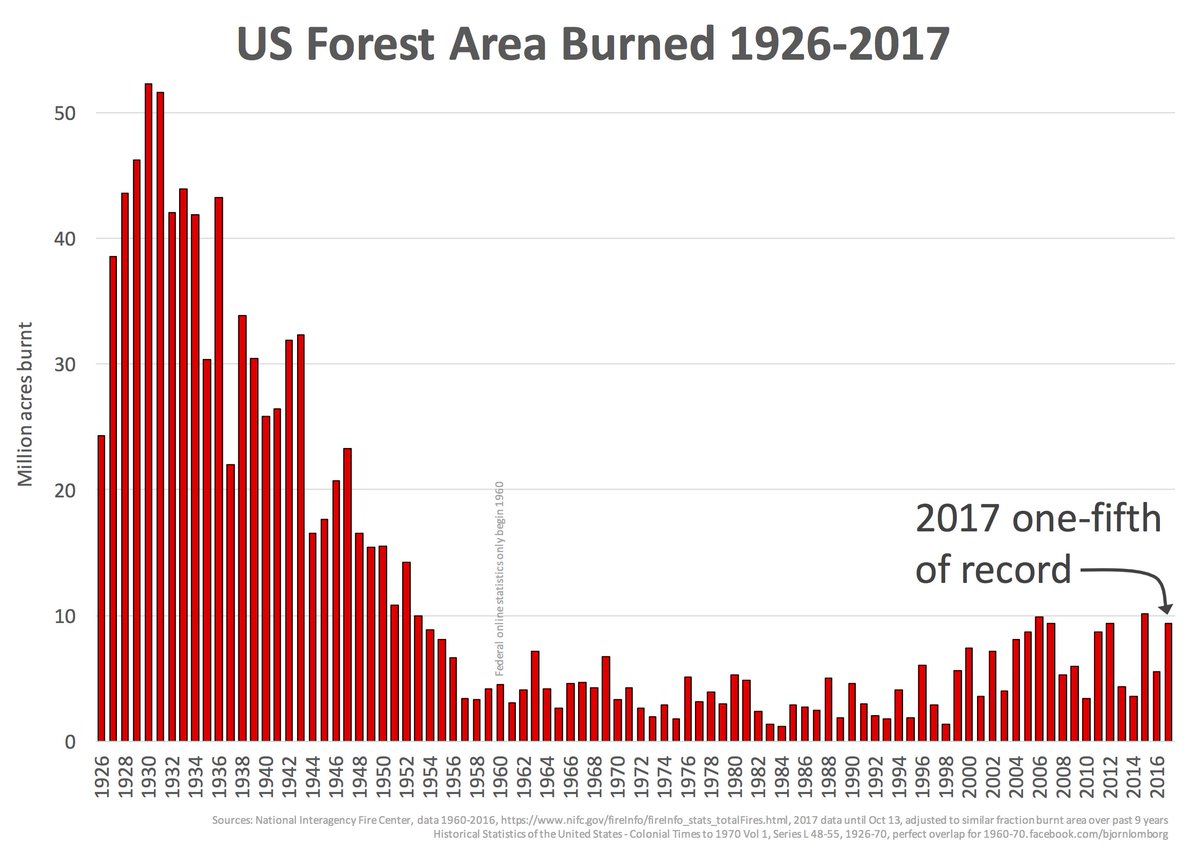
The data suggest it’s more complicated. Hurricanes are actually slightly less frequent today than they were a century ago. The average number of wildfires has not increased over the last thirty years and, over the past century, the total number of acres burned is far lower.

It may be hard to believe, but hurricanes hit the east coast even before Thomas Edison opened his Pearl Street Generating Station in the financial district in 1882. For example, the Coastal Hurricane of 1749 was estimated to have been one of the strongest hurricanes to hit the eastern seaboard.[1] Twin hurricanes hit North Carolina in August 1795. And the New England Hurricane of 1815 devastated Providence, Rhode Island.

Figure 2a shows Integrated Storm Activity Annually over the Continental U.S. (ISAAC) from 1900 through 2017, with a 10 year centered average in red. Source: Truchelut and Staehling (2017) Overlaid is atmospheric CO2 concentrations measured at Mauna Loa.

It’s true that damages caused by hurricanes and wildfires have increased. But the reasons are far from conclusive, and likely have far more to do with bureaucracy than with climate change.

Regardless, the rhetoric from our political class should be exposed for what it is: a thin attempt to shift blame away from their own bureaucratic failures.

Damages from hurricanes have increased because of far more development along the Gulf and east coasts. Furthermore, the federal government has subsidized flood insurance in these same areas and continues to do so. Not only have those subsidies encouraged coastal development, but also they provide an economic incentive for individuals, and state and local governments, to skimp on building more flood-resistant facilities. Vulnerable infrastructure—and more of it—will naturally yield greater infrastructural damage.

Similarly, damages from wildfires, especially in California, have resulted from a toxic combination of federal and state fire suppression policies, environmentalists’ demands that have prohibited removal of dead and diseased trees, restrictions on grazing that would remove dry grasses and, especially, poorly maintained power lines. Pacific Gas & Electric Company, for example, pleaded guilty to 85 counts of manslaughter because it failed to maintain power line equipment that caused the 2018 Camp Fire. To make matters worse, California’s restrictive development policies have forced homeowners to move farther away from cities and into mountainous areas where fire risk is greatest.

Climate change isn’t responsible for those policies.

Remember Superstorm Sandy? After it flooded New York City in October 2012, Governor Cuomo formed the “NYS 2100 Commission” to find ways to strengthen the state’s infrastructure. He also formed the “NYS Ready Commission,” which was to find ways to ensure that the state’s critical systems and services, including subways, are better prepared for disasters.

The 2100 Commission recommended hardening infrastructure, especially sewage treatment plants, strengthening dams and constructing levees, and even expanding wetlands protections in flood-prone areas.

Seven years later, in 2019, the City Council criticized the lack of preparation for the next storm because those preparations were mired in red tape and bureaucratic squabbling. [2] One notable project, for example, the $1.5 billion East Side Coastal Resiliency project, finally started earlier this year. It won’t be finished until at least 2026. Most of the other recommendations haven’t been implemented, either.

Climate change didn’t cause those delays.

Part of that “preparation” includes more stringent mandates for green energy. But even if New York was powered solely by green energy tomorrow, it wouldn’t eliminate bureaucratic delays.

Instead, it would inflict its own damage on New York’s beleaguered economy, with higher costs and more blackouts. Last month, for example, the New York State Reliability Council, which is tasked with preserving the reliability of the state’s electric power grid, issued a report regarding how to maintain that reliability while meeting the green energy and electrification mandates of former Governor Cuomo’s Climate Leadership and Community Protection Act.[3]

The Council concluded that, because of the inherent intermittency of wind and solar power, meeting those mandates will require “substantial clean energy and dispatchable resources, some with yet to be developed technology …” The Council estimated that, by 2040, New York will need 50,000 megawatts of generating capacity just in reserve – more than the state’s entire generating capacity today – and require generating technologies that don’t even exist.

Americans like to think they elect leaders who diligently prepare for the future. But if the preparation requires unknown technologies, and if concrete plans for resilience are going unfulfilled now, one man’s forward-thinking rhetoric can look an awful lot like another’s finger-pointing to eschew blame. It would be nice to think politicians would avoid using buzzwords and broad concepts to mask their own deficiencies. But the facts of bad incentives and poor planning are undeniable. When the lights go out, we can expect more of the same excuses.