End Covid19 Vaccine Obsession Now

Fig. 1. The four pillars of pandemic response to COVID-19. The four pillars of pandemic response to COVID-19 are:
1) contagion control or efforts to reduce spread of SARS-CoV-2,
2) early ambulatory or home treatment of COVID-19 syndrome to reduce hospitalization and death,
3) hospitalization as a safety net to prevent death in cases that require respiratory support or other invasive therapies,
4) natural and vaccination mediated immunity that converge to provide herd immunity and ultimate cessation of the viral pandemic.

Robert Clancy explains in his Quadrant article  COVID-19: A realistic approach to community management The author is Emeritus Professor of Pathology at the University of Newcastle Medical School. He is a member of the Australian Academy of Science’s COVID-19 Expert Database.   Excerpts in italics with my bolds.

Historically pandemics generate suspicion, speculation and emotion, before logic and empiric decisions determine optimal management. The current Covid19 pandemic is no exception. Twelve months on, there is an emerging consensus supporting an integration of a four-pillar plan: public health strategies; vaccination; early pre-hospital treatment; and hospital treatment. This position replaces an early confusion, with supporting data appearing on a near daily basis.

Public Health strategies are well understood and highly effective, forming the bedrock for disease control, while hospital management is a work in progress, but with progressive improvement in outcomes. Typical data for high risk subjects (>50 years with 1 or more co-morbidities) in the USA is currently 18-20% hospitalisation, with mortality around 1%. Less attention has been given to ongoing symptoms, with about 80% of hospitalised patients having profound fatigue and/or breathlessness 3-4 months after discharge. Many are unable to return to full time work 6 months after infection control.

The area of intense disagreement is community management combining prevention by vaccine and reduction of hospital admission, using pre-hospital treatment.

There is a global expectation that vaccines will dramatically change the current face of Covid19 while there is broad based denial that any of the available (unpatented) drugs beneficially alter the natural history of infection. Expectation of a vaccine nirvana alongside therapeutic nihilism are both incorrect, although each is promoted with a vigour rooted in socio-political conviction (& supported by the Pharma industry).

The conclusion based on logic and data, is that vaccines and early treatment strategies are both necessary for optimal disease control. As a result, a community plan has been formulated, aimed at keeping patients out of hospital. Experienced physicians have developed protocols based on evidence, with sequenced multi-drug regimens that support >80% reductions in admissions to hospital and death.

Implementation of this approach would effectively end the US, UK, Canada, and EU hospitalisation crises.

The objective of this brief review is to provide argument in support of these conclusions, based on an untangling of the pathobiology of Covid19 over the last 12 months; review of the available data on the three vaccines used in the western world; and current data supporting significant benefit of pre-hospital drug treatment.

The Vaccine

The idea that a vaccine would induce sterilising immunity and therefore prevent community spread by creating herd immunity, has become the dominant political and medical story. Political, economic and social planning has been based on a sense of certainty that this will happen. This was never a likely outcome, as such success was asking more of the immune apparatus responsible for containment of a respiratory virus, than had been observed. The first principal of vaccinology has always been that a vaccine is unlikely to give better protection than does the disease itself. First cousin Corona viruses cause recurrent airways infections over many years, manifest clinically as “common colds”. Recurrent Covid19 infections have been documented during the first year of the pandemic. Mucosal immunological memory for corona viruses is predictably poor.

The objective of any Covid19 vaccine is to limit virus replication within the mucosal compartment of the airways. This requires specific activation of the mucosal immune system, which differs from systemic immunity, geared to protect the internal spaces of the body. Blood antibody levels characterise the systemic immune response. These antibodies are very effective at neutralising virus that passes through the blood stream in its normal course of infection, such as the measles or mumps virus. These vaccines readily induce sterilising immunity.

The relevance of this immune machinery to Covid19 vaccines can be summarised:

  •  the systemic and mucosal immune compartments communicate poorly, with minimal mixing. Some mixing occurs in regions such as the nasal cavity and the alveolar space as demonstrated by injected pneumococcal vaccines where IgG antibody from blood can inhibit pneumocooci in the nose and the gas exchange apparatus of the lungs and thus protect from ear infections and pneumonia. This may explain the high level of “PCR-ve Covid19 infections” (that is, apparent clinical infection by Covid19 virus, but with a negative laboratory test in the mRNA trials, as discussed below. 
  • mucosal immune responses to the virus are transient.
  • immune senescence at a mucosal level is marked.

Three vaccines have been released in the US and UK after limited observation and review due to the dramatic circumstances of the pandemic. . . The outcome of these reviews suggest that little difference exists between the three vaccines.  To summarise current position with vaccines;

  • Little protection against infection occurs, although protection against symptomatic disease is significant, but is likely to be far less than 90%. It remains to be demonstrated whether this translates into protection against admission to hospital, & mortality since this was not the case in 2 months of follow-up with the mRNA vaccines. The duration of protection and level of protection in high risk individuals over time, need to be monitored. The likely outcome is that vaccines push the disease profile towards asymptomatic infection, rather than induce any discrete sterilising immune state. It is unhelpful and risky to attempt to choose between available vaccines until far more data becomes available.
  • Re-infection in vaccinated subjects appears to occur at a similar rate as it does for community non-vaccinated controls.
  • There is no realistic chance of herd immunity, given the high rate of asymptomatic infections in vaccinated individuals. This becomes more probable should the current intention of about 30% of the population (US figures) to not be vaccinated irrespective of advice given, be accurate. In Australia, every encouragement should support over 90% vaccination, with whatever of the available vaccines are available: dissention and argument over “false news” undermines this endeavour. In other words, though immunity with Covid19 vaccination appears to be neither complete nor durable, any chance of approaching “herd immunity” depends on a near 100% vaccination rate. Time will give answers to the critical questions, and vaccines still in trials, may be a better choice in the longer run. None of the “clever” delivery systems have yet proved to be an advantage over traditional (or 21st century variations) adjuvenated split vaccines (other than for those who own the patent).
  • It can be predicted that endemic spread of the virus throughout the population will occur. The observations in the UK trial of high levels of asymptomatic infection, and “Diagnostic Test Negative” infections in the Pfizer study, focus attention on confirming the dynamics of asymptomatic infection post vaccination, and the degree of transmission in the community, from that source. Data on these critical issues is limited.
  • There is a potential danger that as vaccination levels increase, but remain short of comprehensive cover, virus could spread with “hotspots” difficult to identify. Such spread could promote the emergence of resistant strains.The worst scenario would be an increase in mortality due to spread from unrecognised vaccinated subjects with asymptomatic infection, to those without vaccination protection. On this, current data is scanty, indicating about 20% of Covid19 infections are asymptomatic, but that the infectivity of these, is reduced, perhaps 3-4 fold. Similar data in the post-vaccine world will be of central importance.
Early Drug Treatment

It could be summarised that in a “Post Truth World’, those with Covid19 disease are denied safe, effective treatment which if given early can reduce admission to hospital and death. The main purpose of the comments to follow, is to show that the data have moved on, and that science-based decisions can and must be made if lives are to be saved. Two drugs are effective: hydroxychloroquine (HCQ), and ivermectin (IVM) with most effective trials including nutraceutical, zinc and intracellular antibiotics. These antivirals have been available as antimicrobial drugs for many years. Their antiviral activity is due to intracellular processes that inhibit virus assemblage – HCQ reduces acidity within cytoplasmic vesicles, and IVM blocks communication between the cytoplasm and the nucleus, while both have many sites of action that impair the inflammatory response.

The basic principal in treating viral infections is to treat early. This is well established for all virus therapy including acyclovir treatment for shingles, herpes simplex infections, and neuraminidase inhibitors in influenza. The same principal applies to treatment of Covid19. Treatment during the first “virus dominant” phase is directed at reducing the viral load within the mucosal compartment, while in the second phase treatment aims at inhibition of the damaging inflammatory response. Patients with significant second phase disease are usually in hospital, and treated with organ support, anticoagulation and anti-inflammatory drugs.

The data base supporting the value of early treatment of Covid19 disease is so strong, that it is hard to understand the current philosophy of “wait until you are sick enough, then go to hospital” (The question I put to naysayers is “would you give or not give HCQ or IVM to your grandparent with early Covid19 disease in an Australian aged care facility?”). Suggested reasons for unscientific denial include: ideological unmovable mind sets; a rapidly evolving pandemic where new data appears on a daily basis making it hard to keep up with the data flow; failure to understand the value of non RCT data sets which from a scientific and ethical viewpoint are appropriate to the circumstances of a pandemic; and a total focus on an anticipated Covid-free world following the release of vaccines.

The RCT mantra selectively used against HCQ and IVM is cynical, given the experience with Remdesivir. This antiviral agent has been tried in the treatment of Covid19 and was shown in a RCT to reduce time in hospital by 4 days, with no reduction in mortality. On this scanty evidence it was rushed through the regulatory process. Although three additional RCTs failed to confirm this slight benefit, it continues to be used at around A$4,000 a course, with many significant side effects.

Review of clinical studies in early (pre-hospital) disease as at end of November 2020 illustrate the data:

  • All 27 trials of HCQ showed protection (OR 0.37 (0.29-0.47)). 10 of these were RCT (OR 0.71 (0.54-0.95)) (the Odds Ratio , or OR of , say, 0.37, means “63% protection”, and 0.71 would be “29% protection”). The figures in ( ) are the 95% confidence levels: if <1.0, this is equivalent to {at least } a P value <0.05) (P value refers to probability of result being by chance. A value of 0.05 means a 1 in 20 chance that it is “by chance”, with that level taken as reflecting a significant observation).
  • 26 of 32 prophylaxis studies using HCQ showed protection (OR for 5 post exposure studies: 0.61 (0.4-0.74))
  • IVM in 8 studies, half of which were RCT, showed protection in early treatment studies (OR 0.28(0.13-0.59) P=0.004)

As this clinical data continues to accumulate, regions around the world are adopting therapy with HCQ or IVM with dramatic results, when compared to adjoining areas that have not adopted this therapy. This has been marked in regions in Brazil.

The incidence and mortality of Covid19 in the US and Europe is of crushing proportions with no end in sight. . . Planning on the basis that all this will change following introduction of vaccines, needs reassessment, as early review of trial data, while showing short term protection from significant symptomatic disease, must be tempered by evidence that infection is little reduced when asymptomatic and “PCR-ve Covid19” (a negative test for virus on a nasal swab) cases are counted. . . Uncertainties regarding the capacity of current vaccines to attain herd immunity due to continued asymptomatic infection, dictate that additional measures to reduce the impact of the pandemic must be put in place.

Two drugs used early in disease reduce admission into hospital and death, including in those considered high-risk subjects, and they go a significant way to filling this need: HCQ and IVM. Both can be used as prophylactic or therapeutic medications. From uncertain beginnings, an impressive data base has more recently accumulated, that strongly supports the use of HCQ and/or IVM. Their use in concert with vaccines can no longer be denied; indeed this is the only science-based option.

Background from previous post Why Pandemic Responses Fail

As reported in the journal Reviews in Cardiovascular Medicine, Top US medics recommend ‘sequenced multidrug therapy’ including HCQ & Ivermectin, for early high-risk COVID-19 infections (source Palmer Foundation).  Bureaucratic public health officials obsessed with top-down, high-tech solutions have failed to provide citizens with the most important pillar: advice and the means to treat themselves and take charge of their own health care.  Excerpts in italics with my bolds.

The pandemic of SARS-CoV-2 (COVID-19) is advancing unabated across the world with each country and region developing distinct epidemiologic patterns in terms of frequency, hospitalization, and death. There are four pillars to an effective pandemic response:
1) contagion control,
2) early treatment,
3) hospitalization, and
4) vaccination to assist with herd immunity (Fig. 1).

Additionally, when feasible, prophylaxis could be viewed as an additional pillar since it works to reduce the spread as well as the incidence of acute illness.

Many countries have operationalized all four pillars including the second pillar of early home-based treatment with distributed medication kits of generic medications and supplements as shown in Table 1.

In the US, Canada, United Kingdom, Western European Union, Australia, and some South American Countries there have been three major areas of focus for pandemic response:
1) containment of the spread of infection (masking, social distancing, etc.,
2) late hospitalization and delayed treatments (remdesivir, convalescent plasma, antiviral antibodies), and
3) vaccine development (Bhimraj et al., 2020; COVID-19 Treatment Guidelines, 2020).

Thus the missing pillar of pandemic response is early home-based treatment (as seen in Fig. 1).

The current three-pronged approach has missed the predominant opportunity to reduce hospitalization and death given the practice of directing patients to self-isolation at home. Early sequential multidrug therapy (SMDT) is the only currently available method by which hospitalizations and possibly death could be reduced in the short term (McCullough et al., 2020a).

Innovative SMDT regimens forCOVID-19 utilize principles learned from hospitalized patients as well as data from treated ambulatory patients.

For the ambulatory patient with recognized signs and symptoms of COVID-19 on the first day (Fig. 2), often with nasal real-time reverse transcription or oral antigen testing not yet performed, the following three therapeutic principles apply (Centers for Disease Control and Prevention, 2020) :

1) combination anti-infective therapy to attenuate viral replication,
2) corticosteroids to modulate cytokine storm, and
4) antiplatelet agent/antithrombotic therapy to prevent and manage micro- or overt vascular thrombosis.

For patients with cardinal features of the syndrome (fever, viral malaise, nasal congestion, loss of taste and smell, dry cough, etc) with pending or suspected false negative testing, therapy is the same as those with confirmed COVID-19.

Fig. 3. Sequential multidrug treatment algorithm for ambulatory acute COVID-19 like and confirmed COVID-19 illness in patients in self-quarantine. Yr = year, BMI = body mass index, Dz = disease, DM = diabetes mellitus, CVD = cardiovascular disease, chronic kidney disease, HCQ = hydroxychloroquine, IVM = ivermectin, Mgt = management, Ox = oximetry, reproduced with permission from reference.

Summary

The SARS-CoV-2 outbreak is a once in a hundred-year pandemic that has not been addressed by rapid establishment of infrastructure amenable to support the conduct of large, randomized trials in outpatients in the community setting.

The early flu-like stage of viral replication provides a therapeutic window of tremendous opportunity to potentially reduce the risk of more severe sequelae in high risk patients. Precious time is squandered with a “wait and see” approach in which there is no anti-viral treatment as the condition worsens, possibly resulting in unnecessary hospitalisation, morbidity, and death.

Once infected, the only means of preventing a hospitalization in a high-risk patient is to apply treatment before arrival of symptoms that prompt paramedic calls or emergency room visits. Given the current failure of government support for randomized clinical trials evaluating widely available, generic, inexpensive therapeutics, and the lack of instructive out-patient treatment guidelines (U.S., Canada, U.K., Western EU, Australia, some South American Countries), clinicians must act according to clinical judgement and in shared decision making with fully informed patients.

Early SMDT developed empirically based upon pathophysiology and evidence from randomized data and the treated natural history of COVID-19 has demonstrated safety and efficacy.

In newly diagnosed, high-risk, symptomatic patients with COVID-19, SMDT has a reasonable chance of therapeutic gain with an acceptable benefit-to-risk profile.

Until the pandemic closes with population-level herd immunity potentially augmented with vaccination, early ambulatory SMDT should be a standard practice in high risk and severely symptomatic acute COVID-19 patients beginning at the onset of illness.

Authors:

Peter A. McCullough, Paul E. Alexander, Robin Armstrong, Cristian Arvinte, Alan F. Bain, Richard P. Bartlett, Robert L. Berkowitz, Andrew C. Berry, Thomas J. Borody, Joseph H. Brewer, Adam M. Brufsky, Teryn Clarke, Roland Derwand, Alieta Eck, John Eck, Richard A. Eisner, George C. Fareed, Angelina Farella, Silvia N. S. Fonseca, Charles E. Geyer Jr., Russell S. Gonnering, Karladine E. Graves, Kenneth B. V. Gross, Sabine Hazan, Kristin S. Held, H. Thomas Hight, Stella Immanuel, Michael M. Jacobs, Joseph A. Ladapo, Lionel H. Lee, John Littell, Ivette Lozano, Harpal S. Mangat, Ben Marble, John E. McKinnon, Lee D. Merritt, Jane M. Orient, Ramin Oskoui, Donald C. Pompan, Brian C. Procter, Chad Prodromos, Juliana Cepelowicz Rajter, Jean-Jacques Rajter, C. Venkata S. Ram, Salete S. Rios , Harvey A. Risch, Michael J. A. Robb, Molly Rutherford, Martin Scholz, Marilyn M. Singleton, James A. Tumlin, Brian M. Tyson, Richard G. Urso, Kelly Victory, Elizabeth Lee Vliet, Craig M. Wax, Alexandre G. Wolkoff, Vicki Wooll, Vladimir Zelenko. Multifaceted highly targeted sequential multidrug treatment of early ambulatory high-risk SARS-CoV-2 infection (COVID-19). Reviews in Cardiovascular Medicine, 2020, 21(4): 517-530.


Energy: Third Rail of US Politics

This third rail, used to power trains, would likely result in the death by electrocution of anyone who comes into direct contact with it.

Wikipedia:  The third rail of a nation’s politics is a metaphor for any issue so controversial that it is “charged” and “untouchable” to the extent that any politician or public official who dares to broach the subject will invariably suffer politically. The metaphor comes from the high-voltage third rail in some electric railway systems.

On his first day in office Biden canceled the Keystone energy pipeline, and the backlash is immediate from the unions who supported him and now will suffer a punishing loss of middle-class jobs.

“Insulting”- Labor Unions That Endorsed Biden Now Lashing Out At Him is an article at Gateway Pundit.  Excerpts in italics with my bolds.

Joe Biden has already made labor unions regret their support for him. 
He’s only been in office three days.

Several unions that eagerly endorsed President Joe Biden during the 2020 presidential election are now learning the hard way what it means to support Democrat policies.

During his first day in office, the newly-inaugurated president revoked the construction permit for the Keystone XL oil pipeline, thus destroying thousands of jobs.  And not just any jobs — but union jobs.

The Laborer’s International Union Of North America issued this statement:

“The Biden Administration’s decision to cancel the Keystone XL pipeline permit on day one of his presidency is both insulting and disappointing to the thousands of hard-working LIUNA members who will lose good-paying, middle-class family-supporting jobs,”

“By blocking this 100-percent union project, and pandering to environmental extremists, a thousand union jobs will immediately vanish and 10,000 additional jobs will be foregone.”

This comes after LIUNA bragged about pushing Biden “over the top” in 2020.

The North American Building Trades Union said this:

“North America’s Building Trades Unions are deeply disappointed in the decision to cancel the Keystone XL permit on the President’s first official day in office. Environmental ideologues have now prevailed, and over a thousand union men and women have been terminated from employment on the project.

On a historic day that is filled with hope and optimism for so many Americans and people around the world, tens of thousands of workers are left to wonder what the future holds for them. In the midst of a pandemic that has claimed 400 thousand American lives and has wreaked havoc on the economic security and standard of living of tens of millions more, we must all stand in their shoes and acknowledge the uncertainty and anxiety this government action has caused.”

The United Association Of Union Plumbers and Pipefitters released this statement about Biden canceling the Keystone XL pipeline permit

“In revoking this permit, the Biden Administration has chosen to listen to the voices of fringe activists instead of union members and the American consumer on Day 1.”

Unions that backed Biden are finding out Biden works for radical Democrats, not labor unions.


WordPress Censorship?

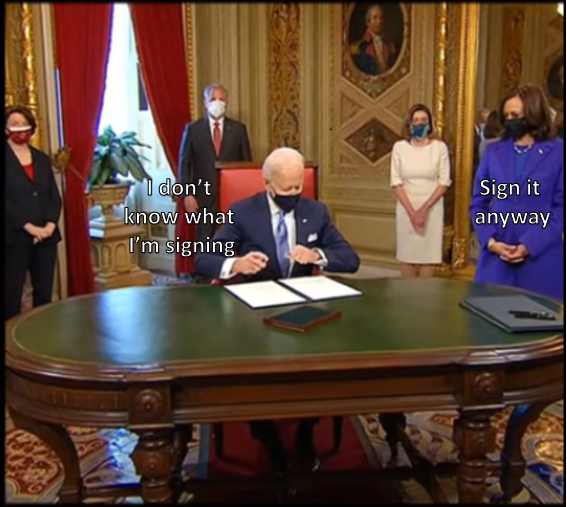
A strange thing happened this morning.  I wanted to improve some wording in a post from last night, and the edit function came up in WordPress block editor.  To my surprise, some of the text and image blocks were no longer visible, covered with a warning label:  “This block contains unexpected or invalid content.” Canceled text started with a reference to the last US election and a video image of Biden signing executive orders.

If I open the post in classical editor, the text is available as I wrote it.  And the post still appears without censorship:  See: Climate Science Victim of Fake News

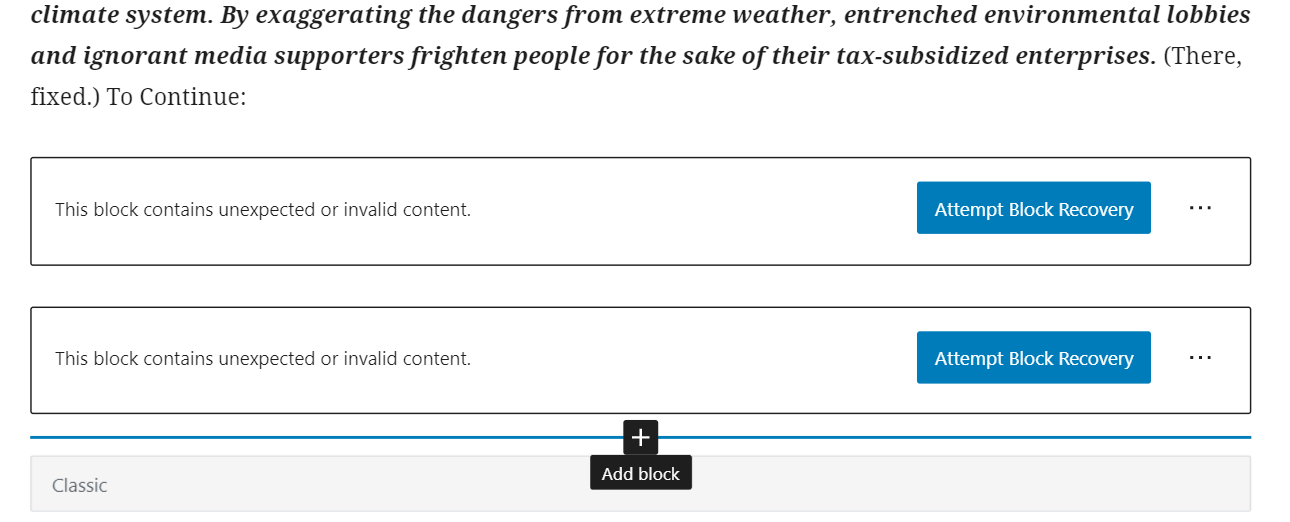
Footnote:  As suggested in comment below, here is a screenshot:

Hitting the “Attempt Block Recovery” button creates a blank block.

Climate Science Victim of Fake News

A recent article in the legacy media needed some editorial work in the public interest. Published at the Business Post, it began this way:

Climate science has long been the victim of ‘fake news’ obscuring uncomfortable truths. By pouncing on supposed uncertainties in climate science, big business interests and their supporters in the media divert attention away from the real climate emergency.

Now that is so misleading that a “False Alarm” label should be attached by fact checkers. In their absence, the next best thing is to rewrite to set the record straight and eliminate the falsehoods and hype. So let’s begin again.

Climate science has long been the victim of ‘false alarms’ obscuring the remarkable stability of our climate system. By exaggerating the dangers from extreme weather, entrenched environmental lobbies and ignorant media supporters frighten people for the sake of their tax-subsidized enterprises. (There, fixed.) To Continue:

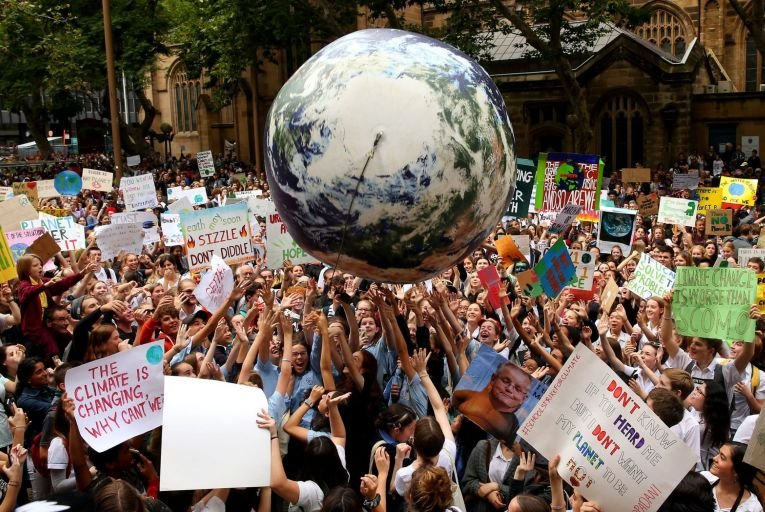
A climate change awareness rally in Sydney in 2019. Picture: Don Arnold/Getty Images

Climate change is a popular crusade with catchy slogans and many social gatherings to celebrate solidarity. Actual scientific understanding of the climate is hard, lonely work collecting and analyzing data. And simplistic notions about “fighting climate change” are nonsense without rigorous cost and benefit analysis.

To the political classes and wider public still reeling from social and mass media censorship and warped “fact-checking”, and astounded that the world’s leading democracy could see its elections invalidated by a blizzard of lies and backroom vote counting, climate scientists might well say: Don’t be so naive.

Take Phil Jones, a quietly spoken climatologist at the University of East Anglia in England. In 2009, he was caught up in a whistleblower’s leak of context from the university’s email servers which was later dubbed “climategate.”

There are three threads in particular in the leaked documents which sent a shock wave through informed observers across the world. Perhaps the most obvious was the highly disturbing series of emails which show how Dr Jones and his colleagues had for years been discussing the devious tactics whereby they could avoid releasing their data to outsiders under freedom of information laws.

But the question which inevitably arises from this systematic refusal to release their data is – what is it that these scientists seem so anxious to hide? The second and most shocking revelation of the leaked documents is how they show the scientists trying to manipulate data through their tortuous computer programs, always to point in only the one desired direction – to lower past temperatures and to ‘adjust’ recent temperatures upwards, in order to convey the impression of an accelerated warming. This is what Mr McIntyre caught Dr Hansen doing with his GISS temperature record last year (after which Hansen was forced to revise his record), and two further shocking examples have now come to light from Australia and New Zealand.

The third shocking revelation of these documents is the ruthless way in which these academics have been determined to silence any expert questioning of the findings they have arrived at by such dubious methods – not just by refusing to disclose their basic data but by discrediting and freezing out any scientific journal which dares to publish their critics’ work. It seems they are prepared to stop at nothing to stifle scientific debate in this way, not least by ensuring that no dissenting research should find its way into the pages of IPCC reports. (Source:  excerpt from John Walker, former Laboratory Medical Director/Pathologist (1984-2011) See: Q&A Why So Many Climate Skeptics

Background from previous post:

In 2021, there may well be a new deluge of hysterical claims from the usual suspects published at the usual venues comprising legacy and social media.

These outrageous appeals by alarmists in the face of contrary facts remind me of the story defining the term “chutzpuh.” A young man is convicted of killing his parents, and later appears before the judge for sentencing. Asked to give any last words, he replies: “Go easy on me, your Honor, I’m an orphan.”
alcoholics-anonymous-logo-e1497443623248

Fortunately, there is help for climate alarmists. They can join or start a chapter of Alarmists Anonymous. By following the Twelve Step Program, it is possible to recover and unite in service to the real world and humanity.

Step One: Fully concede (admit) to our innermost selves that we were addicted to climate fear mongering.

Step Two: Come to believe that a Power greater than ourselves causes weather and climate, restoring us to sanity.

Step Three: Make a decision to study and understand how the natural world works.

Step Four: Make a searching and fearless moral inventory of ourselves, our need to frighten others and how we have personally benefited by expressing alarms about the climate.

Step Five: Admit to God, to ourselves, and to another human being the exact nature of our exaggerations and false claims.

Step Six: Become ready to set aside these notions and actions we now recognize as objectionable and groundless.

Step Seven: Seek help to remove every single defect of character that produced fear in us and led us to make others afraid.

Step Eight: Make a list of all persons we have harmed and called “deniers”, and become willing to make amends to them all.

Step Nine: Apologize to people we have frightened or denigrated and explain the errors of our ways.

Step Ten: Continue to take personal inventory and when new illusions creep into our thinking, promptly renounce them.

Step Eleven: Dedicate ourselves to gain knowledge of natural climate factors and to deepen our understanding of nature’s powers and ways of working.

Step Twelve: Having awakened to our delusion of climate alarm, we try to carry this message to other addicts, and to practice these principles in all our affairs.

Summary:

With a New Year just beginning, let us hope that many climate alarmists take the opportunity to turn the page by resolving a return to sanity. It is not too late to get right with reality before the cooling comes in earnest.

This is your brain on climate alarm.  Just say No!


Arctic Building Ice Inventory Mid January

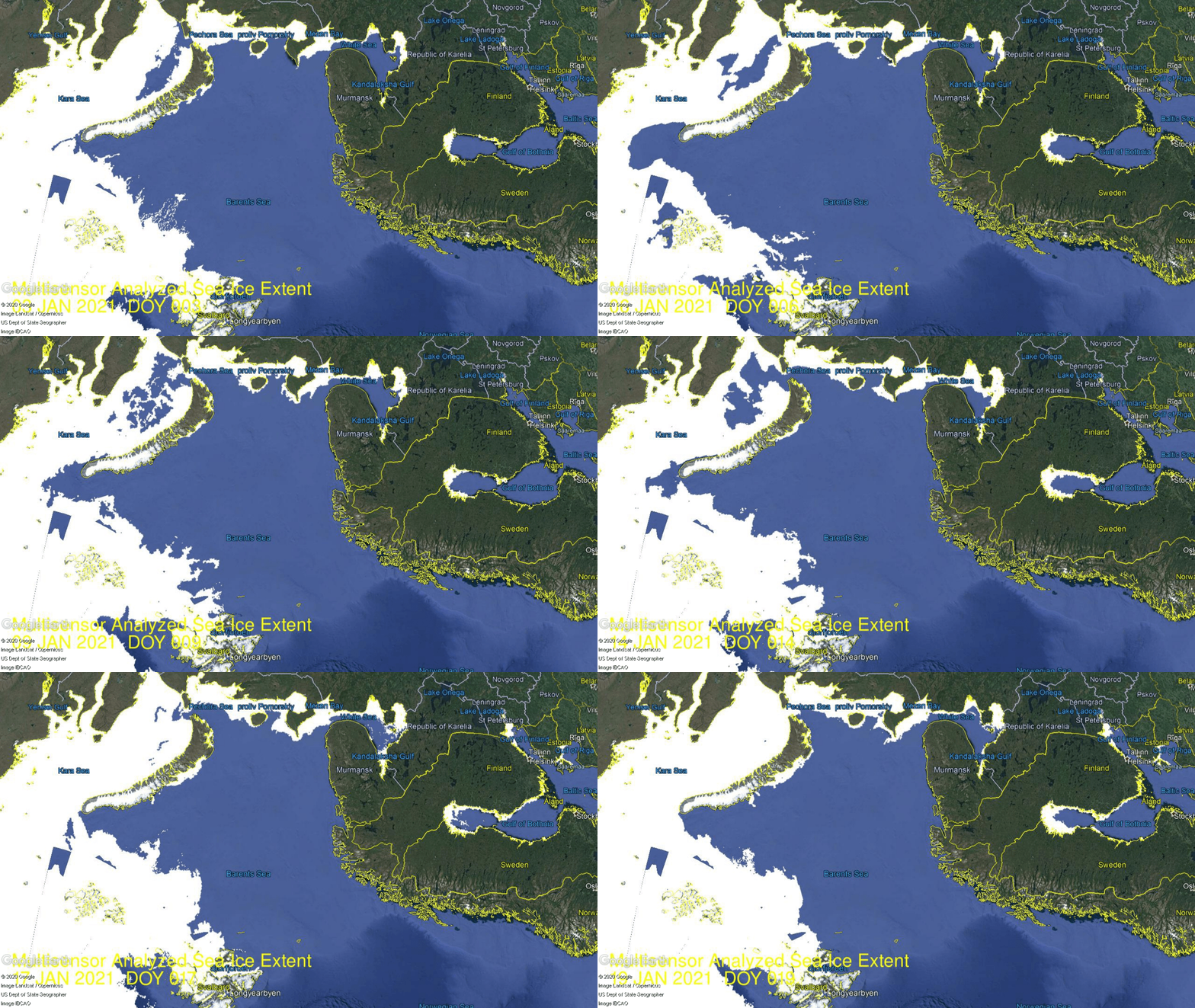
At this point in the Arctic refreezing phase, LIFO inventory accounting comes into play.  Last-In, First-out is one accepted way to price the value of a company’s inventory.  For Arctic ice, it means that basins that are last to freeze over in winter are the first to melt out in the summer.  For example, in Mid January 2021, total NH ice extent is 91% of last March maximum, so most basins have long been covered with ice.  The last 9% will be added in four places (present % of max is noted):

Bering Sea        62%
Okhotsk Sea     70%
Barents Sea      58%
Baffin Bay         66%

In the Pacific animation above, Bering on the right adds ice extent from 261k km2 to 513k km2 since Jan. 1, while Okhotsk goes from 500k km2 to 800k km2.  Together they will likely add ~650k km2 more by March maximum.  

On the Atlantic side, Barents Sea added only ~100k km2 so far in January.  More interesting on the right side is the Baltic Sea quadrupled from 9K km2 to 42k km2.  While the Baltic extent is not large by comparison, it is already 38% greater than last March maximum, so that is surprising.

Normally, ice in the Yellow Sea is insignificant, but this year is different.  Perhaps you saw reports like this one from gcaptain Sea Ice Slows Ships In North China Ports  Excerpts in italics with my bolds.

By Muyu Xu and Chen Aizhu (Reuters) – Chinese ports and marine safety authorities are on high alert as an expansion of sea ice makes it tougher for ships to berth and discharge at key energy product import terminals along the coast of northern Bohai Bay.

A cold wave sweeping the northern hemisphere has plunged temperatures across China to their lowest in decades, boosting demand for power and fuel to historic highs in the world’s largest energy consumer.

Bohai Bay appears in the upper right corner, with Beijing nearby. Yellow Sea extent doubled in January up to 28,000 km2, which is twice the maximum last March.

Background on Okhotsk Sea

NASA describes Okhotsk as a Sea and Ice Factory. Excerpts in italics with my bolds.

The Sea of Okhotsk is what oceanographers call a marginal sea: a region of a larger ocean basin that is partly enclosed by islands and peninsulas hugging a continental coast. With the Kamchatka Peninsula, the Kuril Islands, and Sakhalin Island partly sheltering the sea from the Pacific Ocean, and with prevailing, frigid northwesterly winds blowing out from Siberia, the sea is a winter ice factory and a year-round cloud factory.

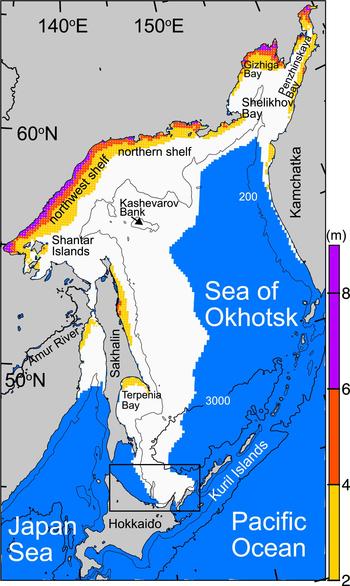
The region is the lowest latitude (45 degrees at the southern end) where sea ice regularly forms. Ice cover varies from 50 to 90 percent each winter depending on the weather. Ice often persists for nearly six months, typically from October to March. Aside from the cold winds from the Russian interior, the prodigious flow of fresh water from the Amur River freshens the sea, making the surface less saline and more likely to freeze than other seas and bays.


Map of the Sea of Okhotsk with bottom topography. The 200- and 3000-m isobars are indicated by thin and thick solid lines, respectively. A box denotes the enlarged portion in Figure 5. White shading indicates sea-ice area (ice concentration ⩾30%) in February averaged for 2003–11; blue shading indicates open ocean area. Ice concentration from AMSR-E is used. Color shadings indicate cumulative ice production in coastal polynyas during winter (December–March) averaged from the 2002/03 to 2009/10 seasons (modified from Nihashi and others, 2012, 2017). The amount is indicated by the bar scale. Source: Cambridge Core

Bering Sea Ice is Highly Variable

The animation above shows Bering Sea ice extents at April 2 from 2007 to 2020.  The large fluctuation is evident, much ice in 2012 -13 and almost none in 2018, other years in between.  Given the alarmist bias, it’s no surprise which two years are picked for comparison:

Source: Seattle Times ‘We’ve fallen off a cliff’: Scientists have never seen so little ice in the Bering Sea in spring.

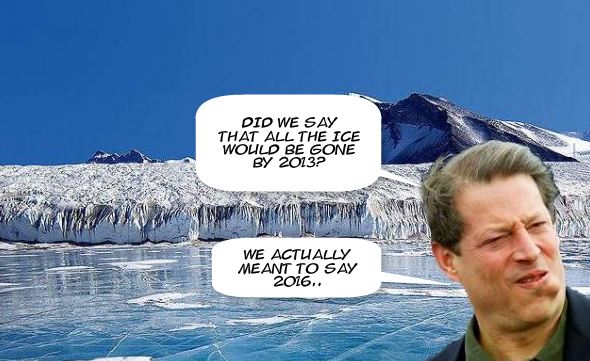
Taking a boat trip from Hokkaido Island to see Okhotsk drift ice is a big tourist attraction, as seen in the short video below.  Al Gore had them worried back then, but not now.

Drift ice in Okhotsk Sea at sunrise.

Biden’s Unique Commemorative Coin

Update January 20: A unique commemorative coin for the new leader of the free world

Background from previous post Biden’s Damaging Climate Plans

President-elect Joe Biden looks to have the US rejoin the Paris Accords. AP

Bjorn Lomborg explains in his NY Post article Joe Biden’s climate-change plans will burn billions, won’t bring change we actually need.  Excerpts in italics with my bolds and some images added.

Joe Biden will rejoin the Paris climate agreement soon after being inaugurated as president of the United States. Climate change, according to Biden, is “an existential threat” to the nation, and to combat it, he proposes to spend $500 billion each year on climate policies — the equivalent of $1,500 per person.

Let’s get real. Climate is a man-made problem. But Biden’s climate alarmism is almost entirely wrong. Asking people to spend $1,500 every year is unsustainable when surveys show a majority is unwilling to spend even $24 per year on climate. And policies like Paris will fix little at a high cost. Biden is right to highlight the problem, but he needs a smarter way forward.

The climate alarm is poorly founded.

Take hurricanes. Last year, you undoubtedly heard that climate change made hurricanes “record-setting.” Actually, 2020 was above average in the North Atlantic partly because of the natural La Niña phenomenon, and only record-setting in that satellites could spot more storms.

When measured by total hurricane-damage potential, the 2020 North Atlantic was not even in the top 10. And almost everywhere else on the planet, hurricanes were far below average. Globally, 2020 ranked as one of the weakest hurricane years in the 40-year satellite record.

We think 2020 was big on hurricanes because we read carefully curated stories about where and when they hit, but we don’t see stories about the many more places where they don’t hit.

The UN Climate Panel, the gold standard of climate science, tells us that the total impact of climate change in the 2070s will be equivalent to an average income reduction of 0.2 to 2 percent. Which means that humans as a whole will be only a fraction less prosperous in a much richer world than they would be without climate change.

Rejoining the Paris agreement will solve very little at a high cost. By the UN’s estimates, if all ­nations live up to all their promises, they will reduce global temperature by less than 0.09 degrees Fahrenheit by 2100.

And Paris is costly, because it forces economies to use less or more expensive energy. Across many studies, the drag to the economies is estimated at between $1 trillion and $2 trillion in lost GDP every year after 2030.

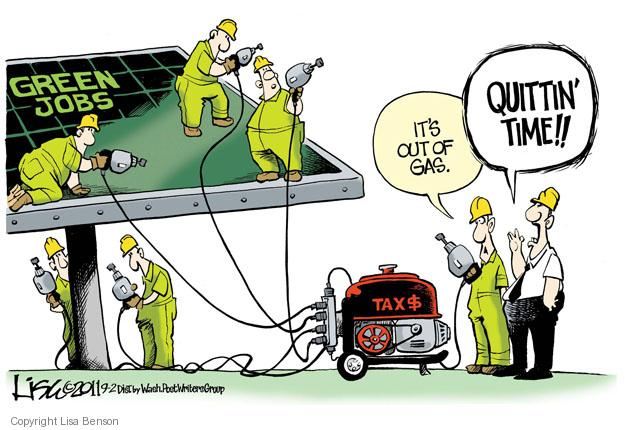
Yes, green spending will predictably increase green jobs. But because subsidies will be paid by higher taxes on the rest of the economy, an equal number of jobs will disappear elsewhere.

In Britain, Prime Minister Boris Johnson excitedly talks about 5 million new green jobs, while his advisers now warn him that 10 million other jobs could be at risk.

For Americans, President Barack Obama’s Paris promises carried a price tag of nearly $200 billion a year. But Biden has vowed to go much further, with a promise of net-zero by 2050. There is only one nation that has done an independent cost estimate of net-zero, namely New Zealand. The Kiwis found the average best-case cost is 16 percent of GDP, or a US cost of more than $5 trillion a year by mid-century.
These figures are unsustainable. Moreover, the US and other developed countries can achieve very little on their own. Imagine if Organization for Economic Cooperation and Development countries stopped all their emissions today and never bounced back. This would be utterly devastating economically yet would reduce global warming by the end of the century by less than 0.8 degrees.

That’s because three-quarters of this century’s emissions will come from the rest of the world, especially China, India, Africa and Latin America. Developing nations are unlikely to accept slower economic growth to address a 2 percent problem 50 years from now.

There is a smarter way: investing a lot more in green-energy ­research and development. As Bill Gates says, “We’re short about two dozen great innovations” to fix climate. If we could innovate the price of green energy below fossil fuels, everyone would switch, eventually fixing climate change.

The policies would be cheaper and much more likely to be implemented. Fortunately, R&D is one of Biden’s promises, and he will have a much easier time with Congress if he makes it his focus.

Bjorn Lomborg is president of the Copenhagen Consensus Center. His new book is “False Alarm.”

Joe Biden’s climate agenda is all about creating a crisis — not actually fixing one

Global Warming Ends

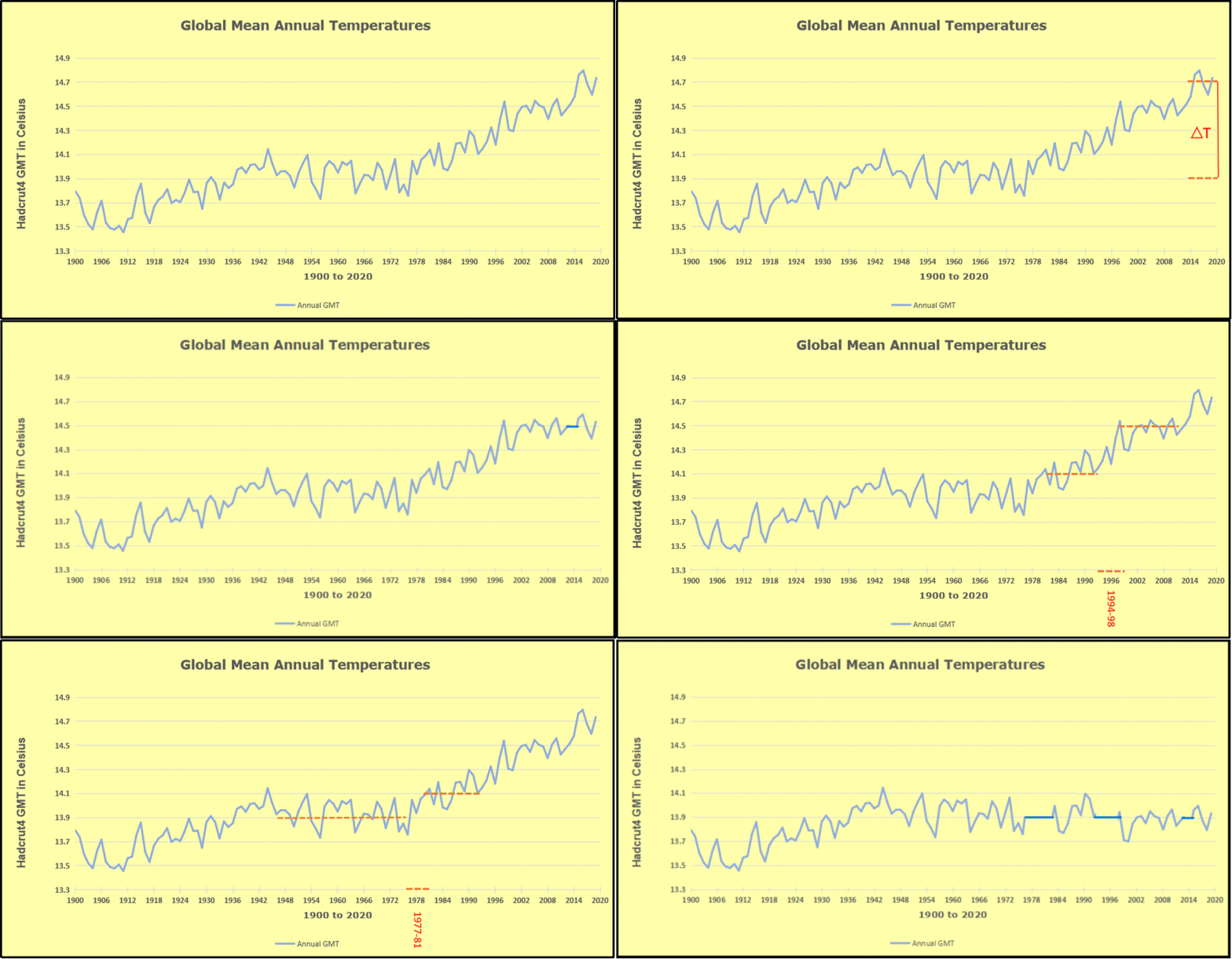
The animation is an update of a previous analysis from Dr. Murry Salby.  These graphs use Hadcrut4 and include the 2016 El Nino warming event.  The exhibit shows since 1947 GMT warmed by 0.8 C, from 13.9 to 14.7, as estimated by Hadcrut4.  This resulted from three natural warming events involving ocean cycles. The most recent rise 2013-16 lifted temperatures by 0.2C.  Previously the 1994-98 El Nino produced a plateau increase of 0.4C.  Before that, a rise from 1977-81 added 0.2C to start the warming since 1947.

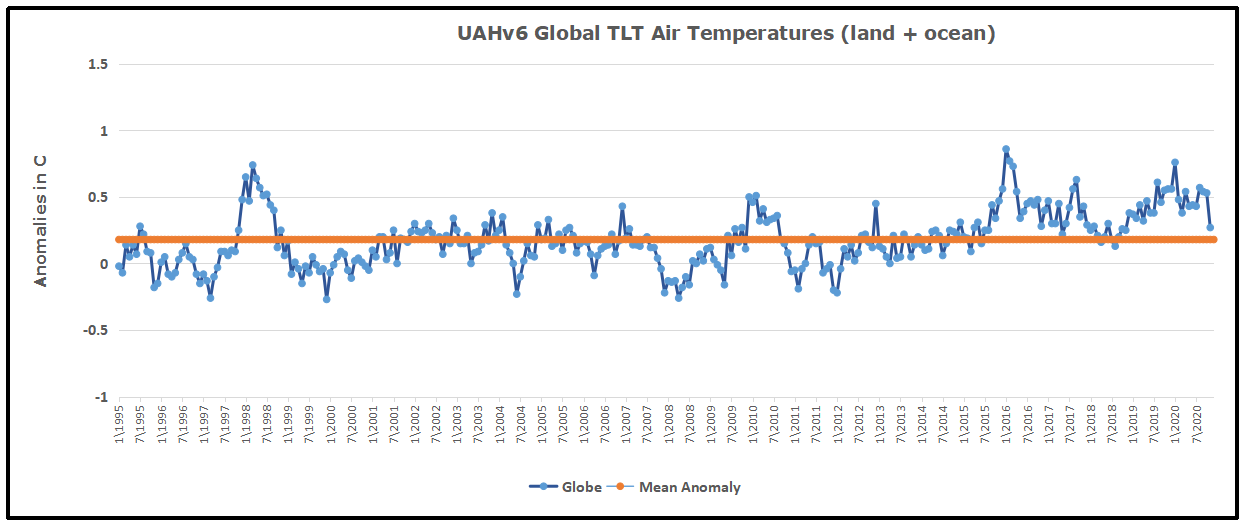
Importantly, the theory of human-caused global warming asserts that increasing CO2 in the atmosphere changes the baseline and causes systemic warming in our climate.  On the contrary, all of the warming since 1947 was episodic, coming from three brief events associated with oceanic cycles. Moreover, the UAH record shows that the effects of the last one are now gone.

The 2016 El Nino persisted longer than 1998, and was followed by warming after effects in NH.  The monthly anomaly at 2020 year end is nearly the 0.18C average since 1995, an ENSO neutral year prior to the second warming event discussed above. With a quiet sun and cooling oceans, the prospect is for cooler times ahead.

The Forces that Flatten Us

Alana Newhouse writes insightfully about the state of American society in her Tablet article Everything Is Broken  And how to fix it.  Excerpts in italics with my bolds and images.

For seven decades, the country’s intellectual and cultural life was produced and protected by a set of institutions—universities, newspapers, magazines, record companies, professional associations, cultural venues, publishing houses, Hollywood studios, think tanks, etc. Collectively, these institutions reflected a diversity of experiences and then stamped them all as “American”—conjuring coherence out of the chaos of a big and unwieldy country. This wasn’t a set of factories pumping out identical widgets, but rather a broad and messy jazz band of disparate elements that together produced something legible, clear, and at times even beautiful when each did their part.

But, beginning in the 1970s, the economic ground underneath this landscape began to come apart. Michael Lind explains this better than anyone else:

The strategy of American business, encouraged by neoliberal Democrats and libertarian conservative Republicans alike, has been to lower labor costs in the United States, not by substituting labor-saving technology for workers, but by schemes of labor arbitrage: Offshoring jobs when possible to poorly paid workers in other countries and substituting unskilled immigrants willing to work for low wages in some sectors, like meatpacking and construction and farm labor. American business has also driven down wages by smashing unions in the private sector, which now have fewer members—a little more than 6% of the private sector workforce—than they did under Herbert Hoover.

This was the tinder. The tech revolution was the match—one-upping the ’70s economy by demanding more efficiency and more speed and more boundarylessness, and demanding it everywhere. They introduced not only a host of inhuman wage-suppressing tactics, like replacing full-time employees with benefits with gig workers with lower wages and no benefits, but also a whole new aesthetic that has come to dominate every aspect of our lives—

a set of principles that collectively might be thought of as flatness.

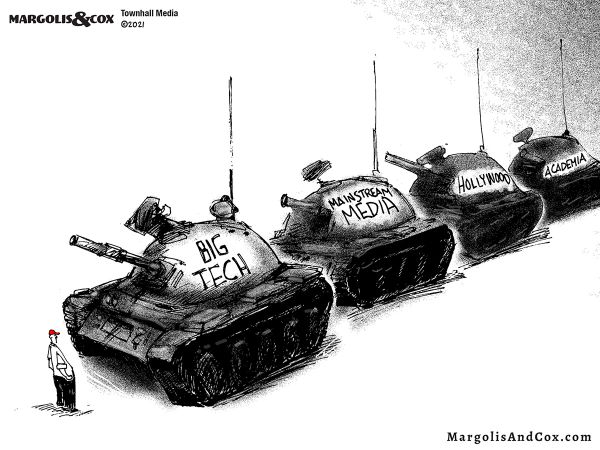
Flatness is the reason the three jobs with the most projected growth in your country all earn less than $27,000 a year, and it is also the reason that all the secondary institutions that once gave structure and meaning to hundreds of millions of American lives—jobs and unions but also local newspapers, churches, Rotary Clubs, main streets—have been decimated. And flatness is the mechanism by which, over the past decade and with increasing velocity over the last three years, a single ideologically driven cohort captured the entire interlocking infrastructure of American cultural and intellectual life. It is how the Long March went from a punchline to reality, as one institution after another fell and then entire sectors, like journalism, succumbed to control by narrow bands of sneering elitists who arrogated to themselves the license to judge and control the lives of their perceived inferiors.

Flatness broke everything.

Today’s revolution has been defined by a set of very specific values:

  • boundarylessness; speed; universal accessibility;
  • an allergy to hierarchy, so much so that the weighting or preferring of some voices or products over others is seen as illegitimate;
  • seeing one’s own words and face reflected back as part of a larger current;
  • a commitment to gratification at the push of a button;
  • equality of access to commodified experiences as the right of every human being on Earth;
  • the idea that all choices can and should be made instantaneously, and that,
  • the choices made by the majority in a given moment, on a given platform represent a larger democratic choice, which is therefore both true and good—until the next moment, on the next platform.

Here’s a description of the aesthetics of Silicon Valley (emphasis added):

It’s the realm of coffee shops, bars, startup offices, and co-live/work spaces that share the same hallmarks everywhere you go: a profusion of symbols of comfort and quality, at least to a certain connoisseurial mindset. Minimalist furniture. Craft beer and avocado toast. Reclaimed wood. Industrial lighting. Cortados. Fast internet. The homogeneity of these spaces means that traveling between them is frictionless, a value that Silicon Valley prizes and cultural influencers take advantage of. Changing places can be as painless as reloading a website. You might not even realize you’re not where you started.

“You might not even realize you’re not where you started.” The machines trained us to accept, even chase, this high. Once we accepted it, we turned from willful individuals into parts of a mass that could move, or be moved, anywhere. Once people accepted the idea of an app, you could get them to pay for dozens of them—if not more. You could get people to send thousands of dollars to strangers in other countries to stay in homes they’d never seen in cities they’d never visited. You could train them to order in food—most of their food, even all of their food—from restaurants that they’d never been to, based on recommendations from people they’d never met. You could get them to understand their social world not as consisting of people whose families and faces one knew, which was literally the definition of social life for hundreds of thousands of years, but rather as composed of people who belonged to categories—“also followed by,” “friends in common,” “BIPOC”—that didn’t even exist 15 years ago. You could create a culture in which it was normal to have sex with someone whose two-dimensional picture you saw on a phone, once.

You could, seemingly overnight, transform people’s views about anything—even everything.

The Obama administration could swiftly overturn the decision-making space in which Capitol Hill staff and newspaper reporters functioned so that Iran, a country that had killed thousands of Americans and consistently announces itself to be America’s greatest enemy, is now to be seen as inherently as trustworthy and desirable an ally as France or Germany. Flatness, frictionlessness.

The biological difference between the sexes, which had been a foundational assumption of medicine as well as of the feminist movement, was almost instantaneously replaced not only by the idea that there are numerous genders but that reference in medicine, law or popular culture to the existence of a gender binary is actually bigoted and abusive. Flatness.

Facebook’s longtime motto was, famously, “Move fast and break shit,” which is exactly what Silicon Valley enabled others to do.

The internet tycoons used the ideology of flatness to hoover up the value from local businesses, national retailers, the whole newspaper industry, etc.—and no one seemed to care. This heist—by which a small group of people, using the wiring of flatness, could transfer to themselves enormous assets without any political, legal or social pushback—enabled progressive activists and their oligarchic funders to pull off a heist of their own, using the same wiring. They seized on the fact that the entire world was already adapting to a life of practical flatness in order to push their ideology of political flatness

what they call social justice, but which has historically meant the transfer of enormous amounts of power and wealth to a select few.

9d5962361f0cdc9f6ecbf27c31107c16-admiration-the-hand

Because this cohort insists on sameness and purity, they have turned the once-independent parts of the American cultural complex into a mutually validating pipeline for conformists with approved viewpoints—who then credential, promote and marry each other. A young Ivy League student gets A’s by parroting intersectional gospel, which in turn means that he is recommended by his professors for an entry-level job at a Washington think tank or publication that is also devoted to these ideas. His ability to widely promote those viewpoints on social media is likely to attract the approval of his next possible boss or the reader of his graduate school application or future mates. His success in clearing those bars will in turn open future opportunities for love and employment. Doing the opposite has an inverse effect, which is nearly impossible to avoid given how tightly this system is now woven. A person who is determined to forgo such worldly enticements—because they are especially smart, or rich, or stubborn—will see only examples of even more talented and accomplished people who have seen their careers crushed and reputations destroyed for daring to stick a toe over the ever multiplying maze of red lines.

So, instead of reflecting the diversity of a large country, these institutions have now been repurposed as instruments to instill and enforce the narrow and rigid agenda of one cohort of people, forbidding exploration or deviation—a regime that has ironically left homeless many, if not most, of the country’s best thinkers and creators. Anyone actually concerned with solving deep-rooted social and economic problems, or God forbid with creating something unique or beautiful—a process that is inevitably messy and often involves exploring heresies and making mistakes—will hit a wall. If they are young and remotely ambitious they will simply snuff out that part of themselves early on, strangling the voice that they know will get them in trouble before they’ve ever had the chance to really hear it sing.

He Zhi Hua, Protestor Crushed To Death By Steamroller In Chinese Government Relocation Drive

As with Communists and modernism, there was nothing inevitable about the match. Most consumers don’t know that by using internet-based (or -generated) platforms—by buying from Amazon, by staying in an Airbnb, by ordering on Grubhub, by friending people on Facebook—that they are subscribing to a life of flatness, one that can lead directly into certain politics. But they are. Seduced by convenience, we end up paying for the flattening of our own lives. It is not an accident that progressive ideas spread faster on the internet.

The internet is a car that runs on flatness; progressive politics—unlike either conservatism or liberalism—are flatness.

I’m not looking to rewind the clock back to a time before we all had email and cellphones. What I want is to be inspired by the last generation that made a new life-world—the postwar American abstract expressionist painters, jazz musicians, and writers and poets who created an alternate American modernism that directly challenged the ascendant Communist modernism: a blend of forms and techniques with an emphasis not on the facelessness of mass production, but on individual creativity and excellence.

Like them, our aim should be to take the central, unavoidable and potentially beneficent parts of the Flatness Aesthetic (including speed, accessibility; portability) while discarding the poisonous parts (frictionlessness; surveilled conformism; the allergy to excellence). We should seek out friction and thorniness, hunt for complexity and delight in unpredictability. Our lives should be marked not by “comps” and metrics and filters and proofs of concept and virality but by tight circles and improvisation and adventure and lots and lots of creative waste.

And not just to save ourselves, but to save each other. The vast majority of Americans are not ideologues. They are people who wish to live in a free country and get along with their neighbors while engaging in profitable work, getting married, raising families, being entertained, and fulfilling their American right to adventure and self-invention. They are also the consumer base for movies, TV, books, and other cultural products. Every time Americans are given the option to ratify progressive dictates through their consumer choices, they vote in the opposite direction. When HBO removed Gone with the Wind from its on-demand library last year, it became the #1 bestselling movie on Amazon. Meanwhile, endless numbers of Hollywood right-think movies and supposed literary masterworks about oppression are dismal failures for studios and publishing houses that would rather sink into debt than face a social-justice firing squad on Twitter.

This disconnect between culturally mandated politics and the actual demonstrated preferences of most Americans has created an enormous reserve of unmet needs—and a generational opportunity.  Build new things! Create great art! Understand and accept that sensory information is the brain’s food, and that Silicon Valley is systematically starving us of it. Avoid going entirely tree-blind. Make a friend and don’t talk politics with them. Do things that generate love and attention from three people you actually know instead of hundreds you don’t. Abandon the blighted Ivy League, please, I beg of you. Start a publishing house that puts out books that anger, surprise and delight people and which make them want to read. Be brave enough to make film and TV that appeals to actual audiences and not 14 people on Twitter. Establish a newspaper, one people can see themselves in and hold in their hands. Go back to a house of worship—every week. Give up on our current institutions; they already gave up on us.

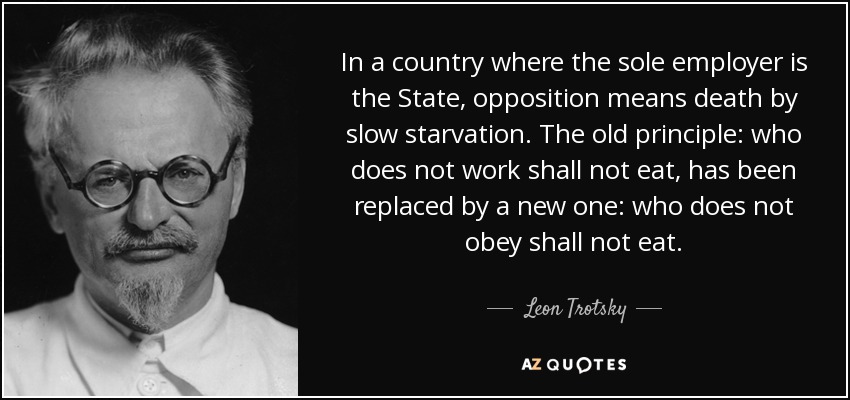
Soviet Jokes About Living Under Oppression

The Soviet people lived under a regime where private life, ideas and opinions were banished from public expression by state media.  Now the USA has state media rivaling the USSR, only difference is ambiguity whether the media runs the state or vice-versa as in Soviet days.  In any case, Russians and others under that regime voiced their resistance by sharing jokes at the expense of the autocrats.  Wikipedia provides some instructive examples for Americans in the days ahead.

A judge walks out of his chambers laughing his head off. A colleague approaches him and asks why he is laughing. “I just heard the funniest joke in the world!”
“Well, go ahead, tell me!” says the other judge.
“I can’t – I just gave someone ten years for it!”

Q: “Who built the White Sea Canal?”
A: “The left bank was built by those who told the jokes, and the right bank by those who listened.”

Q: Will there be KGB in communism?
A: As you know, under communism, the state will be abolished, together with its means of suppression. People will know how to self-arrest themselves.

Q: How do you deal with mice in the Kremlin?
A: Put up a sign saying “collective farm”. Then half the mice will starve, and the rest will run away.

“Lubyanka (KGB headquarters) is the tallest building in Moscow. You can see Siberia from its basement.”

A new arrival to Gulag is asked: “What were you given 10 years for?”
– “For nothing!”
– “Don’t lie to us here, now! Everybody knows ‘for nothing’ is 3 years.”

Q: What’s the difference between a capitalist fairy tale and a Marxist fairy tale?
A: A capitalist fairy tale begins, “Once upon a time, there was….”. A Marxist fairy tale begins, “Some day, there will be….”

A Soviet history professor addressed his university students: “Regarding the final exam, I have good news and bad news.  The good news: All the questions are the same as last year.  The bad news:  Some of the answers are different.”

Q: What is the difference between the Constitutions of the US and USSR? Both of them guarantee freedom of speech.
A: Yes, but the Constitution of the USA also guarantees freedom after the speech.

Q: Is it true that the Soviet Union is the most progressive country in the world?
A: Of course! Life was already better yesterday than it’s going to be tomorrow!

Khrushchev visited a pig farm and was photographed there. In the newspaper office, a discussion is underway about how to caption the picture. “Comrade Khrushchev among pigs,” “Comrade Khrushchev and pigs,” and “Pigs surround comrade Khrushchev” are all rejected as politically offensive. Finally, the editor announces his decision: “Third from left – comrade Khrushchev.”

Q: “What is the main difference between succession under the tsarist regime and under socialism?”
A: “Under the tsarist regime, power was transferred from father to son, and under socialism – from grandfather to grandfather.”

Q: What are the new requirements for joining the Politburo?
A: You must now be able to walk six steps without the assistance of a cane, and say three words without the assistance of paper.

Our Soviet industry system is simple and works very well.  Our bosses pretend to pay and we pretend to work.

An old woman asks her granddaughter: “Granddaughter, please explain Communism to me. How will people live under it? They probably teach you all about it in school.”
“Of course they do, Granny. When we reach Communism, the shops will be full–there’ll be butter, and meat, and sausage. You’ll be able to go and buy anything you want…”
“Ah!” exclaimed the old woman joyfully. “Just like it was under the Tsar!”

A man walks into a shop and asks, “You wouldn’t happen to have any fish, would you?”. The shop assistant replies, “You’ve got it wrong – ours is a butcher’s shop. We don’t have any meat. You’re looking for the fish shop across the road. There they don’t have any fish!”

Q: “What happens if Soviet socialism comes to Saudi Arabia?
A: First five years, nothing; then a shortage of oil.”

Stalin appears to Putin in a dream and says: “I have two bits of advice for you: kill off all your opponents and paint the Kremlin blue.” Putin asks, “Why blue?” Stalin: “I knew you would not object to the first one.”


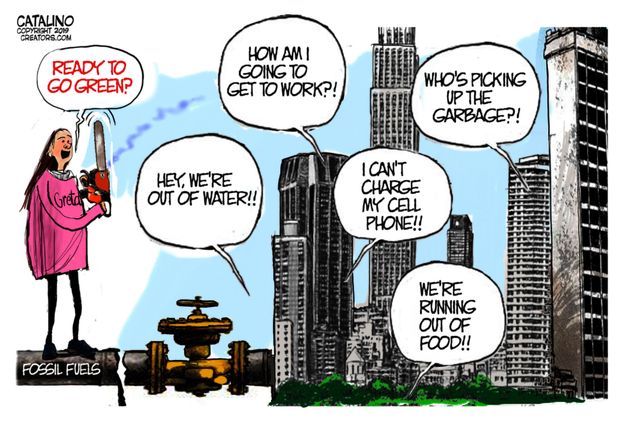
Biden’s Damaging Climate Plans

President-elect Joe Biden looks to have the US rejoin the Paris Accords. AP

Update January 20: A unique commemorative coin for the new leader of the free world

Bjorn Lomborg explains in his NY Post article Joe Biden’s climate-change plans will burn billions, won’t bring change we actually need.  Excerpts in italics with my bolds and some images added.

Joe Biden will rejoin the Paris climate agreement soon after being inaugurated as president of the United States. Climate change, according to Biden, is “an existential threat” to the nation, and to combat it, he proposes to spend $500 billion each year on climate policies — the equivalent of $1,500 per person.

Let’s get real. Climate is a man-made problem. But Biden’s climate alarmism is almost entirely wrong. Asking people to spend $1,500 every year is unsustainable when surveys show a majority is unwilling to spend even $24 per year on climate. And policies like Paris will fix little at a high cost. Biden is right to highlight the problem, but he needs a smarter way forward.

The climate alarm is poorly founded.

Take hurricanes. Last year, you undoubtedly heard that climate change made hurricanes “record-setting.” Actually, 2020 was above average in the North Atlantic partly because of the natural La Niña phenomenon, and only record-setting in that satellites could spot more storms.

When measured by total hurricane-damage potential, the 2020 North Atlantic was not even in the top 10. And almost everywhere else on the planet, hurricanes were far below average. Globally, 2020 ranked as one of the weakest hurricane years in the 40-year satellite record.

We think 2020 was big on hurricanes because we read carefully curated stories about where and when they hit, but we don’t see stories about the many more places where they don’t hit.

The UN Climate Panel, the gold standard of climate science, tells us that the total impact of climate change in the 2070s will be equivalent to an average income reduction of 0.2 to 2 percent. Which means that humans as a whole will be only a fraction less prosperous in a much richer world than they would be without climate change.

Rejoining the Paris agreement will solve very little at a high cost. By the UN’s estimates, if all ­nations live up to all their promises, they will reduce global temperature by less than 0.09 degrees Fahrenheit by 2100.

And Paris is costly, because it forces economies to use less or more expensive energy. Across many studies, the drag to the economies is estimated at between $1 trillion and $2 trillion in lost GDP every year after 2030.

Yes, green spending will predictably increase green jobs. But because subsidies will be paid by higher taxes on the rest of the economy, an equal number of jobs will disappear elsewhere.

In Britain, Prime Minister Boris Johnson excitedly talks about 5 million new green jobs, while his advisers now warn him that 10 million other jobs could be at risk.

For Americans, President Barack Obama’s Paris promises carried a price tag of nearly $200 billion a year. But Biden has vowed to go much further, with a promise of net-zero by 2050. There is only one nation that has done an independent cost estimate of net-zero, namely New Zealand. The Kiwis found the average best-case cost is 16 percent of GDP, or a US cost of more than $5 trillion a year by mid-century.

These figures are unsustainable. Moreover, the US and other developed countries can achieve very little on their own. Imagine if Organization for Economic Cooperation and Development countries stopped all their emissions today and never bounced back. This would be utterly devastating economically yet would reduce global warming by the end of the century by less than 0.8 degrees.

That’s because three-quarters of this century’s emissions will come from the rest of the world, especially China, India, Africa and Latin America. Developing nations are unlikely to accept slower economic growth to address a 2 percent problem 50 years from now.

There is a smarter way: investing a lot more in green-energy ­research and development. As Bill Gates says, “We’re short about two dozen great innovations” to fix climate. If we could innovate the price of green energy below fossil fuels, everyone would switch, eventually fixing climate change.

The policies would be cheaper and much more likely to be implemented. Fortunately, R&D is one of Biden’s promises, and he will have a much easier time with Congress if he makes it his focus.

Bjorn Lomborg is president of the Copenhagen Consensus Center. His new book is “False Alarm.”

Joe Biden’s climate agenda is all about creating a crisis — not actually fixing one